Introduction to Multi Nozzle 3D Printing
If you’ve been following the world of additive manufacturing, you’ve probably noticed something exciting happening right now. The multi nozzle 3D printer is no longer just a niche concept reserved for research labs and cutting-edge universities — it’s becoming a real, practical solution for engineers, designers, and manufacturers who need more from their machines.
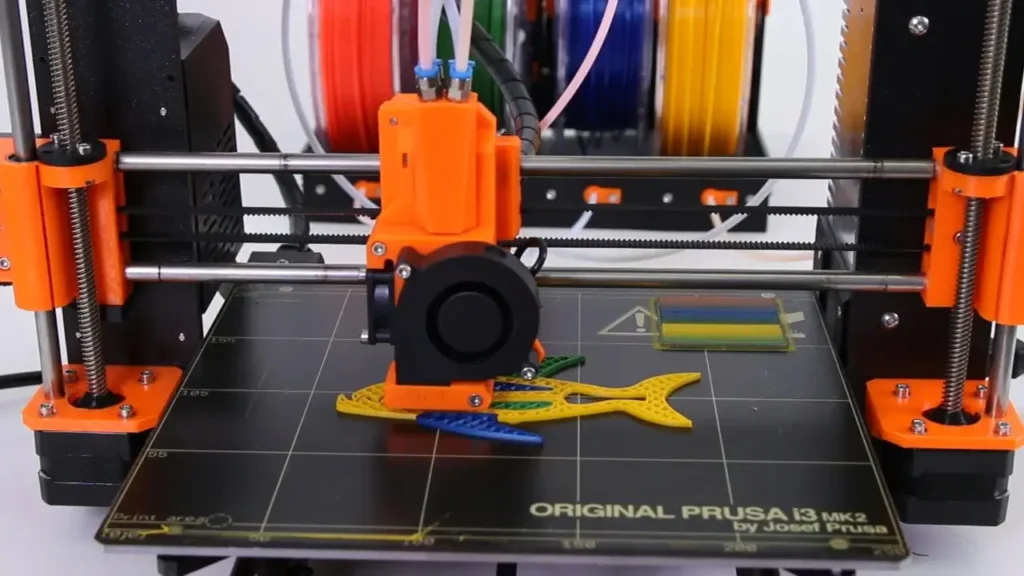
But what exactly is a multi nozzle 3D printer, and why is everyone talking about it? Simply put, it’s a system that uses more than one nozzle to deposit material during the printing process. This means you can print with multiple materials, multiple colors, or multiple properties — all in a single print run, without stopping, swapping filaments, or babysitting your machine through the night.
Traditional single-nozzle printers are fantastic for simple jobs. But the moment your design gets complex — think flexible supports combined with rigid structures, or a prototype that needs both conductive and non-conductive materials — a single nozzle just can’t keep up. That’s where multi nozzle technology steps in and completely changes the game.
Over the past few years, the demand for smarter, faster, and more capable 3D printing has exploded across industries. From aerospace prototyping to medical device manufacturing, engineers are pushing the boundaries of what printed parts can do. And as those demands grow, so does the need for printing systems that can deliver on them — reliably, repeatably, and with minimal human intervention.
The AtomForm Palette 300 is one of the most ambitious answers to that demand we’ve seen yet. Designed with a 12-nozzle architecture and built around automation-first thinking, it’s the kind of machine that makes you look at 3D printing in a completely different way. Let’s explore what makes it so special.
Overview of AtomForm Palette 300
The AtomForm Palette 300 is a professional-grade 3D printing system developed by AtomForm, a company focused on pushing the boundaries of additive manufacturing through intelligent hardware design. The Palette 300 is the flagship model in their lineup, and it’s built around one central idea: making multi-material, multi-nozzle printing as seamless and automated as possible.
At its core, the Palette 300 is a prototype 3D printer innovation — meaning it was designed not just to print things, but to print things that couldn’t reasonably be produced on conventional machines. It’s aimed at engineering teams, R&D departments, advanced makerspaces, and small-batch manufacturers who need a machine that can handle complexity without slowing down their workflow.
What sets the Palette 300 apart from other printers in its class is the philosophy behind it. Rather than adding a second nozzle as an afterthought (as many dual-extrusion printers do), AtomForm built the entire machine around the idea of having multiple nozzles working in a coordinated, intelligent system. The result is a printer that feels less like a hobbyist upgrade and more like a genuine manufacturing tool.
The machine features a large build volume appropriate for professional use, a robust frame designed to minimize vibration and maximize print accuracy, and an integrated control system that manages all nozzles simultaneously. It’s designed to be used with a wide variety of filament types, from standard PLA and PETG to engineering-grade materials like TPU, carbon fiber composites, and soluble support materials.
From an aesthetic standpoint, the Palette 300 looks like it means business. Clean lines, an enclosed build chamber, and a well-thought-out user interface give it the feel of industrial equipment rather than a desktop gadget. But don’t let the professional appearance intimidate you — AtomForm has put significant effort into making the machine accessible through smart software and guided workflows.
Need a professional website or SEO optimization?
Visit our web development studio for custom websites, SEO services, and digital solutions.
Go to Andreev Web Studio →12 Automatic Nozzles Explained
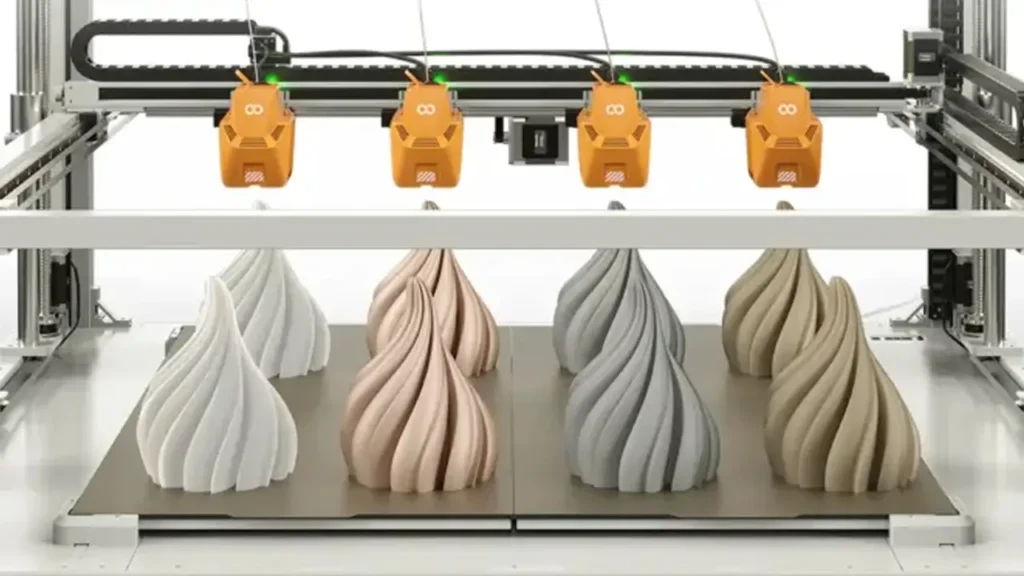
Here’s where things get really interesting. The AtomForm Palette 300 features 12 automatic nozzles — and that number isn’t just a marketing figure. Each nozzle is independently controlled and can be brought into the active printing position automatically, without any manual intervention.
This is what makes the Palette 300 an automatic nozzle changing 3D printer in the truest sense. In a conventional multi-extruder setup, you might have two or four nozzles that are physically mounted side by side. The problem with that approach is that the inactive nozzles can ooze, drag, or collide with the print — causing defects, failed prints, and wasted material. Engineers have come up with various workarounds (like ooze shields and prime towers), but they all add time and material waste to the process.
The Palette 300 takes a fundamentally different approach. Its nozzles are organized in a tool-changer style system, where only one nozzle is active at any given time. When the printer needs to switch materials, it parks the current nozzle, picks up the next one, and resumes printing — all in a matter of seconds. Because the inactive nozzles are physically separated from the print area, there’s no risk of oozing or interference.
Having 12 nozzles available means you can set up an enormous variety of print configurations. You could dedicate certain nozzles to specific materials, use different nozzle diameters for varying levels of detail, or assign nozzles to different colors within a single print. The flexibility this provides is genuinely remarkable.
The automatic switching system also has significant implications for production uptime. In a traditional setup, if one nozzle gets clogged or damaged mid-print, your job is likely ruined. With the Palette 300’s 12-nozzle system, the printer can potentially reroute to a backup nozzle and continue — dramatically reducing the chance of a full print failure.
| Feature | Single Nozzle | Dual Extruder | AtomForm Palette 300 (12 Nozzles) |
|---|---|---|---|
| Max Materials per Print | 1 | 2 | Up to 12 |
| Nozzle Ooze Risk | N/A | High | Minimal |
| Auto Nozzle Switching | No | No | Yes |
| Downtime from Clogs | High | Medium | Low |
| Material Flexibility | Low | Medium | Very High |
Multi Material Capabilities
One of the most exciting things about the AtomForm Palette 300 is what you can actually print with it. As a true multi material 3D printing system, it opens up possibilities that simply don’t exist with conventional printers.
Think about what multi-material printing really means in practice. You could print a mechanical part that has a rigid outer shell but flexible internal hinges — all in one go, no assembly required. You could print a prototype with embedded channels for electronics, using both structural and flexible materials in the same object. You could print objects with soluble support structures that dissolve cleanly in water, leaving perfectly smooth overhangs that would be impossible to achieve otherwise.
For product designers and engineers, this is transformative. Traditionally, if you needed a part with multiple material properties, you either had to design it as multiple components (and then assemble them), or you had to send it out to a specialist manufacturer. Both approaches add time and cost to the development cycle. With the Palette 300, you can produce these complex, multi-material parts in-house, overnight, and ready to test by morning.
Color printing is another dimension entirely. With 12 nozzles available, you could theoretically assign a different color to each nozzle and produce full-color prototype models — think of architectural models, product mockups, or visual displays where the color isn’t just decorative but communicates functional information.
The Palette 300 also supports the use of different nozzle diameters across its 12-nozzle system. This means you can use a fine nozzle for detail work on the exterior of a part while using a larger nozzle for fast infill on the interior — dramatically reducing print times without sacrificing surface quality.
Polimerukr.com
Ukraine
3D Printing Materials & Supplies
Your trusted source for high-quality 3D printing materials in Ukraine. Wide selection of filaments, resins, and accessories for all printer types with fast local shipping.
Filament Control System
A multi nozzle system is only as good as the filament management system behind it. Feed the wrong amount of material, and you get under-extrusion or gaps. Feed too much, and you get blobs, stringing, and failed prints. Getting this right across 12 independent nozzles is genuinely a hard engineering problem — and it’s one that AtomForm has taken seriously.
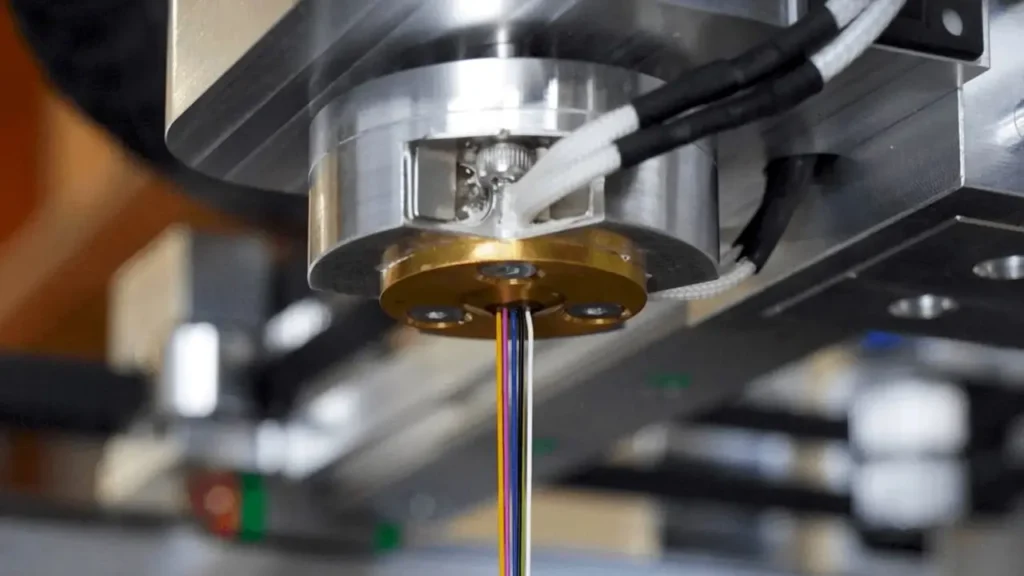
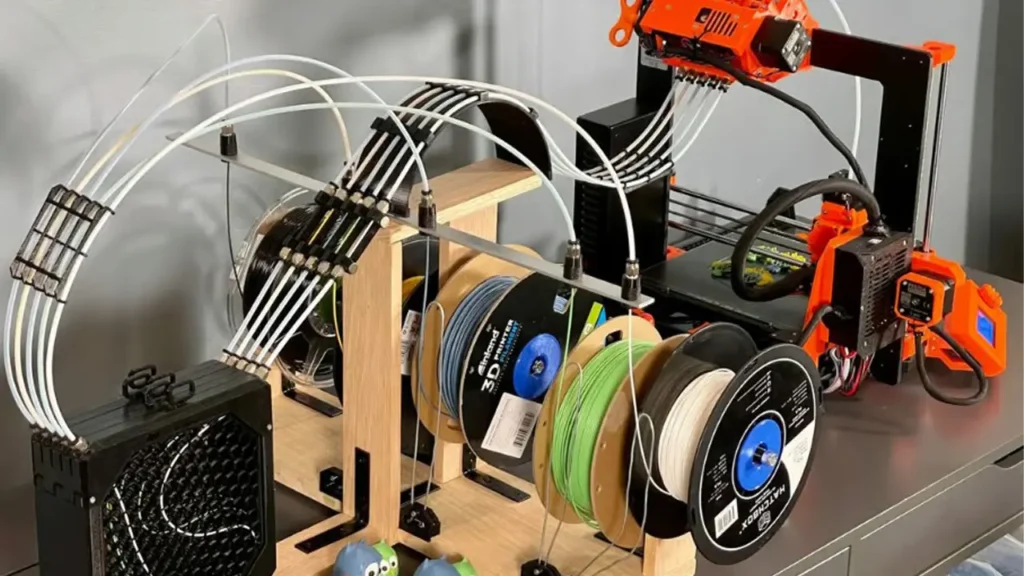
The Palette 300 features an advanced filament management system 3D printer architecture that monitors and adjusts extrusion rates in real time. Each nozzle has its own dedicated feed path, meaning there’s no shared tubing or complex routing that could cause tangles, jams, or inconsistent tension. Each filament is fed directly to its assigned nozzle through a clean, short path that minimizes friction and maximizes control.
The system uses precision stepper motors for filament drive, with feedback mechanisms that detect changes in resistance (which can indicate a partial clog or filament tangle) and alert the user before a small problem becomes a failed print. This kind of proactive monitoring is the sort of feature that experienced 3D printer users will immediately appreciate — because they know how often prints fail not from a catastrophic problem, but from a subtle feeding issue that gradually degrades print quality over hours.
Filament spool management is also addressed thoughtfully. The Palette 300 includes an integrated spool housing system that keeps all 12 filament spools organized, accessible, and protected from humidity — a real concern with moisture-sensitive materials like nylon or TPU. The enclosed spool area also means there’s no tangling of filament paths as the print head moves, which is a genuine challenge in any multi-spool setup.
The control software gives users full visibility into the filament system, including remaining filament estimates for each spool, alerts for low filament, and the ability to pause and swap spools mid-print if needed. It’s the kind of thoughtful, user-focused design that makes a complex machine feel manageable.
Engineering and Design Innovation
Behind every great machine is great engineering, and the AtomForm Palette 300 is no exception. The level of advanced 3D printing technology packed into this system reflects years of iterative design work and a deep understanding of what professional users actually need.
The frame of the Palette 300 is constructed from heavy-gauge aluminum extrusion, braced with steel reinforcement at key stress points. This isn’t just about making the machine look solid — it directly affects print quality. Vibration is one of the most common causes of print artifacts (those subtle ripples you sometimes see in the walls of printed objects), and a rigid, well-damped frame is the most effective solution.
The motion system uses a CoreXY configuration, which is widely regarded as one of the best approaches for high-speed, high-accuracy FDM printing. In a CoreXY system, the print head moves in the XY plane while the bed moves only in the Z direction. This keeps the mass of the print head low, enabling faster movements with less inertia — which translates directly to faster prints and cleaner corners.
The heated build plate is large enough to accommodate the Palette 300’s ambitious build volume, and it heats quickly and evenly across its entire surface — a critical factor for good adhesion, especially when printing with materials that are prone to warping. The enclosed build chamber allows the ambient temperature to be controlled, which is essential for printing engineering materials like ABS, ASA, or PC that require a warm environment to print successfully.
The electronics architecture is equally impressive. The Palette 300 uses a distributed control system where each nozzle has its own dedicated controller board, rather than a single central board managing everything. This approach reduces the risk of a single point of failure taking down the entire machine, and it allows for more precise, independent control of each nozzle’s temperature and extrusion rate.
Automation Features
If there’s one word that defines the philosophy behind the AtomForm Palette 300, it’s automation. This machine is designed to minimize the amount of time you spend managing it, so you can spend more time doing the work that actually matters.
As a 3D printing automation system, the Palette 300 handles a remarkable number of tasks that would traditionally require manual intervention. Nozzle switching, as we’ve discussed, is fully automatic. But the automation goes further than that.
The machine includes automatic bed leveling, which uses a network of sensors to map the build surface and compensate for any unevenness before each print. This is standard on many modern printers, but the Palette 300 implements it with a level of precision appropriate for professional use — measuring the bed at dozens of points and applying a real-time correction mesh during printing.
First layer calibration is also automated. The system adjusts the Z-offset for each nozzle independently, ensuring that every nozzle starts at exactly the right height relative to the build surface. This is crucial in a multi-nozzle system, because even a tiny difference in nozzle height between tools can cause adhesion problems or layer inconsistencies.
The Palette 300 can also perform automatic nozzle priming before each tool change — extruding a small amount of material to ensure the nozzle is fully charged and ready to print before it touches the actual workpiece. This eliminates the under-extrusion that often appears at the start of a new tool’s first line.
Remote monitoring is built in as well. The machine connects to your local network and provides a live camera feed, print progress updates, and the ability to pause or cancel prints remotely. For teams running overnight prints, this peace of mind is genuinely valuable.
| Automation Feature | Description | Benefit |
|---|---|---|
| Auto Nozzle Switching | Automatic tool change between 12 nozzles | Zero manual intervention during multi-material prints |
| Auto Bed Leveling | Multi-point surface mapping before each print | Consistent first layers across the build surface |
| Auto Z-Offset per Nozzle | Individual height calibration for each tool | Precise adhesion from every nozzle |
| Filament Monitoring | Real-time feed tension and remaining filament tracking | Early warning for jams and low material |
| Remote Monitoring | Network-connected camera and status dashboard | Print oversight without being physically present |
| Auto Nozzle Priming | Pre-extrusion routine before each tool activation | Eliminates under-extrusion at tool change points |
Industrial Applications
The AtomForm Palette 300 isn’t a machine designed to sit on a hobbyist’s desk — it’s built for environments where 3D printing is a serious production and development tool. As an industrial multi nozzle printer, its capabilities map directly onto the needs of several key industries.
In aerospace and defense engineering, the ability to print parts with multiple materials in a single run is enormously valuable. Engineers can produce lightweight structural components with integrated flexible joints, or prototype housings that combine rigid outer shells with internal vibration-damping structures. The high accuracy of the Palette 300’s motion system ensures that these parts meet dimensional tolerances tight enough for serious engineering evaluation.
Medical device development is another area where multi-material printing shines. Designing medical devices often requires parts that are simultaneously rigid in some areas and flexible in others — think of an ergonomic handle that needs to be structurally sound but comfortable to grip, or a custom orthotic that combines a stiff structural layer with a soft contact surface. The Palette 300 can produce these kinds of functional prototypes in a single print, dramatically accelerating the design-test-iterate cycle.
In product design and consumer goods development, the Palette 300 enables teams to produce highly realistic appearance models and functional prototypes that closely mimic the properties of the final manufactured product. Instead of spending weeks waiting for injection-molded samples, a design team can have a full-color, multi-material mockup in their hands the next morning.
Architecture and construction firms use multi-material printing for scale models that communicate design intent more effectively than single-material prints. A building model where the structure, glazing, and landscaping are all represented by different materials and colors is far more useful in a client presentation than a uniform white model.
Even in education, the Palette 300’s capabilities open up new possibilities. Science and engineering students can print educational models that show multiple materials or phases within a single object — a geological cross-section in different colors, a mechanical assembly with moving parts, or a chemistry visualization model.
Anycubic
Shenzhen, China
3D Printers & Materials
Speed, stability, and modern electronics. Automatic calibration, high printing speed, well-designed mechanics, and multicolor support for FDM and resin printing.
Comparison with Multi Extruder Systems
To truly appreciate what the AtomForm Palette 300 brings to the table, it helps to understand how it compares to traditional multi extruder 3D printer designs — because the differences are more fundamental than they might first appear.
A conventional multi extruder system mounts two or more extruders side by side on a single carriage. This is the approach taken by many popular desktop printers. It works, and for simple two-color or two-material prints, it can deliver good results. But it comes with a set of inherent limitations that engineers and power users quickly run into.
The most significant issue is nozzle interference. When two nozzles are mounted close together on the same carriage, the inactive nozzle drags very close to the print surface as the active nozzle works. Even with careful calibration and the use of ooze shields, this causes problems — particularly on tall prints or parts with fine detail. Getting a perfect result requires significant tuning, and the window for failure is wide.
There’s also the issue of X-axis offset calibration. In a dual-extruder setup, the two nozzles must be precisely aligned in the X and Y axes — and maintaining that alignment over time, as the machine heats and cools, is an ongoing calibration challenge.
A 3D printer with multiple nozzles in a tool-changer configuration, like the Palette 300, sidesteps these issues entirely. Because only one nozzle is ever in the active position, there’s no interference, no ooze from idle nozzles, and no X-axis offset to manage between active tools. The docking and undocking process is the key engineering challenge instead — and it’s one that AtomForm has clearly invested significant effort in solving well.
The trade-off, of course, is complexity and cost. Tool-changer systems are more mechanically sophisticated than dual-extruder setups, and they require more careful software coordination. But for professional users who need reliable multi-material results, the improved print quality and reduced failure rate more than justify the investment.
| Criteria | Multi Extruder (Side by Side) | AtomForm Palette 300 (Tool Changer) |
|---|---|---|
| Number of Materials | 2–4 typically | Up to 12 |
| Nozzle Interference | Common issue | Eliminated by design |
| Calibration Complexity | Ongoing X/Y offset tuning | Automated per-tool calibration |
| Print Quality | Good with tuning | Excellent, consistent |
| Machine Cost | Lower | Higher (professional grade) |
| Target User | Enthusiast / small studio | Professional / industrial |
Expert Insight
The AtomForm Palette 300 represents a meaningful shift in how we think about automated multi-material production in additive manufacturing. Its 12-nozzle architecture places it in a different category from most FDM systems available today — not because of the number itself, but because of what that number enables at the system level.
By separating each nozzle into an independently dockable tool, AtomForm has effectively made the nozzle a modular, interchangeable component of the workflow rather than a fixed part of the machine. This has long-term implications beyond just today’s use cases. As nozzle technology continues to evolve — with specialized nozzles for new materials, different deposition methods, or even post-processing functions — a tool-changer architecture like the Palette 300’s becomes a platform for future capability rather than a static machine.
The reduction in human intervention enabled by this system is also significant. Every touch point where a human must intervene in a print job is a potential source of error, delay, or inconsistency. By automating nozzle switching, bed leveling, Z-offset calibration, and filament monitoring, the Palette 300 moves multi-material printing substantially closer to the kind of set-it-and-walk-away reliability that manufacturing environments require.
Future of Multi Nozzle 3D Printing
So where does multi nozzle 3D printing go from here? The trajectory is pretty clear, and it’s exciting to think about. A 3D printer with multiple nozzles is no longer a curiosity — it’s becoming the logical endpoint of where professional additive manufacturing is headed.
We’re already seeing a broader industry shift toward systems that prioritize automation, material versatility, and production reliability over raw speed or low cost. The machines that will define the next decade of additive manufacturing are ones that can run reliably for extended periods, switch between materials without fuss, and produce parts that genuinely compete with or complement traditional manufacturing methods.
The rise of multi-material printing is also being driven by advances in materials science. New filament formulations are being developed constantly — materials with specific electrical properties, biocompatible materials for medical applications, high-temperature composites for automotive and aerospace use, and environmentally sustainable options made from recycled or bio-based sources. A 12-nozzle system like the Palette 300 is perfectly positioned to take advantage of this expanding material ecosystem, because it can accommodate a wider range of material combinations than any single or dual-nozzle machine.
Software will play a growing role as well. As slicers and print management systems become more sophisticated, the complexity of coordinating 12 nozzles across a multi-material print will become increasingly invisible to the user. Intelligent software will handle material assignment, purge optimization, print sequencing, and failure recovery with minimal user input — making powerful multi-nozzle printing accessible to users who don’t want to become experts in 3D printing technology.
Looking further ahead, we can imagine scenarios where multi-nozzle systems like the Palette 300 form the basis of fully automated production cells — integrated into larger manufacturing workflows, receiving print jobs from design software, running continuously, and delivering finished parts to automated post-processing stations. The Palette 300 isn’t just a product; it’s a preview of what that future looks like.
The AtomForm Palette 300 stands today as one of the clearest statements yet that multi-nozzle 3D printing is no longer a research concept — it’s here, it works, and it’s ready to change how the most demanding users approach additive manufacturing. For anyone serious about what comes next in 3D printing, it deserves a very close look.
Professional Web Development and SEO Services
Discover more from bestchina3dprinters.com
Subscribe to get the latest posts sent to your email.