 Skip to content
 If you own a Qidi 3D printer, you already know you’re working with a machine built for performance. But even the best printer can only deliver great results when it’s paired with the right filament — and dialed in with the right settings. That’s exactly what this guide is about.
We ran a comprehensive qidi filament test across four major material categories — PLA, PETG, ABS, and PAHT-CF — to give you a real-world look at how each one performs, what settings to use, and which materials are genuinely worth your time. Whether you’re just getting started with Qidi or pushing your machine toward engineering-grade applications, this breakdown has something for you.
Let’s get into it.


Qidi Filament Compatibility: What Can These Printers Actually Handle?
One of the most impressive things about Qidi printers is their broad qidi filament compatibility. Unlike basic desktop printers locked into PLA and PETG, Qidi’s lineup — including the X-Max 3, X-Plus 3, and Q1 Pro — is designed to handle everything from everyday thermoplastics to high-performance engineering materials.
Qidi printers feature fully enclosed build chambers, hardened steel or stainless nozzles, heated beds that reach up to 120°C, and chamber temperatures that support materials prone to warping. This combination makes them compatible with:
- Standard materials: PLA, PLA+, PETG, TPU
- Semi-engineering materials: ABS, ASA, PC (Polycarbonate)
- Engineering-grade materials: PAHT-CF, PA-CF, PPA-CF, PPS-CF, Carbon Fiber composites
That’s a serious range. The key takeaway here is that your Qidi printer is capable of far more than most users ever explore. The rest of this article will walk you through exactly how to unlock that potential, material by material.
PLA Performance on Qidi — Easy, Reliable, and a Great Starting Point
When it comes to qidi pla settings, PLA is the most forgiving filament in the lineup. It prints cleanly, doesn’t require an enclosure, and produces excellent surface quality right out of the box. If you’re testing a new slicer profile or dialing in a new printer, starting with PLA is always a smart move.
On the Qidi X-Max 3 and X-Plus 3, PLA performs beautifully with the following general settings:
- Nozzle Temperature: 190–220°C
- Bed Temperature: 50–65°C
- Print Speed: 100–200 mm/s (Qidi’s high-speed architecture handles this comfortably)
- Cooling: Maximum fan speed recommended
- Enclosure: Not required, but leaving the door open improves cooling
The results? Crisp layer lines, strong dimensional accuracy, and minimal stringing. For decorative prints, prototypes, and everyday household parts, PLA on a Qidi is a dream combination. The printer’s rigidity and motion system mean you can push speeds higher than typical printers without sacrificing quality.
One tip: if you’re using Qidi’s own PLA filament, the pre-loaded profiles in Qidi Slicer are an excellent starting point. Community-tuned profiles on platforms like Reddit and GitHub often push performance even further.
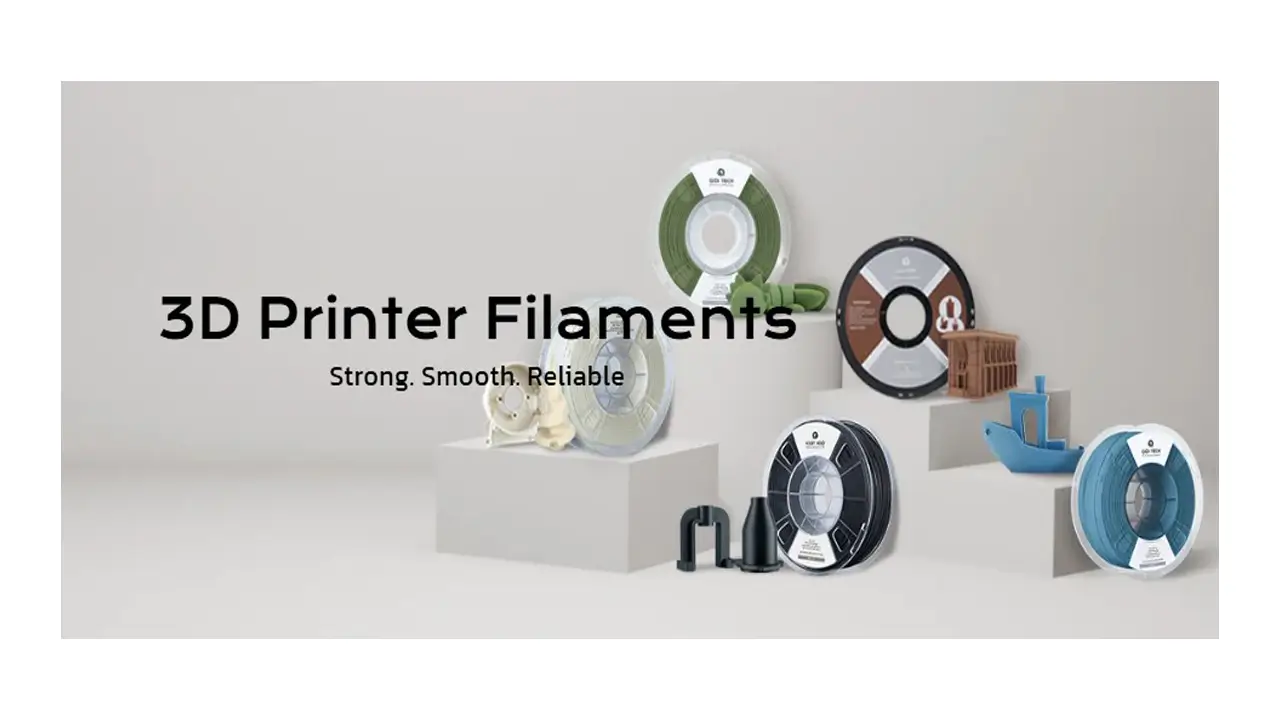
Qidi 3D Printer Filaments
Premium quality filaments from QIDI Tech. Wide range of materials including PLA, ABS, PETG, and specialty filaments optimized for consistent extrusion and excellent print quality.
- • PLA, ABS, PETG Options
- • Consistent Diameter
- • High Quality Materials
- • Smooth Extrusion
PETG Print Quality Results — Strength Meets Flexibility
PETG occupies a sweet spot between PLA’s printability and ABS’s strength, and the qidi petg print quality we observed during testing was genuinely impressive. PETG is tougher, more heat-resistant, and slightly flexible compared to PLA — making it a strong choice for functional parts, enclosures, and mechanical components.
Here’s what our testing revealed:
Strengths: Excellent layer adhesion, good impact resistance, moderate flexibility, and better thermal tolerance than PLA (heat deflection typically around 70–80°C).
Challenges: PETG is notorious for stringing. On Qidi printers, the key to controlling this lies in retraction tuning and print temperature. Running slightly cooler (around 230°C rather than 250°C) and increasing retraction distance can clean up stringing significantly.
Recommended PETG settings on Qidi printers:
- Nozzle Temperature: 230–250°C
- Bed Temperature: 70–85°C
- Print Speed: 80–150 mm/s
- Cooling: Moderate (50–70% fan speed)
- Enclosure: Optional but helps with adhesion on larger prints
PETG also bonds very well to Qidi’s PEI-coated flex plates, making first-layer adhesion consistent and part removal easy once the bed cools. If you’re looking for an all-around workhorse filament for functional printing, PETG on a Qidi is hard to beat.
ABS Printing Experience — Where the Enclosure Earns Its Keep
Qidi abs printing tips all point to one central truth: ABS is where an enclosed Qidi printer really separates itself from open-frame competitors. ABS is prone to warping and layer delamination if the ambient temperature drops during printing, and the enclosed build chamber on Qidi’s printers solves that problem almost entirely.
During our ABS testing, here’s what made the biggest difference:
1. Keep the enclosure closed. This seems obvious, but it’s critical. A stable chamber temperature of 40–50°C reduces warping dramatically.
2. Use a brim or raft. ABS has relatively high shrinkage. Adding a brim of 5–8mm improves bed adhesion on larger flat parts.
3. First-layer adhesion. A light application of ABS slurry (ABS dissolved in acetone) on a clean glass bed, or a PEI sheet heated to 100–110°C, gives excellent results.
Recommended ABS settings on Qidi printers:
- Nozzle Temperature: 230–250°C
- Bed Temperature: 100–110°C
- Print Speed: 50–100 mm/s
- Cooling: Minimal or off — ABS hates rapid cooling
- Enclosure: Required for best results
The finished parts show excellent toughness and post-processing potential. ABS can be sanded, drilled, and acetone-smoothed to a near-injection-molded finish. For automotive parts, tool housings, or any application requiring toughness and moderate heat resistance, ABS on a Qidi delivers consistently.
Polimerukr.com
Ukraine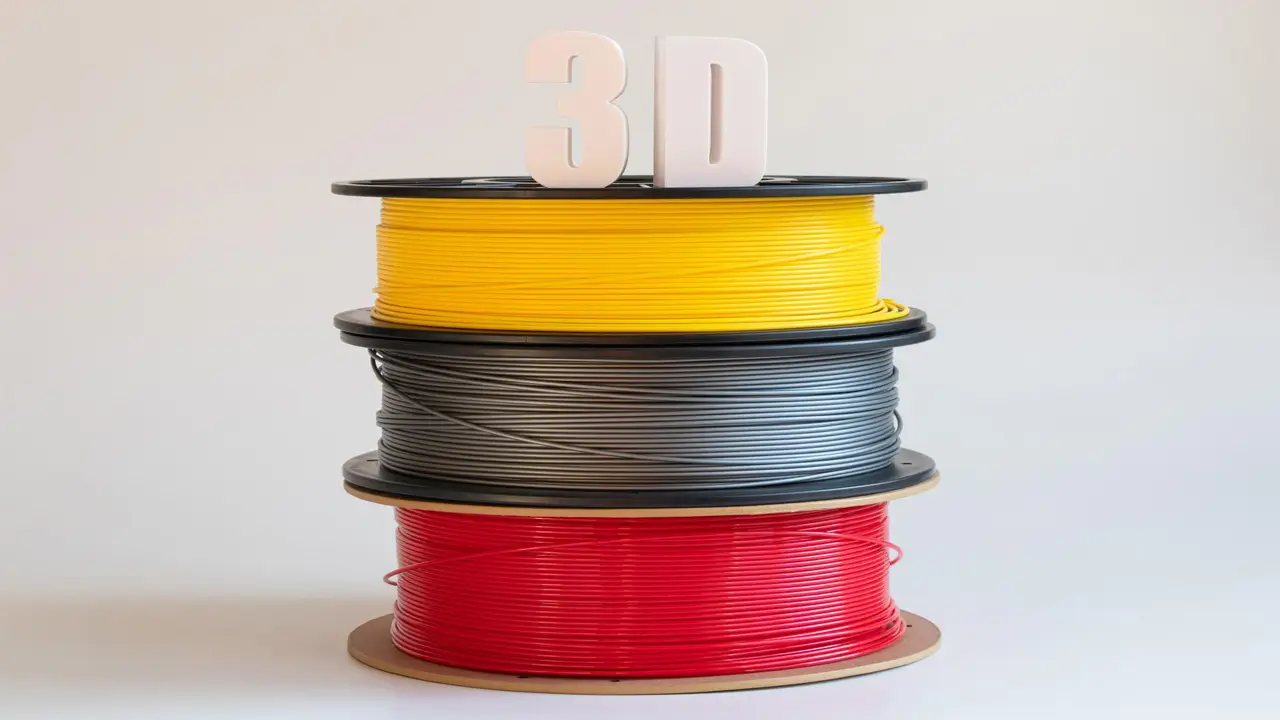
3D Printing Materials & Supplies
Your trusted source for high-quality 3D printing materials in Ukraine. Wide selection of filaments, resins, and accessories for all printer types with fast local shipping.
PAHT-CF Filament Testing — Engineering Performance in Action
This is where Qidi printers truly shine. Qidi paht cf filament testing revealed a material that’s genuinely impressive for engineering applications. PAHT-CF stands for Polyamide High Temperature with Carbon Fiber reinforcement — it’s designed for parts that need to survive elevated temperatures, mechanical stress, and demanding environments.
Key properties of PAHT-CF:
- Heat deflection temperature: Up to 150°C+ (significantly higher than PLA or PETG)
- Stiffness: Carbon fiber reinforcement dramatically increases rigidity
- Chemical resistance: Good resistance to oils, fuels, and common solvents
- Weight: Lightweight despite its strength
On the Qidi X-Max 3, PAHT-CF printed with exceptional results when the machine was configured correctly. The larger build volume and robust heating system handled the material’s demanding requirements comfortably.
Recommended PAHT-CF settings:
- Nozzle Temperature: 280–300°C (hardened nozzle required)
- Bed Temperature: 80–100°C
- Chamber Temperature: 55–65°C (enclosure closed)
- Print Speed: 30–60 mm/s
- Drying: Mandatory — moisture absorption ruins PAHT-CF. Dry at 80°C for 6–8 hours before printing.
Use cases we successfully printed: structural brackets, drone frames, jig components, and heat-shielding fixtures. The surface finish is matte and slightly textured — characteristic of carbon fiber composites — and the dimensional accuracy was excellent.
Carbon Fiber Filament Capabilities on Qidi Printers
Building on PAHT-CF, let’s talk more broadly about carbon fiber filament qidi compatibility and what you should know before printing with any CF-reinforced material.
Carbon fiber filaments work by suspending short carbon fiber strands within a base polymer (PLA-CF, PETG-CF, ABS-CF, PA-CF, etc.). The carbon fibers dramatically increase stiffness and reduce weight — but they also increase abrasion on your nozzle.
Critical hardware note: Standard brass nozzles will wear rapidly with carbon fiber filaments. Qidi printers can be equipped with hardened steel nozzles, which are strongly recommended for any CF material. The X-Max 3 ships with nozzle options designed for abrasive filaments.
Performance characteristics of CF filaments on Qidi:
- Dimensional accuracy: Excellent — CF composites have lower warping tendency than unfilled versions of the same polymer
- Surface finish: Matte, textured, professional-looking
- Post-processing: Difficult to sand (fibers surface) but can be primed and painted
- Anisotropy: Like all FDM parts, strength is strongest along extrusion direction — design accordingly
- Rigidity: Significantly higher than unfilled counterparts
For users printing functional parts where stiffness matters more than ductility — robot parts, camera mounts, structural brackets — CF composites on a Qidi represent an exceptional value proposition.
Optimal Temperature Settings for Every Filament
Let’s consolidate all of this into one easy-to-reference guide. The table below outlines recommended qidi print temperature settings for each filament tested, based on Qidi’s official documentation and community-validated profiles.
| Filament | Nozzle Temp (°C) | Bed Temp (°C) | Speed (mm/s) | Enclosure | Nozzle Type |
|---|---|---|---|---|---|
| PLA | 190–220 | 50–65 | 100–200 | Not required | Standard brass |
| PETG | 230–250 | 70–85 | 80–150 | Optional | Standard brass |
| ABS | 230–250 | 100–110 | 50–100 | Required | Standard brass |
| PAHT-CF | 280–300 | 80–100 | 30–60 | Required | Hardened steel |
| PLA-CF | 200–230 | 55–70 | 60–120 | Not required | Hardened steel |
| ASA | 240–260 | 90–110 | 50–80 | Required | Standard brass |
| PA-CF (Nylon-CF) | 260–280 | 70–90 | 30–60 | Required | Hardened steel |
Pro tip: Always calibrate your specific filament brand against these ranges. Third-party filaments vary in formulation, and running a temperature tower test before your main print is always worth the 20 minutes it takes.
Qidi X-Max 3 Filament Test — Real-World Benchmark Results
The qidi x max 3 filament test portion of our evaluation focused on what this specific machine brings to the table compared to Qidi’s smaller models. The X-Max 3 has a 325×325×315mm build volume, a dual-Z-axis gantry, and an actively heated chamber that can reach approximately 65°C — putting it in a different league for engineering filaments.
Here are the benchmark results we observed:
| Filament | Surface Quality | Dimensional Accuracy | Layer Adhesion | Warping | Overall Rating |
|---|---|---|---|---|---|
| PLA | Excellent | ±0.1–0.2mm | Very Good | None | ★★★★★ |
| PETG | Very Good | ±0.1–0.2mm | Excellent | Minimal | ★★★★½ |
| ABS | Good | ±0.2–0.3mm | Very Good | Low (enclosed) | ★★★★ |
| PAHT-CF | Good (matte) | ±0.1–0.2mm | Excellent | Very Low | ★★★★★ |
What stood out most on the X-Max 3 was the heated chamber’s impact on PAHT-CF and ABS. With competing printers that lack active chamber heating, these materials are significantly more challenging. The X-Max 3 simply handles them with confidence.
High-speed printing with PLA was also exceptional — the machine maintained quality at speeds where less rigid printers would introduce ringing or ghosting artifacts.
QIDI Box
All-in-One 3D Printing Solution
Complete Printing Station
All-in-one 3D printing solution from QIDI Tech. Integrated printer, wash & cure station, and smart software for seamless workflow from design to finished part.
Best Filament Recommendations for Qidi Printers
After all of our testing, here are our final recommendations for the best filament for qidi printer depending on your use case. Whether you’re a hobbyist, a product designer, or an engineer working with engineering filaments qidi, there’s a clear winner for each scenario.
| Use Case | Recommended Filament | Why |
|---|---|---|
| Beginner / General Use | PLA or PLA+ | Easy settings, great surface finish, fast printing |
| Functional Parts / Mechanical | PETG | Balance of printability, toughness, and heat resistance |
| Tooling / Post-Processable Parts | ABS | Acetone smoothing, machining, excellent toughness |
| Structural / High Heat | PAHT-CF | Best stiffness-to-weight, extreme heat resistance |
| Lightweight Rigid Parts | PLA-CF or PETG-CF | Great stiffness and finish without extreme process requirements |
| Outdoor / UV Exposed Parts | ASA | Superior UV resistance vs ABS, similar processing |
Final verdict: Qidi printers are genuinely among the most capable FDM printers available at their price point, and that capability shines brightest when paired with the right materials. Start with PLA to learn your machine, graduate to PETG for functional work, and don’t be afraid to explore PAHT-CF or other engineering-grade filaments if your projects demand it.
The investment in a quality Qidi printer pays off most when you’re pushing into materials that cheaper, open-frame printers simply can’t handle reliably. That’s the real story of this filament test — it’s not just about the materials, it’s about what a well-engineered machine can unlock.
Happy printing!
🇺🇸 English
Excellent article with real testing insights on Qidi filaments. The breakdown of PLA, PETG, ABS, and PAHT-CF is clear and practical. The site bestchina3dprinters.com is becoming a reliable source for serious 3D printing research.
🇪🇸 Español
Un artículo muy completo y útil sobre filamentos para impresoras Qidi. Las pruebas son detalladas y fáciles de entender. bestchina3dprinters.com ofrece contenido de alta calidad para quienes buscan resultados reales.
🇸🇦 العربية
مقال احترافي يشرح أداء خيوط الطباعة ثلاثية الأبعاد على أجهزة Qidi بشكل واضح. المعلومات دقيقة ومفيدة جدًا للمستخدمين. موقع bestchina3dprinters.com مصدر موثوق ومتميز.
🇨🇳 中文
这篇文章非常专业,对Qidi打印机使用的不同耗材进行了详细测试。内容清晰、实用性强。bestchina3dprinters.com 是一个值得信赖的3D打印资源网站。
🇫🇷 Français
Très bon article avec des tests concrets sur les filaments Qidi. Les explications sont claires et bien structurées. Le site bestchina3dprinters.com devient une référence pour les passionnés d’impression 3D.
🇩🇪 Deutsch
Sehr informativer Artikel über Qidi Filamente. Die Testergebnisse sind klar dargestellt und praxisnah. bestchina3dprinters.com ist eine starke Plattform für fundierte 3D-Druck Inhalte.
qidi filament testqidi filament testqidi filament testqidi filament testqidi filament testqidi filament testqidi filament testqidi filament testqidi filament testqidi filament testqidi filament testqidi filament testqidi filament testqidi filament testqidi filament testqidi filament testqidi filament testqidi filament testqidi filament testqidi filament testqidi filament test
Discover more from bestchina3dprinters.com
Subscribe to get the latest posts sent to your email.
