 Skip to content
 Welcome to a friendly, in-depth look at one of the most talked-about machines in the world of ceramic making. If you have ever watched a clay 3D printer lay down coil after coil of soft, wet clay and thought “I want to try that,” then this guide is written for you. Below we explore the Tronxy Moore 3 Pro in detail, compare it with the Tronxy Moore X, and walk through everything from build volume and extrusion technology to real-world applications. All of the technical details here come from Tronxy’s own product information, so you can read with confidence.
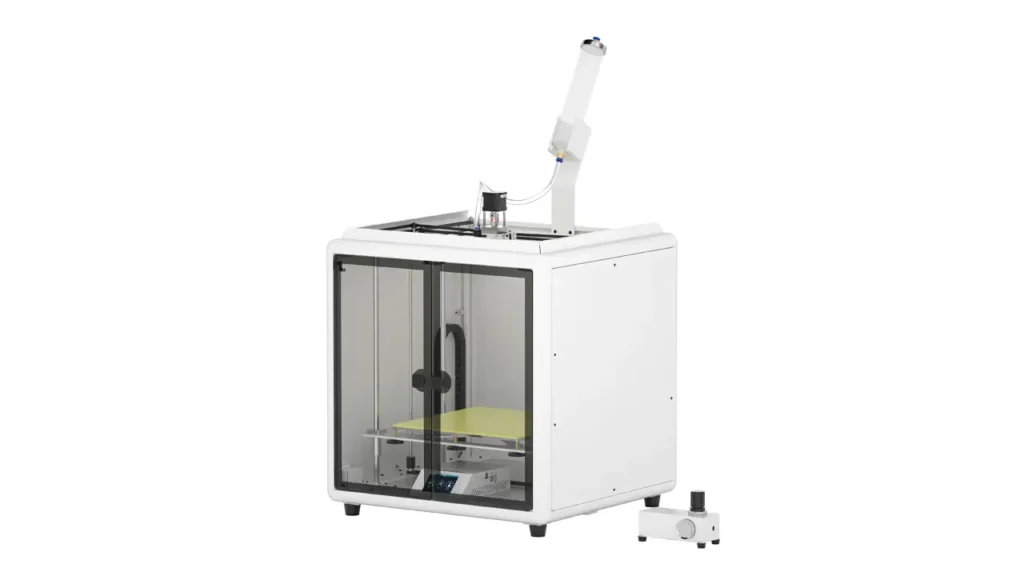
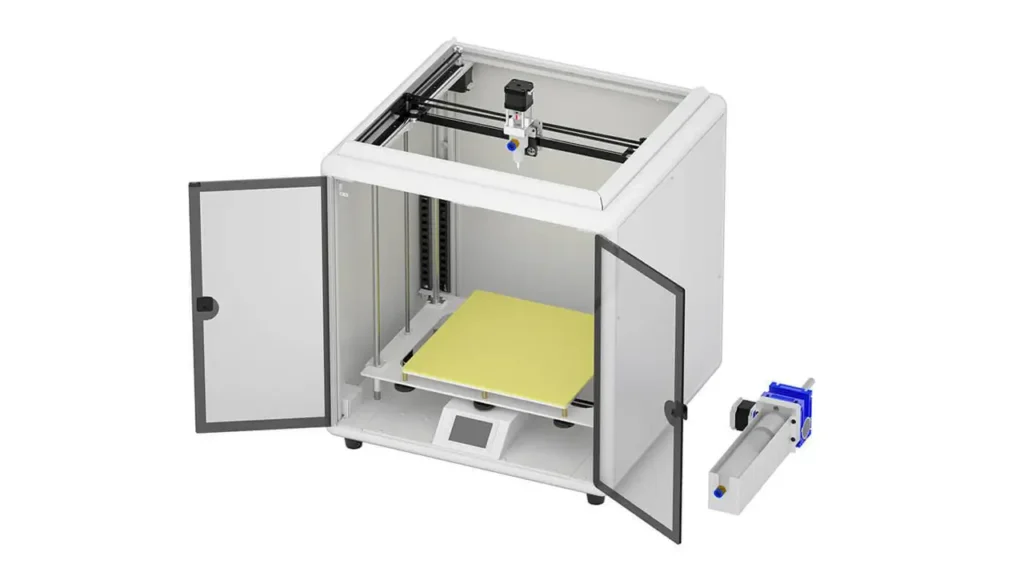
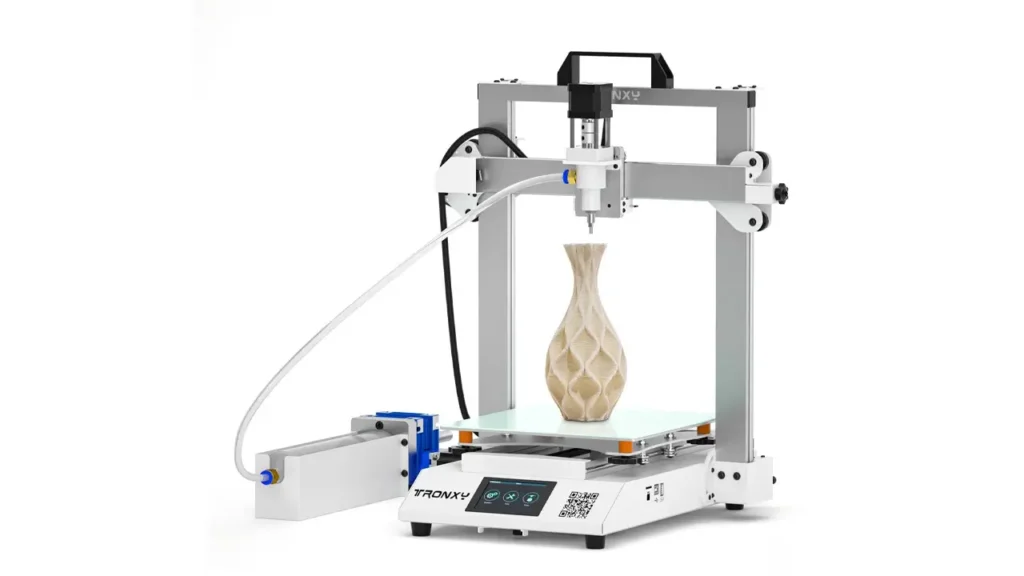
Introduction: Who Is the Tronxy Moore 3 Pro For?
The Tronxy Moore 3 Pro is a clay 3D printer built for people who are serious about making ceramics but still want a machine that fits on a workbench rather than in a factory. Tronxy, a Shenzhen-based manufacturer, has spent several generations refining its Moore line of liquid-clay printers, starting with the compact Moore 1 and growing into the enclosed, large-format Moore 3 and Moore 3 Pro.
So who exactly is this printer designed for? Think of the artist who wants to move beyond hand-thrown pottery and explore geometry that human hands cannot easily repeat. Think of the product designer prototyping ceramic housings, the ceramics teacher introducing students to digital fabrication, or the small studio producing short runs of decorative vases and tableware. The Moore 3 Pro sits comfortably between hobby curiosity and professional production, giving you room to grow.
The Moore family currently spans a few tiers. The Moore X is the compact enclosed model with a 255 mm cube of build space, ideal for smaller pieces and tighter workspaces. The Moore 3 Pro steps up to a much larger enclosed build area and adds an optional air-assisted extrusion path for demanding, high-pressure printing. Together they cover a wide slice of the ceramic market. Throughout this review we will keep circling back to what makes the Moore 3 Pro special, but understanding the whole lineup helps you choose the right tool for your goals.
Tronxy Moore X vs Moore 3 Pro
Choosing between the Tronxy Moore X and the Moore 3 Pro really comes down to size, feeding options, and how much production headroom you want. Both are enclosed ceramic 3D printer models that use liquid deposition, but they target slightly different users.
The Moore X is the more compact enclosed machine. It offers a build volume of roughly 255 x 255 x 255 mm and ships with a default 2.0 mm nozzle plus three extra nozzles (1.6 mm, 2.5 mm, and 3.0 mm), so you can adjust line width straight out of the box. Its material cylinder is flexible too: aluminum barrels are offered in 0.5 L, 1 L, and 2 L capacities, and stainless-steel barrels are available in 3 L and 5 L sizes. Feeding can be handled by a motor-driven worm system, a pneumatic option, or both together, which makes the Moore X surprisingly adaptable for its footprint.
The Moore 3 Pro is the larger, more production-minded sibling. It expands the build area to 330 x 330 x 380 mm and adds a full enclosure that helps keep clay conditions stable. The Pro version also introduces an optional air control valve, letting you connect an air compressor for high-pressure printing when a job demands extra force through the nozzle. The base Moore 3 is designed to print clay directly with strong electric pressure and no compressor required, while the Pro gives you that air-assisted upgrade path.
Here is a quick side-by-side to make the differences clear:
| Feature | Moore X | Moore 3 Pro |
|---|---|---|
| Build volume | 255 x 255 x 255 mm | 330 x 330 x 380 mm |
| Enclosure | Yes | Yes |
| Feeding options | Motor worm and/or pneumatic | Electric push rod + screw; optional air valve |
| Nozzles included | 2.0 mm default + 1.6, 2.5, 3.0 mm | 1.2–2.2 mm range (13G standard) |
| Barrel capacity | 0.5–5 L options | 0.5 L standard; 2000cc barrel optional |
| Best suited for | Smaller pieces, tight spaces | Larger pieces, production headroom |
If your workshop is small and you mostly make cups, bowls, and modest sculptures, the Moore X is a smart entry point. If you want to print tall vases, larger art pieces, or run longer jobs with an air-assisted upgrade path, the Moore 3 Pro earns its keep.
Technical Specifications
Now let’s get into the numbers that matter for a large format clay printer. The Moore 3 Pro is designed around stability, generous space, and quiet operation, and its specification sheet reflects that balance.
Build volume is the headline feature. At 330 x 330 x 380 mm, the Moore 3 Pro gives you plenty of vertical room, which is exactly what clay artists crave for tall vessels and layered sculptural forms. The whole machine measures around 580 x 550 x 717 mm, so while the build area is large, the printer still lives comfortably in a studio corner.
Motion system is handled by Tronxy’s exclusive OSG dual-core guide rail, described as a full-metal OSG speed roller guide rail and pulley. This design aims for smooth, stable travel across long print jobs, and the printer reports an XYZ positioning accuracy of 6.25 x 6.25 x 1.25 microns. Clay is a forgiving material in some ways and unforgiving in others, so consistent motion is essential for clean, even walls.
Touchscreen control comes by way of a 3.5-inch full-color touch display running Marlin firmware. It lets you manage the three axes, level the bed, and start jobs without hunting through complicated menus, which is genuinely helpful for beginners.
Electronics center on a 32-bit silent mainboard. The “silent” part is not just marketing comfort; quieter stepper drivers mean the machine is pleasant to sit beside during the long, slow prints that ceramics often require.
Extrusion system uses an electric push rod combined with a screw extrusion mechanism, paired with a silent screw feeding device carrying a 0.5 L material deposit and offering replaceable, adjustable synchronous feeding.
| Specification | Detail |
|---|---|
| Build volume | 330 x 330 x 380 mm |
| Layer thickness | 0.05–3.0 mm |
| Print speed | 10–40 mm/s |
| Motion system | OSG dual-core metal guide rail |
| Positioning accuracy | 6.25 x 6.25 x 1.25 μm |
| Nozzle range | 1.2–2.2 mm |
| Touchscreen | 3.5-inch full-color, Marlin |
| Mainboard | 32-bit silent |
| Feeding deposit | 0.5 L (2000cc barrel optional) |
Clay Extrusion Technology
The heart of any clay extrusion 3D printer is the way it moves soft material from the barrel to the nozzle, and this is where the Moore 3 Pro shows its engineering. Tronxy uses a Liquid Deposition Modeling approach, which the industry also calls LDM 3D printer technology or Liquid Additive Manufacturing. Instead of melting plastic, the machine precisely deposits a liquid or paste material layer by layer to build up a solid form.
The electric screw feeder is the star of the show. Rather than relying only on compressed air, Tronxy developed an electric push rod combined with a screw extrusion system. The push rod applies steady pressure to the material in the barrel, while the rotating screw meters the clay smoothly to the nozzle. This combination gives you consistent flow and good pressure control, which reduces stringing, blobbing, and the frustrating stop-start behavior that plagues air-only systems. For beginners, this electric approach is especially welcome because it removes a lot of guesswork.
The air-assisted option is what earns the Moore 3 Pro its “Pro” name. An air control valve can be added so you can connect an air compressor when a job needs extra force. This is useful for thicker clay bodies or high-pressure production runs where you want maximum, uninterrupted output. Because the valve is optional, you are not forced to buy a compressor to get started, but the door is open when your ambitions grow. The base Moore 3 is engineered to print clay directly with strong electric pressure and no compressor at all.
The detachable print head rounds out the design. Clay is messy, and dried clay inside a nozzle is the enemy of clean printing. Tronxy made the print head quick to remove so you can clean and maintain it easily, and a common studio habit is to soak the print head or nozzle in water after printing to stop the clay from drying and clogging. This thoughtful, maintenance-friendly detail makes daily use far less stressful.
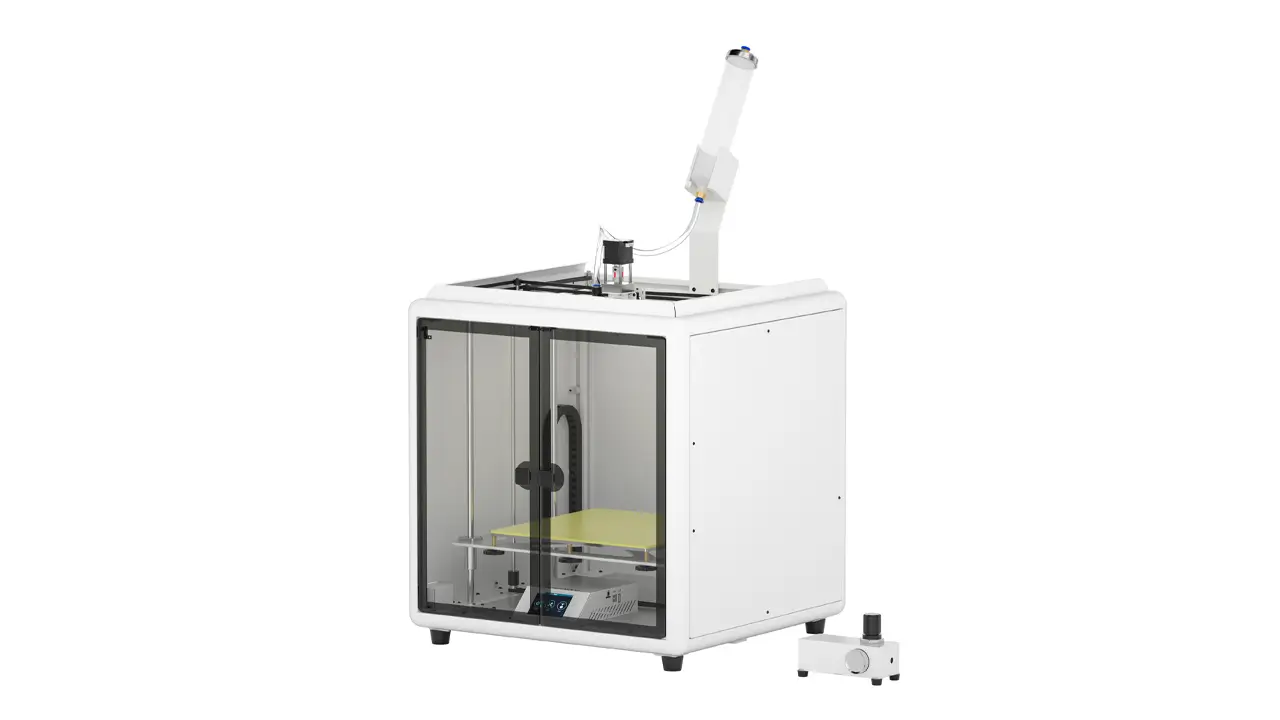
Tronxy Moore 3 Pro
Advanced CoreXY 3D printer from Tronxy. High-speed printing, auto-leveling, and robust construction for professional prototyping and reliable everyday printing.
- • CoreXY High-Speed
- • Auto Bed Leveling
- • Direct Drive Extruder
- • Silent Operation
Print Quality
Let’s talk about the results, because ceramic 3D printing lives or dies on the look of the finished piece. The Moore 3 Pro is tuned for smooth, repeatable output rather than blistering speed, which is exactly what clay work calls for.
Layer consistency benefits directly from the OSG dual-core metal guide system and the electric screw feeder. Because the feed pressure stays even, each coil of clay lands with a similar thickness, producing walls that look intentional and clean. The reported positioning accuracy of 6.25 microns in X and Y helps keep the tool path tight, so spirals and curves stack neatly.
Surface finish in clay printing has a characteristic ridged, coiled aesthetic that many artists actually prize. The Moore 3 Pro can lean into that hand-built texture or, with a smaller nozzle and thinner layers, produce a finer, more refined surface. Layer thickness is adjustable from a very fine 0.05 mm all the way up to a chunky 3.0 mm, giving you enormous creative range between delicate detail and bold, expressive lines.
Typical printing speeds run from 10 to 40 mm/s. That may sound slow compared with plastic FDM printers, but clay rewards patience: too fast and wet walls can slump before they firm up. Staying in this measured range helps tall pieces hold their shape as they rise.
Nozzle options let you dial in the look you want. The Moore 3 Pro works with nozzles in roughly the 1.2 to 2.2 mm range, with a 13G nozzle (around 1.5 mm inner diameter) as the standard and 12G to 15G choices available. A wider nozzle prints faster and gives a rustic, ropey texture; a narrower one slows things down but captures finer detail. Matching nozzle size to clay viscosity is one of the key skills you’ll develop.
Compatible Materials
A great pottery 3D printer is only as versatile as the materials it can handle, and here the Moore 3 Pro is genuinely flexible. Tronxy designed the Moore line specifically to print clay and ceramic materials in liquid or paste form, so the material list is broad and creative.
Clay is the everyday workhorse. Standard ceramic clay bodies, once mixed to the right smooth, lump-free consistency, flow beautifully through the screw feeder. Getting the water content right is important, and Tronxy’s guidance around soaking and preparing clay to the correct viscosity is worth following closely.
Ceramic slurry opens the door to a more liquid, pourable working material. Slurry can produce different textures and finishes, and it behaves differently under pressure than stiff clay, so it is a fun material to experiment with once you are comfortable with the basics.
Red porcelain is explicitly supported and gives a warm, distinctive fired color that many ceramicists love. Porcelain bodies can be finicky, but the electric feeding system helps maintain the steady pressure they need.
Liquid ceramic materials and other flowing compounds round out the list. Because the printer is built around liquid deposition, it can handle a range of “various liquid flowing materials” beyond the named favorites, which is where a lot of artistic exploration happens.
| Material | Notes |
|---|---|
| Clay | Everyday body; needs correct viscosity |
| Ceramic slurry | More liquid; varied textures |
| Red porcelain | Warm fired color; benefits from steady feed |
| Liquid ceramic compounds | Broad experimental range |
Software & Workflow
No ceramic printer review is complete without looking at the software and the day-to-day workflow, because a printer is only as friendly as the path from idea to finished object. The good news is that the Moore 3 Pro slots neatly into tools most makers already know.
Cura compatibility is a big plus. The Moore 3 Pro works with the popular Cura slicing software, so you can prepare your models using a mature, well-documented, free program. Extrusion behavior can be tuned through the slicer settings, letting you match flow rate and speed to your clay. If you have ever sliced a plastic print, the mental model carries over comfortably.
STL and OBJ are the supported file formats, which are the two most common 3D model types you’ll find anywhere online or export from design tools. That means models from libraries, sculpting apps, and CAD programs are all fair game.
USB and TF card give you two flexible ways to move files to the machine. You can connect over a USB data cable or simply drop a file onto a TF card and print standalone, whichever fits your setup. This kind of connectivity keeps the workflow simple whether or not the printer sits next to your computer.
Resume printing is a reassuring safety net. If the power cuts out or a job is interrupted, the resume-print feature lets the machine pick up where it left off once power returns, which protects long clay prints from becoming wasted material. Combined with the 3.5-inch touchscreen and Marlin firmware, the whole experience is built to be approachable for newcomers while remaining capable enough for experienced users.

AndreevWebStudio.com
Professional web development and design services. Custom WordPress sites, landing pages, e-commerce solutions, and 3D printing content creation for businesses and creators.
- • WordPress Development
- • Custom Web Design
- • E-Commerce Solutions
- • 3D Printing Content
Real Applications
One of the joys of owning a ceramic 3D printer like the Moore 3 Pro is how many different worlds it opens up. Tronxy positions the Moore line across a wide range of creative and professional uses, and it’s worth picturing where your work might fit.
Pottery is the most obvious. From bowls and cups to planters and vases, the printer produces functional and decorative pieces with a distinctive coiled character that hand-throwing cannot easily replicate.
Sculpture benefits enormously from digital fabrication. Complex forms, repeating patterns, and precise geometries that would take hours by hand can be printed reliably, freeing the artist to focus on concept and finishing.
Ceramic art and customization is a natural home for the Moore 3 Pro. Artists and designers can produce bespoke pieces tailored to a specific vision, iterating quickly on shapes that would be tedious to remake manually.
Product design teams use clay and ceramic printing for prototyping housings, tableware concepts, and decorative objects, testing form and feel before committing to production.
Education is another strong fit. Schools, universities, and pottery workshops can introduce students to the intersection of craft and technology, and the family-friendly, easy-to-use design supports learners of many ages.
Museums and restoration round out the list. Tronxy specifically highlights cultural relic restoration, where accurate reproduction of intricate details matters, along with IP and character work that brings designs to life in three dimensions.
Pros and Cons
Every machine has trade-offs, so let’s give an honest look at this Tronxy clay printer and where it shines or asks a little patience.
On the plus side, the enclosed frame helps maintain a stable printing environment and keeps the workspace cleaner. The large build volume of 330 x 330 x 380 mm gives you real creative freedom for tall and wide pieces. The electric feeding system delivers smooth, controllable material flow without forcing you to buy an air compressor to get started. The quiet 32-bit silent motherboard keeps long print sessions pleasant, and the large clay cartridges, including an optional 2000cc barrel, mean fewer refills during big jobs.
On the other side, this is a premium-priced machine that sits at the higher end of the desktop clay-printer market, so it represents a real investment. It is also a fairly heavy, substantial machine at roughly 580 x 550 x 717 mm, so you’ll want a dedicated, sturdy spot for it. And like all clay printing, there is a learning curve around preparing clay to the right viscosity, soaking and mixing it properly, and cleaning the print head after each session to prevent clogs.
| Pros | Cons |
|---|---|
| Enclosed frame | Premium price |
| Large build volume | Heavy machine |
| Electric feeding system | Clay-prep learning curve |
| Quiet 32-bit mainboard | Needs a dedicated space |
| Large clay cartridges | Regular head cleaning required |
Final Verdict
So, is the Tronxy Moore 3 Pro the right machine for you? The short answer is that it’s an excellent choice for anyone ready to take ceramic 3D printing seriously without stepping all the way into industrial equipment.
This printer earns a strong recommendation for dedicated ceramic artists who want a generous enclosed build area, for small studios producing decorative and functional pieces, for product designers prototyping in real clay, and for educational settings that want a reliable, approachable teaching tool. The combination of a large 330 x 330 x 380 mm build volume, an electric screw feeding system with an optional air-assisted upgrade, quiet electronics, and familiar Cura-based software makes it capable yet welcoming.
It is a bigger commitment than the compact Moore X, both in price and in physical size, so if you mostly make small pieces or have limited space, the Moore X remains a fantastic starting point. But if you dream of tall vases, ambitious sculptures, and longer production runs, the Moore 3 Pro gives you the headroom to keep growing.
Whichever model you choose, be prepared to invest a little time in learning clay preparation and print-head care. Master those basics, and the Moore 3 Pro rewards you with beautiful, repeatable ceramic work that blends the warmth of traditional pottery with the precision of modern digital fabrication. For makers who want a large, enclosed, thoughtfully engineered clay printer, the Tronxy Moore 3 Pro is a compelling place to plant your creative flag.
Oliver Bennett 🇬🇧
Hands down the most detailed Tronxy Moore 3 Pro review I’ve come across. The Moore X vs Moore 3 Pro comparison table made the decision really easy, and the section on LDM electric screw extrusion is clear even for a beginner. The specs display beautifully on mobile, and the honesty about the clay-preparation learning curve is refreshing. Bookmarked this site for all my future clay printer research!
↗ bestchina3dprinters.comRocío Gutiérrez 🇪🇸
Un análisis excelente de la Tronxy Moore 3 Pro. La explicación del sistema de extrusión eléctrica por tornillo y la opción de asistencia por aire es clarísima, incluso para principiantes en la impresión con arcilla. Las tablas de especificaciones se ven perfectas en el móvil y la lista de materiales compatibles es muy útil. Sin duda, este sitio se ha convertido en mi referencia favorita para impresoras 3D de cerámica.
↗ bestchina3dprinters.comخالد المطيري 🇸🇦
مراجعة رائعة وشاملة لطابعة Tronxy Moore 3 Pro للطين والسيراميك. أعجبني شرح نظام التغذية الكهربائي بالمسمار اللولبي وخيار الهواء المساعد في نسخة Pro، بالإضافة إلى المقارنة مع طراز Moore X. المعلومات دقيقة ومأخوذة من مصادر رسمية، والجداول تظهر بشكل ممتاز على الهاتف. من أفضل المواقع المتخصصة في مراجعات الطابعات ثلاثية الأبعاد. أنصح بزيارته بشدة!
↗ bestchina3dprinters.com张燕 🇨🇳
对Tronxy Moore 3 Pro黏土陶瓷3D打印机的评测非常专业、全面。文章详细对比了Moore X与Moore 3 Pro的区别,并介绍了LDM液态沉积成型和电动螺杆送料系统,内容来自官方资料,信息可靠。规格参数表格在手机上显示得非常清晰,对陶土准备的学习曲线也很坦诚。网站整体质量很高,是陶瓷3D打印爱好者不可错过的宝贵资源!
↗ bestchina3dprinters.comMathilde Leroy 🇫🇷
Un article remarquablement documenté sur la Tronxy Moore 3 Pro. Les explications sur l’extrusion électrique à vis, l’option d’assistance pneumatique et la comparaison avec la Moore X sont parfaites. Le tableau des spécifications s’affiche très bien sur mobile et la partie sur les matériaux compatibles est vraiment utile. On sent une vraie expertise, et le site reste honnête sur la préparation de l’argile. Ma référence pour l’impression céramique !
↗ bestchina3dprinters.comFelix Wagner 🇩🇪
Ein hervorragender Testbericht über den Tronxy Moore 3 Pro — sachlich, präzise und gut strukturiert. Besonders überzeugend sind die technischen Daten, der Vergleich zwischen Moore X und Moore 3 Pro sowie die Erklärung des elektrischen Schnecken-Extrusionssystems mit optionaler Luftunterstützung. Die Tabellen sind auch auf dem Smartphone bestens lesbar. Eine ausgezeichnete Ressource für alle, die sich ernsthaft mit Keramik-3D-Druck beschäftigen. Absolute Empfehlung!
↗ bestchina3dprinters.comDiscover more from bestchina3dprinters.com
Subscribe to get the latest posts sent to your email.
