1. Introduction — Why Build Volume Matters More Than You Think
If you’ve spent any time in the world of 3D printing, you already know the quiet frustration that comes with a small build plate. You design something exciting, you slice it, and then — right before you hit “print” — the software gently reminds you that your model is a few millimeters too tall or too wide to fit. Suddenly you’re chopping your creation into pieces, printing each part separately, and gluing everything back together while praying the seams line up.
This is exactly where a large format 3D printer starts to feel less like a luxury and more like a genuine time-saver. When you have room to work with, whole categories of projects open up: cosplay helmets in one piece, tall vases, functional brackets, drone frames, planters, architectural models, and oversized prototypes that would otherwise demand endless assembly. Bigger volume isn’t just about printing bigger things — it’s about printing fewer parts to make the same thing, which means fewer glue joints, fewer alignment headaches, and a stronger final result.
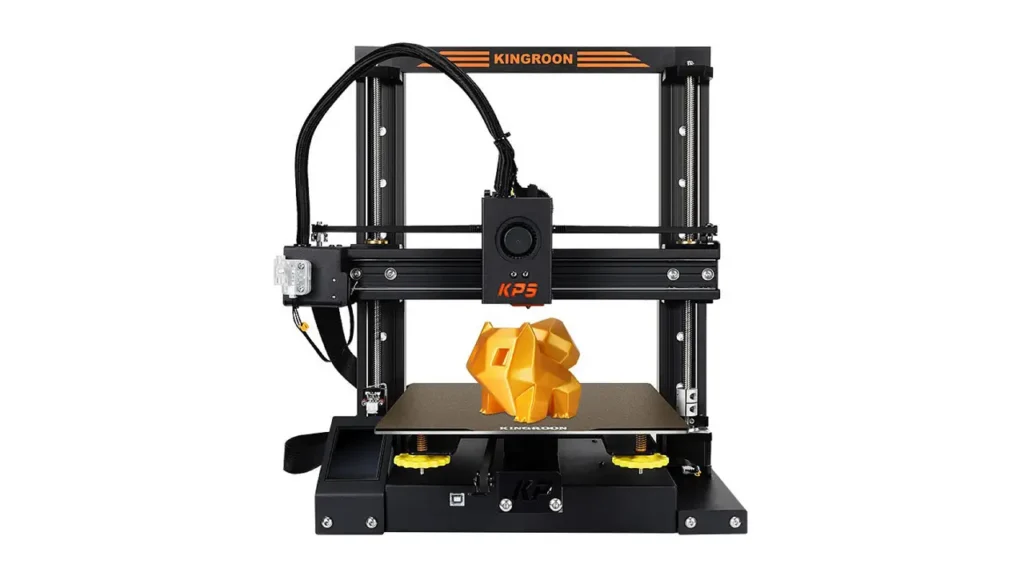
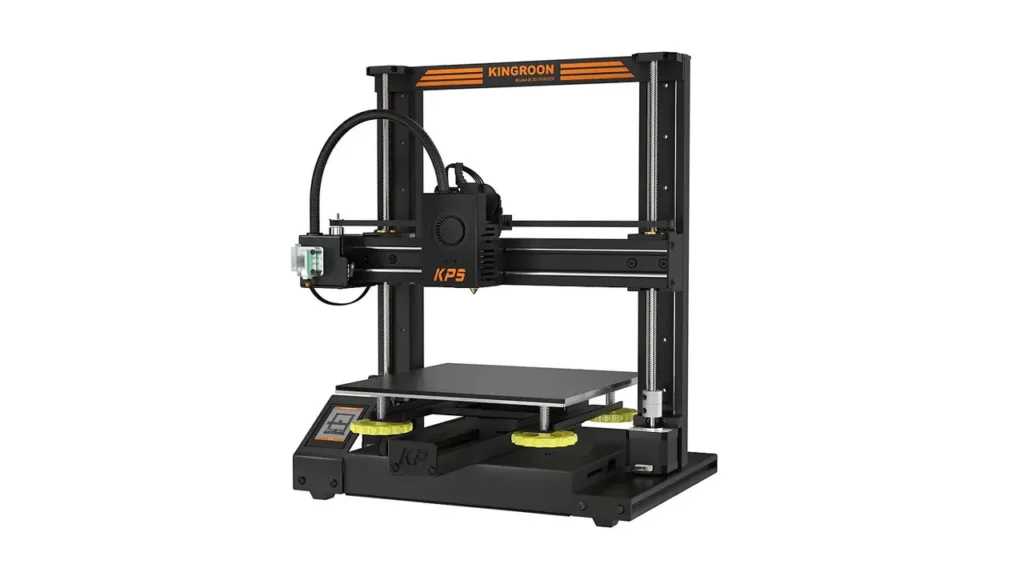
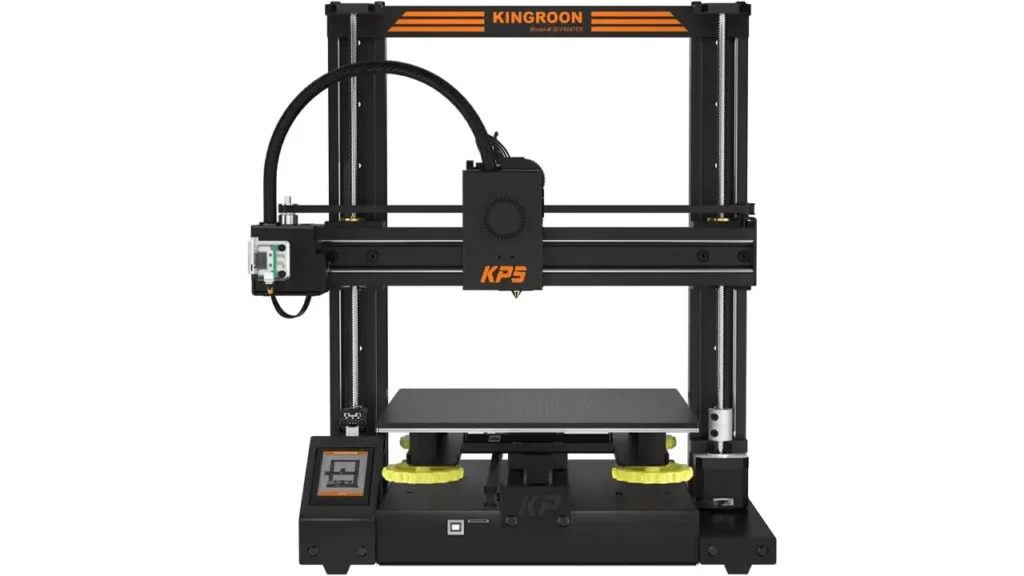
The Kingroon KP5L 3D printer steps right into this space. It’s a machine built around a generous 300×300×330 mm build area, wrapped in a set of features that you’d normally expect to pay quite a bit more for. In this friendly, introductory review, we’ll walk through everything the KP5L offers — its build volume, its dual SGR15 linear rails on the XYZ axes, its Titan direct drive extruder, its full specifications, and how it holds up in real-world printing. By the end, you’ll have a clear, honest picture of whether this large format 3D printer with 300×300×330 mm of space deserves a spot on your desk.
2. Overview of the Kingroon KP5L
Let’s start with the big picture. The Kingroon KP5L is a Cartesian-style FDM (Fused Deposition Modeling) 3D printer, meaning it builds objects layer by layer using melted plastic filament. Unlike some of Kingroon’s earlier machines, which used a cantilever design where the print head hangs off to one side, the KP5L adopts a more traditional and rigid layout similar to the well-loved Prusa i3 form factor. This “bed-slinger” arrangement, where the print bed moves back and forth along the Y-axis, is a proven design that balances stability, affordability, and ease of maintenance.
Kingroon is a Shenzhen-based manufacturer that has been producing desktop 3D printers for several years, and the KP5L represents their largest and most feature-rich machine in this class. What makes it interesting is that it doesn’t cut the corners you might expect from a budget-friendly printer. Instead of using cheaper Bowden extrusion, it comes with a direct drive setup. Instead of standard wheels riding on aluminum extrusions, it runs on linear guide rails. And instead of a single Z-axis, it uses dual lead screws for stability.
The printer arrives largely pre-assembled, shipped in a well-packed box with foam padding to protect the components during transit. Rather than requiring you to build the whole thing from scratch, the KP5L generally comes as two main sections — the top assembly (which holds the frame, the Z-axis, the X-axis, and the print head) and the base — that you bolt together, along with the LCD screen, filament holder, and cables. For newcomers, this is a reassuring middle ground: you get the satisfaction of setting up your own machine without the intimidation of assembling hundreds of tiny parts.
Right out of the box, the KP5L is designed to be approachable. It supports common file types like STL, OBJ, and G-code, works with popular slicing software, and accepts files via USB and a memory card. Whether you’re a hobbyist making your first big print or a small business looking to prototype larger parts, this Kingroon KP5L 3D printer is positioned as a friendly entry point into the large-format world.
3. Build Volume: 300×300×330 mm in Practice
The headline feature of this machine is right there in the specs: a Kingroon KP5L build volume of 300×300×330 mm. But numbers on a page don’t always translate into a gut feeling, so let’s put that into everyday terms.
A build area of 300 mm in each horizontal direction is roughly the size of a standard sheet of A4 paper laid flat — actually a touch larger. And with 330 mm of vertical clearance, you have enough height to print objects taller than a one-liter bottle. That’s a lot of room. To give you a sense of what fits: full-size helmets, large vases, tall figurines, sizable enclosures for electronics projects, and functional parts like tool holders or replacement components for household items all become single-piece prints.
It’s worth noting a small but practical detail from the official specifications: while the heated bed itself measures 310×320 mm, the usable print size is the stated 300×300×330 mm. This is completely normal — printers reserve a small margin around the edges of the bed for clips, adhesion, and safe travel of the print head. So when you’re planning a project, design to the 300×300×330 mm figure and you’ll be right at home.
The bed surface is a carborundum glass plate with a microporous structure. This is one of those quiet features that makes daily printing more pleasant. The microporous surface grips prints firmly while they’re being made, then releases them more easily once the bed cools down — which means less prying, scraping, and frustration when you’re removing a finished model. The glass also helps keep the print surface flat, giving your first layers a smooth, consistent foundation.
For anyone coming from a smaller machine, the practical impact of this large format 3D printer with 300×300×330 mm of space is hard to overstate. Projects that once required careful sectioning and reassembly now simply fit. You spend less time slicing your work into puzzle pieces and more time actually creating.
Polimerukr.com
Ukraine
3D Printing Materials & Supplies
Your trusted source for high-quality 3D printing materials in Ukraine. Wide selection of filaments, resins, and accessories for all printer types with fast local shipping.
4. Dual SGR15 Linear Rails on the XYZ Axes
Here’s where the Kingroon KP5L starts to distinguish itself from many printers in its price range. Motion quality is the beating heart of any 3D printer, and the KP5L takes it seriously by using dual SGR15 linear rails on the X, Y, and Z axes.
Let’s unpack why this matters. Many affordable printers move their print head and bed using plastic V-slot wheels that roll along aluminum extrusions. This works, and it’s inexpensive, but over time those wheels can wear, loosen, or develop play, which shows up as small imperfections in your prints. Linear rails, by contrast, use precision-machined guide rails with recirculating ball bearings inside the carriage. The result is smoother, more consistent, and more repeatable motion with far less wobble.
The KP5L uses SGR15 linear rails — a well-regarded size and type — and, importantly, it uses them across all three axes with a dual-rail arrangement. This means the moving components are supported more evenly and rigidly. When your motion system is stable and free of slop, you see the benefits directly in your prints: cleaner vertical walls, tighter dimensional accuracy, and fewer of the tiny ripples and artifacts that can creep in when a machine flexes or vibrates during printing.
For a printer aimed at newcomers and value-conscious buyers, offering SGR15 linear rails as a 3D printer motion system on the XYZ axes is genuinely generous. This is the kind of feature you’d typically expect to find on more expensive machines or as an aftermarket upgrade that enthusiasts install themselves. Getting dual linear rails on the XYZ axes as a standard feature means the KP5L starts life with a solid mechanical foundation, and that foundation pays dividends in print quality over the life of the machine.
The rails also complement the printer’s larger goal. When you’re printing big objects across a 300×300×330 mm volume, the print head and bed travel long distances, and any looseness in the motion system becomes more noticeable at that scale. Precise, well-supported motion is exactly what a large machine needs to keep quality high from corner to corner.
5. The Titan Direct Drive Extruder, Explained
The next standout feature is the extruder. The Kingroon KP5L uses a Titan direct drive extruder, a setup that carries over from Kingroon’s popular smaller model and brings real advantages, especially if you like to experiment with different materials.
To understand why this is a big deal, it helps to know the two main styles of extruders. In a Bowden setup, the motor that pushes the filament sits away from the print head, feeding the filament through a long tube. This keeps the moving print head lighter, but it introduces distance and flexibility between the motor and the nozzle, which can make precise control tricky — particularly with soft, flexible materials. In a direct drive setup, the extruder motor sits right at the print head, pushing filament directly into the hotend over a very short distance.
The Titan direct drive extruder on the KP5L pairs this direct arrangement with a gear-reduction system and a double-gear feeding mechanism. In plain language, this gives the motor more grip and more precise control over the filament. The practical payoff is excellent compatibility with a wide range of materials. According to Kingroon, the KP5L handles PLA, PETG, TPU, and even wood-infused filament well. That TPU capability is especially notable — flexible filament is notoriously difficult on Bowden machines because the soft material tends to buckle in the tube, but a direct drive extruder feeds it smoothly.
The Titan design is also relatively lightweight for a direct drive unit, which is a thoughtful choice. Heavy print heads can strain the motion system and introduce vibration, so keeping the extruder compact helps preserve the clean, precise movement that the SGR15 linear rails are working hard to provide. It’s a nice example of the machine’s components complementing one another rather than fighting each other.
For a beginner, all of this translates into fewer failed prints and more freedom to explore. You’re not locked into a single filament type. You can start with easy, forgiving PLA, then branch out into tougher PETG for functional parts or flexible TPU for phone cases, gaskets, and springy designs — all on the same machine, without swapping hardware.
6. Full Technical Specifications
Sometimes the clearest way to understand a machine is to see all its numbers in one place. Below is a summary of the Kingroon KP5L specifications drawn from official information. Take a moment to scan it — you’ll notice how many premium touches are packed into this printer.
| Technology | FDM (Fused Deposition Modeling) |
| Build Volume | 300 × 300 × 330 mm |
| Heated Bed Size | 310 × 320 mm |
| Print Accuracy | ±0.1 mm |
| Print Speed | 30 – 150 mm/s |
| Extruder | Titan direct drive, double-gear feeding |
| Motion System | Dual SGR15 linear rails on X, Y, Z axes |
| Z-Axis | Dual Z-axis lead screws with dual motors |
| Nozzle | 0.4 mm MK8 brass |
| Filament Diameter | 1.75 mm |
| Max Hotend Temp | Up to 260 °C |
| Max Bed Temp | Up to 100 °C |
| Supported Filaments | PLA, PETG, TPU, wood |
| Build Surface | Carborundum glass plate |
| Mainboard | 32-bit |
| Stepper Driver | TMC2225 (quiet) |
| Connectivity | USB, memory card |
| File Formats | STL, OBJ, G-code |
| Extra Features | Filament sensor, resume printing, all-metal frame |
Reading through that list, a pattern emerges. Nearly every line item reflects a deliberate choice toward stability and quality: the dual Z-axis lead screws keep the gantry level, the TMC2225 driver keeps the machine quiet, the filament sensor pauses printing if you run out of material, and the resume-printing feature protects long jobs from unexpected power interruptions. For a large machine that may run multi-hour prints, these safeguards are genuinely valuable.
7. Print Quality and Real-World Results
Specifications set expectations, but the real question is always: how does it actually print? Here the KP5L’s design choices come together in a satisfying way. Because it combines a rigid, Prusa-style frame with dual SGR15 linear rails on the XYZ axes and dual Z-axis lead screws, the machine moves with the kind of stability that produces clean, consistent layers even as it works across the full 300×300×330 mm area.
The stated print accuracy of ±0.1 mm is right in line with what you’d want from a machine at this level, and it’s a figure that reflects careful mechanical design rather than marketing optimism. When your motion system doesn’t flex or wobble, dimensional accuracy stays tight — holes come out round, corners stay sharp, and parts fit together as designed. This is a direct benefit of the linear rail motion system, and it’s the sort of thing you feel most keenly when printing functional parts that need to snap or screw together.
The Titan direct drive extruder contributes its own share of quality. Precise filament control means better retraction, which translates to less stringing and cleaner surfaces. And because the extruder handles flexible and specialty materials so well, you can push the machine into projects that many budget printers simply can’t manage. Printing a springy TPU phone case or a wood-filament decorative piece on the same afternoon, without changing any hardware, is exactly the kind of versatility that makes 3D printing fun.
That said, an honest review acknowledges that budget large format machines sometimes benefit from a little care during setup. Some early hands-on testers of the KP5L noted that certain adjustments — like belt tension — were worth checking before the first print. This is common across affordable printers, and it’s nothing to fear.
A quick tune-up of the belts and a careful bed leveling at the start will reward you with noticeably better results, and it’s a great way to get comfortable with how your machine works. Think of it as a fifteen-minute investment that pays off over hundreds of hours of printing. Once dialed in, this large format 3D printer with 300×300×330 mm of space is capable of producing prints that genuinely belie its budget positioning.
8. Hands-On Review: The Pros and the Trade-Offs
No machine is perfect, and part of being genuinely helpful is laying out both sides so you can make an informed decision. Here’s a balanced summary of what this Kingroon KP5L review boils down to.
| Strengths | Things to Keep in Mind |
| Large 300×300×330 mm build volume | May need a quick belt-tension check on setup |
| Dual SGR15 linear rails on all XYZ axes | Manual bed leveling requires initial patience |
| Titan direct drive for flexible filaments | Bed-slinger design needs some desk space |
| Quiet TMC2225 stepper driver | Larger prints naturally take longer |
| Dual Z-axis lead screws for stability | Best results reward a bit of tinkering |
| Filament sensor and resume printing | Assembly, though simple, is still required |
The overall impression is clear: the KP5L delivers a remarkable amount of hardware for the money. The features on the left column — linear rails, direct drive, dual Z, quiet drivers — are things you often pay a premium for. The trade-offs on the right are the kind of gentle, manageable quirks common to affordable printers, and none of them is a dealbreaker for someone willing to spend a little time learning their machine. If you enjoy the hands-on side of 3D printing, you may not even see them as downsides at all.
9. How the KP5L Compares to Other Large Printers
To understand where the Kingroon KP5L sits in the market, it helps to look at it alongside other large-volume machines that hobbyists often consider. The KP5L competes in the same general space as several well-known big-bed printers, and its defining trait is the sheer amount of premium mechanical hardware it includes at its price point.
| Feature | Kingroon KP5L |
| Build volume | 300 × 300 × 330 mm |
| Motion system | Dual SGR15 linear rails (XYZ) |
| Extruder type | Titan direct drive |
| Z-axis | Dual lead screws |
| Noise level | Quiet (TMC2225) |
| Position | High value for the feature set |
When people shop for the best large FDM 3D printer on a budget, they usually have to make compromises — either they get a big bed with a basic wheel-based motion system, or they pay a premium for linear rails on a smaller machine. What makes the KP5L stand out is that it refuses to force that trade-off. It brings the linear-rail motion, the direct drive extruder, and the dual Z-axis stability into a single large-format package. That combination is unusual in this class and is the core reason it earns a spot on shortlists for anyone weighing the best large FDM 3D printer options without a large budget.
Of course, “best” always depends on your needs. If you want a fully enclosed printer for high-temperature engineering materials, or you prioritize a touchscreen and auto-leveling out of the box, other machines may suit you better. But if your priority is maximum mechanical quality per dollar in a big-volume machine, the KP5L is a compelling contender.
10. Price, Value, and Final Thoughts
Let’s talk value, because this is where the Kingroon KP5L really tells its story. This printer has consistently been positioned as a budget-friendly large format machine, offering a feature set — linear rails on every axis, a Titan direct drive extruder, dual Z-axis lead screws, quiet stepper drivers, and a filament sensor — that would typically cost significantly more if bought piece by piece or found on higher-end printers. Because pricing changes over time and varies by region and retailer, the best move is always to check the current Kingroon KP5L price through the official store before buying, but the underlying value proposition has stayed remarkably consistent: a lot of quality hardware for a modest outlay.
So, who is this machine for? If you’re a beginner who wants to grow into larger, more ambitious projects, the KP5L gives you room to explore without immediately hitting a size ceiling. If you’re a hobbyist who loves tinkering, you’ll appreciate the premium mechanical foundation and the freedom to fine-tune. And if you’re a small maker or business needing to prototype bigger parts affordably, the combination of build volume and print quality makes a lot of practical sense.
The trade-offs are real but gentle: you’ll want to spend a little time on setup, belt tension, and bed leveling to unlock the machine’s best performance, and the bed-slinger design will ask for some desk space. But in exchange, you get a large format 3D printer with a 300×300×330 mm build volume, backed by hardware that consistently outclasses its price.
In the end, the Kingroon KP5L 3D printer is a friendly, capable, and genuinely impressive machine for anyone stepping into large-format printing. It doesn’t pretend to be a premium industrial workhorse — it aims to deliver serious capability at an accessible price, and by that measure it succeeds beautifully. If you’ve been dreaming of printing bigger, printing flexible materials, and enjoying smooth, precise motion without emptying your wallet, this is a printer well worth getting to know. Happy printing.
1. 🇺🇸 English
⭐⭐⭐⭐⭐ (5/5) Mike Thompson
“Incredible article! I’ve been researching large-format 3D printers for months, and this review of the Kingroon KP5L is the most detailed one I’ve found. The 300×300×330 mm build volume is exactly what I need for my projects. The dual SGR15 linear rails on all XYZ axes are a game-changer for print quality, and the Titan direct drive handles flexible filaments like a dream. The website has tons of useful info and great photos. Highly recommend checking it out! 🔗 https://bestchina3dprinters.com/“
2. 🇪🇸 Español
⭐⭐⭐⭐⭐ (5/5) Carlos Ramírez
“¡Excelente artículo! La información sobre la Kingroon KP5L es muy completa y bien detallada. El gran volumen de impresión de 300×300×330 mm es impresionante para su precio. Me encantó ver que incluye dobles rieles lineales SGR15 en los ejes XYZ, lo cual garantiza una precisión increíble. El extrusor Titan direct drive funciona perfectamente con filamentos flexibles. El sitio web es muy profesional y fácil de navegar. ¡Visítenlo! 🔗 https://bestchina3dprinters.com/“
3. 🇸🇦 العربية
⭐⭐⭐⭐⭐ (5/5) أحمد محمد
“مقال رائع ومفيد جدًا! طابعة Kingroon KP5L تقدم حجم بناء كبير 300×300×330 ملم وهو مثالي للمشاريع الكبيرة. ما أعجبني أكثر هو وجود قضبان خطية مزدوجة SGR15 على جميع المحاور XYZ مما يضمن دقة عالية في الطباعة. نظام Titan direct drive يعمل بشكل ممتاز مع جميع أنواع الخيوط. الموقع الإلكتروني غني بالمعلومات والصور التفصيلية. أنصح الجميع بزيارته! 🔗 https://bestchina3dprinters.com/“
4. 🇨🇳 中文
⭐⭐⭐⭐⭐ (5/5) 张明
“非常好的文章!关于Kingroon KP5L的介绍非常详细专业。300×300×330毫米的大尺寸打印平台完全满足我的需求。XYZ轴都配备双SGR15直线导轨,打印精度非常高。Titan直驱挤出机处理柔性耗材毫无压力。网站内容丰富,图片清晰,信息全面,是了解中国3D打印机的好平台。强烈推荐大家访问!🔗 https://bestchina3dprinters.com/“
5. 🇫🇷 Français
⭐⭐⭐⭐⭐ (5/5) Pierre Dubois
“Article exceptionnel ! La Kingroon KP5L est une imprimante 3D grand format impressionnante avec son volume de 300×300×330 mm. Les doubles rails linéaires SGR15 sur les axes XYZ offrent une stabilité et une précision remarquables. L’extrudeur Titan direct drive gère parfaitement les filaments flexibles. Le site web est très bien fait, avec des explications claires et des photos détaillées. Je recommande vivement cette source d’information ! 🔗 https://bestchina3dprinters.com/“
6. 🇩🇪 Deutsch
⭐⭐⭐⭐⭐ (5/5) Hans Müller
“Fantastischer Artikel! Die Kingroon KP5L ist ein hervorragender 3D-Drucker mit einem beeindruckenden Bauraum von 300×300×330 mm. Die doppelten SGR15-Linearschienen auf allen XYZ-Achsen sorgen für erstklassige Druckqualität und Stabilität. Der Titan-Direktantrieb funktioniert einwandfrei, auch mit flexiblen Filamenten. Die Website ist sehr informativ, gut strukturiert und bietet viele nützliche Details. Sehr empfehlenswert! 🔗 https://bestchina3dprinters.com/“
Discover more from bestchina3dprinters.com
Subscribe to get the latest posts sent to your email.