Qidi Tech X Plus 3
If you’ve been paying attention to the 3D printing market over the last couple of years, you’ve probably noticed one major shift: high-speed, enclosed printers are no longer the exclusive domain of expensive industrial machines. The Qidi Tech X Plus 3 is one of the clearest examples of that shift. Positioned firmly in the high-speed enclosed 3D printer segment, the X Plus 3 brings together CoreXY motion, Klipper firmware, a heated build chamber, and a generous print volume — all for a price that sits comfortably under $1,000.
This printer is aimed at hobbyists, makers, and small business owners who need more than PLA printing capabilities without having to spend thousands of dollars on an industrial machine. Whether you want to print functional ABS brackets, Nylon gears, carbon fiber reinforced parts, or just need a fast workhorse for prototyping, the X Plus 3 makes a compelling case. In this review, we’ll break down everything you need to know — specs, performance, setup, materials, price, and how it stacks up against competitors like the Bambu Lab P1P.
2. Qidi Tech X Plus 3 Review: First Impressions
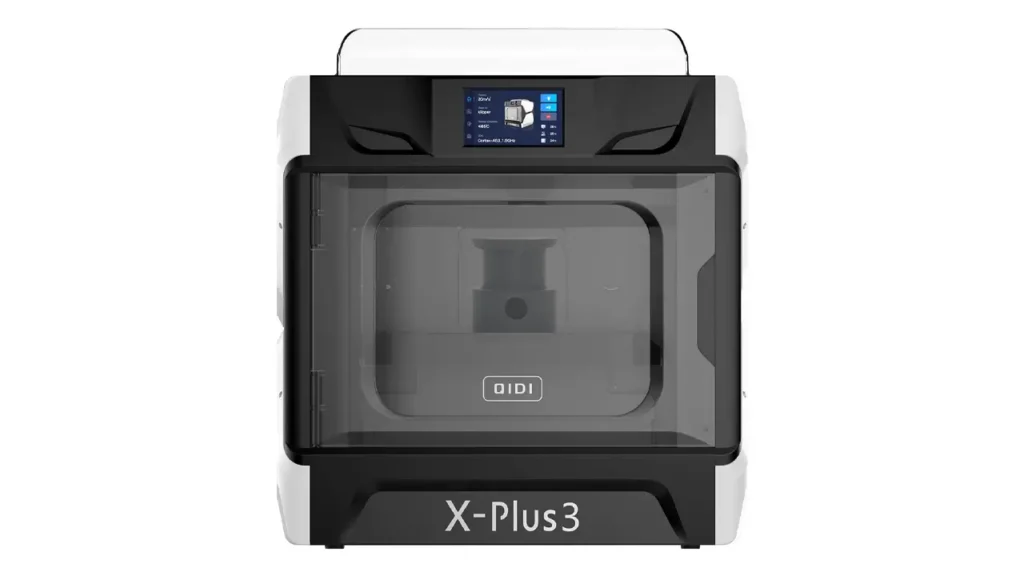
When the Qidi Tech X Plus 3 arrives at your door, the first thing you notice is the packaging. It’s well-protected and arrives approximately 95% pre-assembled, which immediately sets a positive tone. You don’t need to spend hours on assembly — mostly you’re just cutting zip ties and removing transit screws before your first print.
From a design standpoint, the X Plus 3 presents itself as a serious machine. The enclosure is rigid and well-constructed, using a metal frame reinforced with metal crossbeams at the bottom for structural resistance to deformation. The overall aesthetic is clean and functional — this is clearly designed to be a workhorse, not a showpiece, though it doesn’t look out of place on a workshop bench or in a studio.
The front-facing transparent door gives you a clear view of the build plate and print head in action, and the interior is fitted with LED lighting to improve visibility during operation. One thing worth noting: the X Plus 3 does not come with a built-in webcam. However, Qidi has thoughtfully included an external USB port so you can attach your own camera and access it through the web-based Fluidd interface.
The touchscreen is responsive and easy to navigate. The interface feels intuitive even for users who are stepping up from more beginner-friendly machines. Overall, first impressions of the Qidi Tech X Plus 3 are very positive — it feels like a machine that means business.
3. Qidi X Plus 3 Specs Breakdown
Let’s get into the numbers. The Qidi X Plus 3 specs represent a genuinely impressive package, especially at this price tier.
| Specification | Details |
|---|---|
| Motion System | CoreXY |
| Firmware | Klipper (64-bit Cortex-A53, 1.5 GHz) |
| Max Print Speed | 600 mm/s |
| Max Acceleration | 20,000 mm/s² |
| Build Volume | 280 × 280 × 270 mm |
| Max Nozzle Temperature | 350°C |
| Max Bed Temperature | 120°C |
| Chamber Temperature | Up to 65°C (active heating) |
| Extruder Type | Direct Drive, 9.5:1 gear ratio (hardened steel) |
| Max Volumetric Flow | 35 mm³/s |
| Included Nozzles | Copper alloy + Hardened steel |
| Z-Axis | Dual lead screws |
| Linear Rails | High-grade steel optical linear rails (X axis: carbon fiber rods) |
| Stepper Drivers | TMC2209 (silent) |
| Auto Bed Leveling | 16-point inductive sensor |
| Build Plate | Double-sided flexible magnetic HF plate |
| Connectivity | Wi-Fi, USB |
| Slicer Software | QIDI Studio (normal & expert mode) + Fluidd Console |
The motion system is built around CoreXY architecture, which reduces the moving mass compared to bed-slinger designs, enabling much higher speeds and accelerations without compromising print quality. The linear rail system uses high-grade hardened steel optical hollow linear axes, which deliver a 60% lower deflection error and are designed to last a lifetime with minimal maintenance. On the X axis specifically, lightweight carbon fiber rods are used to further reduce mass and allow faster movement.
The stepper drivers are the TMC2209, which are known for their silent operation — a welcome detail if your printer lives in a shared space or home office.
4. Build Volume and Printing Capabilities
The Qidi X Plus 3 build volume of 280 × 280 × 270 mm is one of the machine’s standout features. To put that in perspective, this is a generous footprint that allows you to print objects up to about 11 inches in every major direction — a size that covers the vast majority of practical projects.
This volume positions the X Plus 3 above many competitors in its class. You could comfortably print a full-sized helmet visor, drone frame components, automotive interior pieces, large cosplay props, engineering fixtures, or sizable replacement parts. For workshop and small business users, this capacity means fewer instances of having to split models into multiple parts and glue them together.
The build plate itself is a double-sided flexible magnetic HF (High-Frequency) printing plate. This type of plate is a practical feature that many experienced 3D printer users appreciate — once a print is done, you simply flex the magnetic plate and the print pops right off without tools. The adhesion during printing is strong enough for demanding materials, yet release is effortless.
The hotbed reaches up to 120°C, which is critical for engineering-grade materials that require a warm bed to prevent warping. Combined with the heated chamber (more on that shortly), this means the X Plus 3 can tackle materials that many open-frame printers simply cannot manage reliably.
5. High-Speed Performance & Klipper Firmware
This is where the Qidi X Plus 3 really earns its reputation as a high-speed 3D printer. With a rated maximum print speed of 600 mm/s and an acceleration of over 20,000 mm/s², the X Plus 3 belongs in the same performance conversation as the fastest machines currently available at the consumer level.
To put the speed into a real-world benchmark: the X Plus 3 can print a Benchy (a standard 3D printing test boat model) in just 14 to 16 minutes. For reference, a conventional FDM printer at standard settings typically takes 60 to 90 minutes for the same print. That’s a dramatic time saving that compounds significantly across long print queues.
Achieving these speeds without sacrificing print quality requires more than just a fast motion system. This is where the Klipper firmware plays a central role. The Qidi X Plus 3 runs Klipper on a 64-bit Cortex-A53 processor running at 1.5 GHz — significantly more computational power than the 8-bit or 32-bit microcontrollers found in older printer designs.
Klipper’s most important contribution to print quality at high speeds is Input Shaping (also called resonance compensation). At high accelerations, printers develop vibrations known as “ringing” or “ghosting” that show up as wave-like artifacts on the surface of prints. Klipper’s input shaping algorithm measures the printer’s resonant frequencies and mathematically compensates for them in real time, effectively canceling out these vibrations before they reach the print head. The result is clean, artifact-free surface quality even at speeds that would ruin prints on a conventional machine.
Klipper also enables Klipper Adaptive Meshing and Purging (KAMP), which dynamically adjusts the bed mesh to only the area actually being used for a print. This results in a more accurate first layer for every single print, regardless of where it’s placed on the build plate.
The volumetric flow rate of 35 mm³/s from the high-velocity 9.5:1 gear ratio direct-drive extruder ensures a steady, consistent supply of molten filament to the nozzle even at the highest speeds. This is critical — a printer that claims 600 mm/s speed but can’t deliver enough material fast enough will still produce poor quality prints. The X Plus 3’s extruder is designed to keep up.
For those who want to go deeper, Qidi also provides access to the Fluidd web console, giving advanced users full Klipper control from a browser — including the ability to edit configuration files, run macros, and monitor print progress in real time.
6. Enclosed Chamber & Engineering Materials
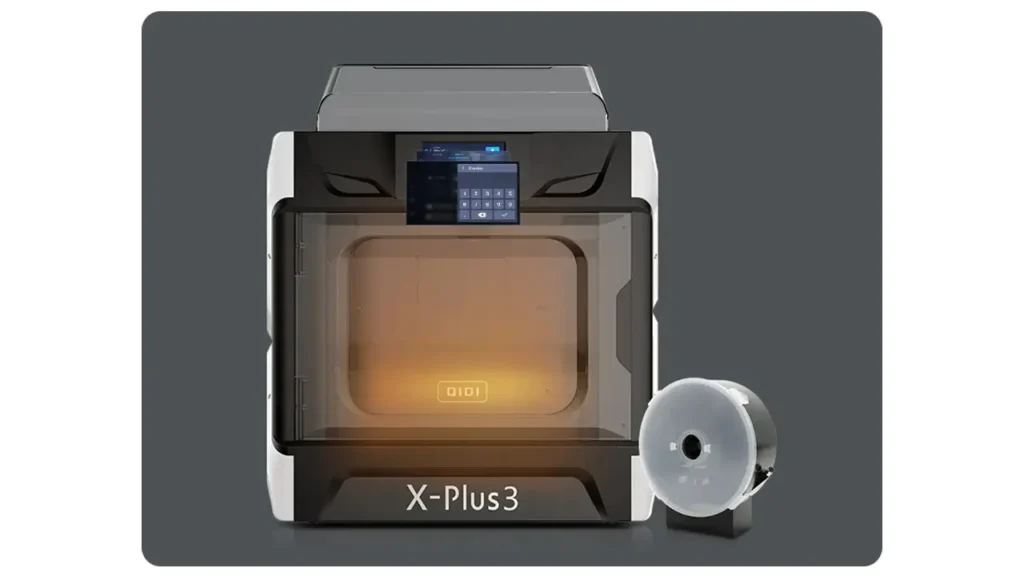
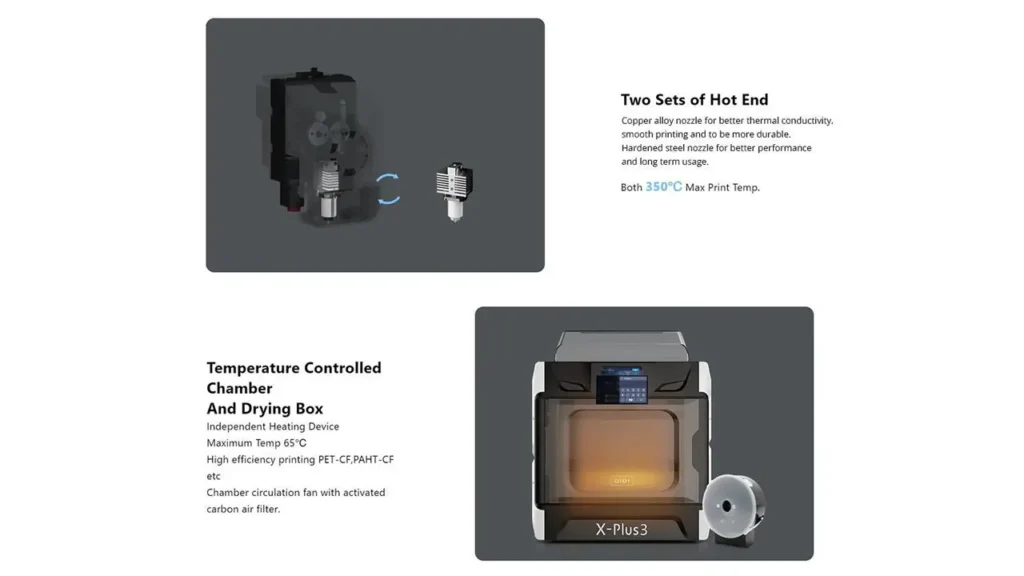
The enclosed chamber of the Qidi X Plus 3 is arguably its most important differentiating feature. Many printers in this price range offer enclosures that simply block drafts. The X Plus 3 goes further with an actively heated chamber that can reach and sustain temperatures up to 65°C.
Why does this matter? Many engineering-grade materials, particularly ABS, ASA, Nylon, and carbon fiber composites, are highly sensitive to temperature gradients. When a hot plastic part cools unevenly — as it will in an open or unheated enclosure — it warps, cracks, or delaminated between layers. A consistently warm chamber eliminates these gradients and allows the material to cool evenly and slowly, producing parts with proper crystalline structure and mechanical strength.
The X Plus 3 supports a wide range of materials:
| Material | Difficulty | Notes |
|---|---|---|
| PLA | Easy | Standard everyday printing |
| PETG | Easy–Medium | Good chemical resistance |
| ABS | Medium | Requires heated chamber; benefits greatly from 65°C chamber |
| ASA | Medium | UV resistant; outdoor applications |
| Nylon (PA) | Medium–Hard | Excellent mechanical properties; hygroscopic |
| PA-CF (Carbon Fiber Nylon) | Hard | Requires hardened steel nozzle; 350°C nozzle temp |
| PAHT-CF | Hard | High-temperature carbon fiber composite |
| PET-CF | Medium–Hard | Carbon fiber reinforced PETG; stiff and lightweight |
| PC (Polycarbonate) | Hard | Excellent impact resistance; 350°C nozzle capability critical |
| TPU | Medium | Flexible filament; direct drive extruder handles well |
Carbon fiber printing deserves special mention. The Qidi X Plus 3 comes with two nozzles: a copper alloy nozzle optimized for thermal conductivity and smooth extrusion of standard filaments, and a hardened steel nozzle rated up to 350°C for abrasive materials. Carbon fiber composite filaments are highly abrasive — they will destroy brass or soft copper nozzles within hours. The included hardened steel nozzle means you’re ready to print these advanced materials right out of the box, without purchasing accessories separately.
For users working with Nylon composites, the combination of the 65°C chamber and 350°C nozzle covers the demanding thermal profile that PAHT-CF and similar materials require for reliable inter-layer adhesion and minimal warping.
7. Qidi Tech X Plus 3 Setup and Calibration
One of the highlights of the Qidi Tech X Plus 3 setup experience is how little work it demands from the user. As mentioned, the printer ships approximately 95% assembled. The process of getting it print-ready is straightforward:
First, unbox the machine and remove the transit packaging — this means cutting zip ties that hold the motion system in place during shipping and removing a few screws securing the Z-axis components. Next, power on the machine. The touchscreen display walks you through an on-screen setup guide that covers initial checks, input shaper calibration, and bed leveling.
Auto bed leveling is handled by an inductive sensor that probes 16 points across the build surface. This creates a detailed mesh map of the bed’s actual geometry and applies compensation during printing, meaning that even if your bed isn’t perfectly flat (few are), your first layer will be consistent and well-adhered. Klipper’s Adaptive Meshing further refines this by focusing the mesh on the actual print area rather than the full bed surface.
The touchscreen interface is well thought-out with a clearly organized menu structure. For users who want more control, the Fluidd web interface is accessible over your local Wi-Fi network and provides full Klipper functionality — including the ability to monitor temperature graphs, adjust print settings mid-print, run G-code macros, and perform input shaper measurements.
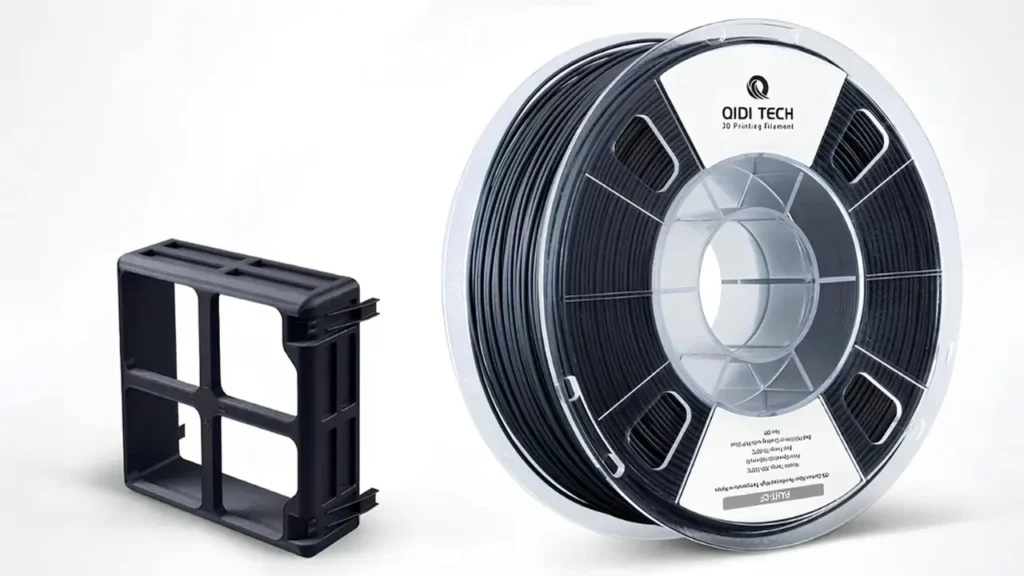
Qidi also provides QIDI Studio as their bundled slicer software, which is derived from a well-known open-source slicer and comes in both a simplified “Normal Mode” for beginners and a fully featured “Expert Mode” for advanced users. Pre-configured profiles for Qidi’s own filament range are included, which reduces the time needed to dial in settings for engineering materials.
Setup time from unboxing to first print is typically around 10 minutes (excluding bed leveling time), which is genuinely impressive for a machine of this capability level.
8. Qidi X Plus 3 Price Analysis & Value for Money
Let’s talk about the Qidi X Plus 3 price and where it sits in the current 2026 market.
The X Plus 3 has a listed retail price of $1,099 USD, though it has been available at promotional prices as low as $699 USD during sales periods. At the $699–$799 price point, it represents exceptional value. Even at full retail of $1,099, the value proposition is strong.
To understand why, consider what you’re getting:
- An actively heated enclosed chamber reaching 65°C (a feature almost exclusively found on machines costing $1,500–$3,000+)
- CoreXY motion with 600 mm/s rated speed and 20,000 mm/s² acceleration
- Klipper firmware with input shaping on a 64-bit processor
- 280 × 280 × 270 mm build volume — larger than many competitors at this price
- Two nozzles included (copper + hardened steel for abrasive materials)
- 16-point auto bed leveling
- Dual Z-axis lead screws for stability
- TMC2209 silent stepper drivers
For context, before machines like the X Plus 3 arrived on the market, a 3D printer with a genuinely heated enclosed chamber for engineering material printing would typically cost you $1,500 to $3,000 or more. The X Plus 3 democratizes this capability in a significant way.
For small businesses using 3D printing for prototyping or end-use parts in engineering plastics, the cost savings compared to outsourcing those prints can be recouped in a matter of weeks. For serious hobbyists and makers, it opens up material possibilities that were previously cost-prohibitive.
9. Qidi X Plus 3 vs Bambu Lab P1P
The Qidi X Plus 3 vs Bambu Lab P1P comparison is one of the most frequently asked about in the enthusiast community, and for good reason — both machines target the same high-speed CoreXY segment.
| Feature | Qidi X Plus 3 | Bambu Lab P1P |
|---|---|---|
| Motion System | CoreXY | CoreXY |
| Max Speed | 600 mm/s | 500 mm/s |
| Build Volume | 280 × 280 × 270 mm | 256 × 256 × 256 mm |
| Enclosure | Fully enclosed, actively heated (65°C) | Partially open (upgradeable to P1S for full enclosure) |
| Chamber Heating | Yes — up to 65°C | No (P1P is open; P1S has passive enclosure) |
| Firmware | Klipper (open, fully accessible) | Proprietary (Bambu OS) |
| Max Nozzle Temp | 350°C | 300°C |
| Included Nozzles | Copper + Hardened Steel (both included) | Stainless steel nozzle (hardened steel extra cost) |
| Webcam | Not included (USB port for DIY install) | Built-in |
| Slicer | QIDI Studio + Fluidd (open source) | Bambu Studio (proprietary ecosystem) |
| Price (approx.) | ~$699–$1,099 | ~$699 |
The comparison reveals some interesting trade-offs. The Bambu Lab P1P has a refined, polished user experience and a built-in webcam, and it benefits from Bambu’s tightly integrated ecosystem. However, the P1P is a partially open machine — it does not have a sealed heated chamber. If you want a fully enclosed Bambu printer, you need to step up to the P1S, which costs significantly more.
The Qidi X Plus 3, on the other hand, gives you a fully enclosed, actively heated 65°C chamber at a price comparable to or lower than the open P1P. For anyone who plans to print ABS, Nylon, or carbon fiber composites, this is a critical difference — the X Plus 3 is simply better equipped for engineering materials out of the box.
From a firmware perspective, Klipper on the X Plus 3 is an open, community-supported platform with extensive documentation, modifications, and flexibility. Bambu’s proprietary OS is more polished and beginner-friendly but less customizable. Advanced users who want to tune every parameter will lean toward the X Plus 3; users who want a print-and-play experience may prefer Bambu’s ecosystem.
Speed-wise, the X Plus 3’s rated 600 mm/s edges out the P1P’s 500 mm/s, though real-world quality print speeds for both machines are lower than their maximums — typically in the 150–300 mm/s range for high-quality output.
The X Plus 3 also has a larger build volume (280 × 280 × 270 mm vs. 256 × 256 × 256 mm) and a higher nozzle temperature ceiling (350°C vs. 300°C), both of which expand material and project possibilities.
10. Final Verdict
After examining every aspect of the Qidi Tech X Plus 3, the conclusion is straightforward: this is an outstanding value proposition in the high-speed enclosed 3D printer segment.
Strengths: The actively heated 65°C chamber is the headline feature and it genuinely delivers — ABS, Nylon, and carbon fiber composite prints that would fail repeatedly on an open machine come out reliably on the X Plus 3. The CoreXY motion system with Klipper firmware provides impressive speed and the input shaping system keeps print quality high. The 280 × 280 × 270 mm build volume is generous for the price category, and the inclusion of both a copper alloy and hardened steel nozzle (both rated to 350°C) means you’re ready to tackle advanced materials immediately. Setup is fast, calibration is largely automated, and the Fluidd interface gives advanced users full Klipper control.
Weaknesses: The absence of a built-in webcam is a minor inconvenience — though the external USB port workaround is functional. The Bambu ecosystem is more polished and beginner-friendly in terms of software. Some early production units reportedly had issues that Qidi addressed in revised production runs, so buyers should ensure they’re purchasing a current version.
Who is it for? The Qidi X Plus 3 is an excellent choice for:
- Enthusiast makers and hobbyists who have outgrown PLA printing and want to explore engineering materials without spending $2,000+.
- Small business owners and designers who need fast prototyping in functional materials like ABS, Nylon, or carbon fiber composites.
- Advanced users who want the flexibility and power of open Klipper firmware.
- Anyone who needs a large build volume in an enclosed, heated machine at a sub-$1,100 price point.
If you’re looking for a machine that bridges the gap between consumer hobbyist printers and genuine engineering-grade equipment, the Qidi Tech X Plus 3 deserves serious consideration. It punches well above its weight, and in 2026, it remains one of the most capable enclosed high-speed 3D printers available for under $1,000.
If you’re impressed by cutting-edge 3D printing innovation, you’ll also want to see how technology is transforming the automotive world. The new Aion V pushes electric SUV design forward with smart features and bold engineering. Explore the full review here: https://autochina.blog/aion-v-electric-suv-review-2026/
Discover more from bestchina3dprinters.com
Subscribe to get the latest posts sent to your email.