 Skip to content
 Introduction to the Sovol Zero 3D Printer
If you have been paying attention to the 3D printing world lately, you have probably noticed a compact little machine making some serious noise — the Sovol Zero 3D printer. In a market flooded with budget options and incremental upgrades, the Sovol Zero stands out as something genuinely different: a factory-built, high-performance CoreXY printer that fits on your desk, ships mostly pre-assembled, and runs Klipper firmware straight out of the box.
Think of the Sovol Zero as Sovol’s answer to a very common question in the maker community: “What if someone just built a Voron 0.2 for me and shipped it ready to print?” The Sovol Zero is essentially a factory-built alternative to the beloved open-source Voron 0.2 — a compact CoreXY machine famous for its remarkable performance, which traditionally requires users to source parts and build it themselves. Sovol handled that homework, assembled it, and shipped it with Klipper pre-installed.
This Sovol Zero review is going to walk you through everything — design, specs, setup, print quality, price, and how it stacks up against the competition. Whether you are a curious hobbyist or a seasoned maker looking for a compact speed machine, this guide has you covered. The Sovol Zero 3D printer is genuinely one of the most talked-about machines in its class right now, and after spending time with it, it is easy to understand why.
Design and Build Quality
A Compact Powerhouse
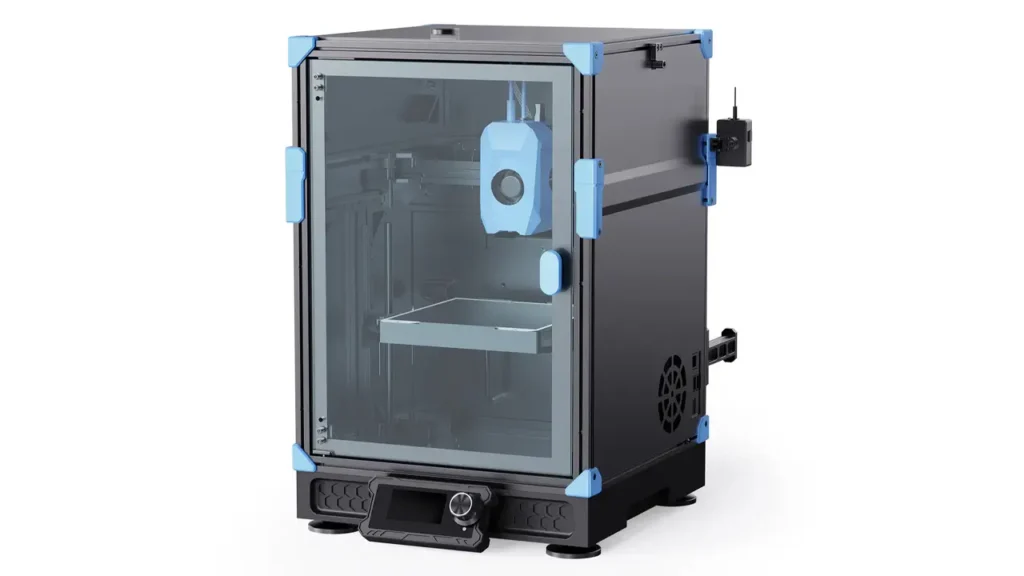
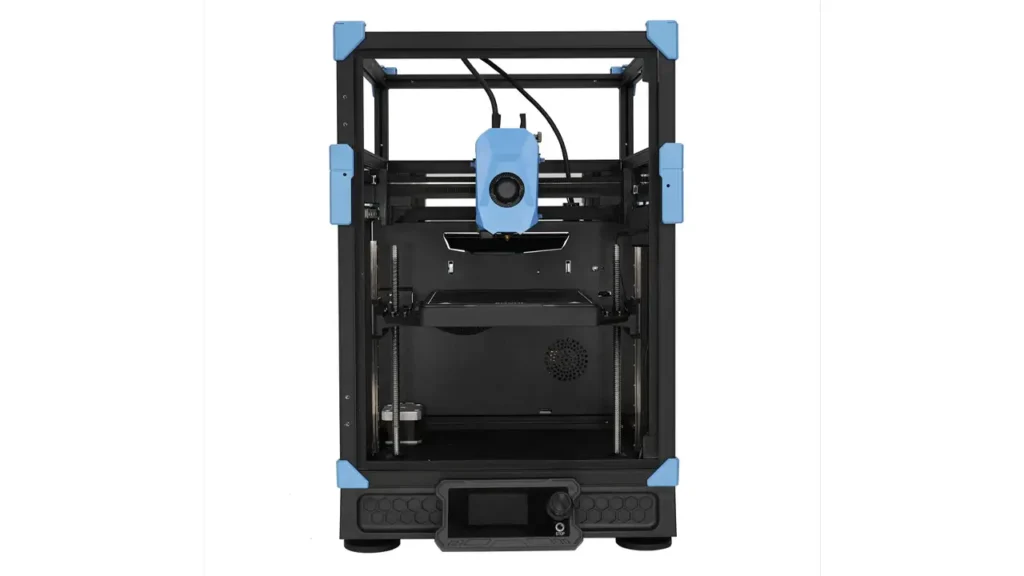
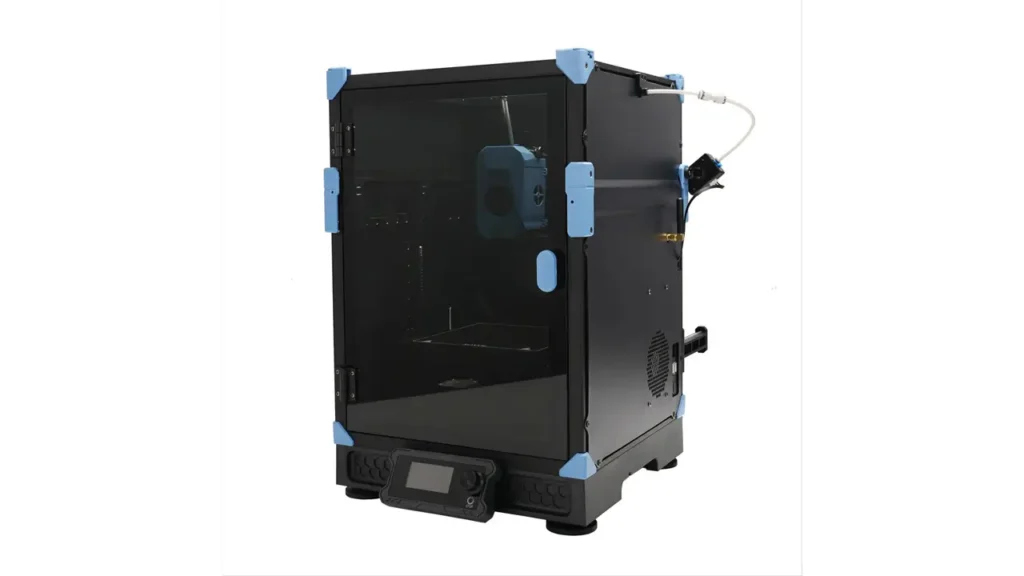
When the Sovol Zero 3D printer arrives at your door, the first thing you will notice is just how small it is. This is a genuinely compact 3D printer — and that is entirely intentional. The machine is built around an enclosed CoreXY frame that is rigid, well-finished, and immediately communicates quality. Unlike a lot of budget printers that feel like they were assembled in a hurry, the Zero feels solid and purposeful.
The fully enclosed design is not just for aesthetics. It serves a real functional purpose: maintaining consistent internal temperatures during printing, which is critical when you start working with more demanding filament types like ABS, ASA, PA, and PC. The enclosure also makes the machine more self-contained, which is great if you are working in a shared space or a home office.
All three axes — X, Y, and Z — ride on full linear rails, which is a feature you typically only find on much more expensive machines. Linear rails provide smoother, more accurate motion compared to traditional V-slot wheels, and they contribute directly to the print quality and speed stability the Zero is known for. The dual Z-axis leadscrews, driven by a single motor with a synchronizing belt, keep the gantry perfectly level throughout a print.
At the bottom corners of the frame, Sovol has fitted soft silicone damping pads that absorb vibrations generated during high-speed operation. This is a thoughtful detail that improves both print quality and user comfort — the last thing you want is a printer that rattles across your desk at 1200mm/s.
Key Features Overview
What Makes the Sovol Zero Special
The Sovol Zero compact 3D printer is loaded with features that you would expect to find on machines costing significantly more. Here is a look at the highlights that make this machine stand out from the crowd.
CoreXY Kinematics. The CoreXY motion system is the heart of the Sovol Zero. With fewer moving parts, faster acceleration, and reduced vibration compared to traditional Cartesian printers, CoreXY architecture is what enables the machine’s extraordinary speed without sacrificing precision. The Zero’s lightweight toolhead moves across the XY plane while the bed only moves on the Z axis, keeping momentum low and accuracy high.
Advanced Auto-Leveling V3.0. The Sovol Zero features a next-generation auto-leveling system that combines eddy current scanning with pressure sensing. The eddy current sensor rapidly maps the Z-axis compensation grid without physical contact, using magnetic induction for fast data acquisition. Then the pressure sensor fine-tunes the precise touchpoint, ensuring exceptional leveling precision with minimal errors. The result is a perfect first layer every single time, automatically.
350°C High-Temperature Hotend. The all-metal nozzle reaches up to 350°C, making the Sovol Zero compatible with a wide range of materials including engineering-grade filaments that most budget printers simply cannot handle. This is a genuine high-temperature hotend, not a compromise.
Built-In Camera with Remote Monitoring. The Sovol Zero includes an integrated camera compatible with Obico, which allows you to monitor prints in real time from your phone or computer, and automatically captures time-lapse footage. This is a fantastic feature for anyone who wants to keep an eye on long prints without sitting in front of the machine.
Air Filtration System. The built-in air filtration system effectively removes VOCs, particles, and fumes generated during high-temperature printing. This makes the Sovol Zero a much safer choice for indoor use, especially in home offices and shared spaces.
Open-Source Design. The Sovol Zero is fully open source, encouraging users to customize, modify, and upgrade the printer as their needs evolve. From firmware tweaks to hardware mods, the machine is built to grow with you.
Filament Runout Sensor. A practical inclusion that pauses the print when filament runs out, saving you from coming back to a failed job after a long print.
Wi-Fi and Ethernet Connectivity. Both wireless and wired network options are available, making it easy to send print jobs remotely and integrate the printer into your workflow.
Flashforge
Jinhua, China
Industrial Stability
Industrial stability with intuitive controls. Reliable mechanics, enclosed enclosures for stable ABS and nylon printing, high-quality assembly for education and professional use.
Technical Specifications
Sovol Zero Specs — Everything You Need to Know
Here is the full technical specification table for the Sovol Zero, based on official information from Sovol:
| Specification | Details |
|---|---|
| Printer Type | CoreXY, Fully Enclosed |
| Build Volume | 152.4 × 152.4 × 152.5 mm (6 × 6 × 6 in) |
| Max Print Speed | 1200 mm/s |
| Max Acceleration | 40,000 mm/s² |
| Nozzle Temperature | Up to 350°C (662°F) |
| Heated Bed Temperature | Up to 120°C (248°F) |
| Motion System | XYZ Full Linear Rails |
| Auto-Leveling | Eddy Current Scanning + Pressure Sensing V3.0 |
| Firmware | Klipper (pre-installed) |
| Build Plate | Double-sided PEI-coated flexible spring steel (magnetic) |
| Nozzle Flow Rate | 50 mm³/s high-flow |
| Connectivity | Wi-Fi, Ethernet |
| Camera | Built-in (Obico compatible) |
| Air Filtration | Yes — VOC + particle filtration |
| Filament Sensor | Yes |
| Compatible Filaments | PLA, TPU, PETG, ABS, ASA, PA, PC, PLA-CF, PETG-CF, HP-PLA |
| Open Source | Yes (hardware and firmware) |
| Assembly Required | Minimal — antenna, screen, filament sensor only |
Setup and First Use Experience
Getting the Sovol Zero Up and Running
One of the things that immediately impresses about the Sovol Zero setup experience is how little assembly is actually required. The machine ships as a complete unit — you simply need to install the external antenna, attach the screen, and connect the filament sensor. That is genuinely it. No gantry assembly, no wiring puzzles, no spending a Sunday afternoon with an Allen key and a YouTube tutorial.
Once the physical setup is done, the auto-leveling system takes over. The V3.0 eddy current and pressure-sensing system scans the bed quickly and precisely, setting up the Z-axis compensation grid without any manual intervention. The printer moves less than 0.02mm off during fast moves, which is a remarkable level of precision for an automatic system.
The Klipper firmware running on the Sovol Zero is the same vanilla Klipper you find in the enthusiast community, which means a wealth of documentation, community support, and customization options are available from day one. The machine connects over Wi-Fi or Ethernet, and you can access the Mainsail interface from any browser on your network to manage print jobs, tune settings, and check on your prints.
It is worth being honest here: the Sovol Zero is not the most beginner-friendly printer on the market in the traditional sense. Klipper firmware has a learning curve. If you have never touched a 3D printer before, there will be a period of learning and calibration. But for users who have some experience and want to step up to a high-performance machine, the setup process is genuinely smooth and the documentation from Sovol is solid.
Polimerukr.com
Ukraine
3D Printing Materials & Supplies
Your trusted source for high-quality 3D printing materials in Ukraine. Wide selection of filaments, resins, and accessories for all printer types with fast local shipping.
Print Quality and Performance
What to Expect From the Sovol Zero
The headline number — 1200mm/s — is impressive and real, but it comes with an important caveat that is worth understanding before you get too excited. Because the Sovol Zero is a compact printer with a small build volume, models with a lot of small features and tight travel paths will not give the printer enough room to accelerate to its theoretical maximum. A small, intricate figurine might see average speeds closer to 100–200mm/s. Larger, simpler shapes will come much closer to the headline figure.
That said, the Sovol Zero print quality at any realistic speed is genuinely excellent. The combination of full linear rails, CoreXY kinematics, and input shaping (which is built into Klipper) eliminates the ghosting and ringing artifacts that plague many high-speed printers. Corners are sharp, surfaces are clean, and layer lines are consistent.
The high-flow 50mm³/s nozzle, paired with a ceramic fast heater, ensures that the hotend can keep up with the print speed demands. The AC-powered heated bed reaches 120°C quickly, which dramatically reduces wait times and keeps the bed at a consistent temperature throughout long prints.
The double-sided PEI-coated spring steel magnetic build plate provides excellent adhesion for a wide range of materials and easy part removal once the plate cools and flexes. This is one of those quality-of-life features that experienced users genuinely appreciate.
For engineering materials, the Sovol Zero is in a class of its own at this price point. The 350°C hotend and 120°C bed, combined with the fully enclosed chamber that naturally retains heat, make printing PA (Nylon), PC (Polycarbonate), ABS, ASA, and carbon-fiber-infused materials straightforward. These are materials that open-frame, low-temperature budget printers simply cannot handle reliably.
One area where reviewers have noted room for improvement is the stock part cooling fan. At very high speeds, the fan arrangement can become a limiting factor for overhangs and bridging on certain filament types. The good news is that the open-source community has already developed several upgraded fan duct designs that improve airflow significantly and are freely available online.
Price and Value for Money
Is the Sovol Zero Worth the Investment?
The Sovol Zero 3D printer has a retail price of $499, with frequent sale pricing around $429. For a machine with this hardware specification, that price represents strong value — but it is a different type of value than what you get from a $199 beginner printer.
Here is a quick market comparison:
| Printer | Price (approx.) | Max Speed | Build Volume | Enclosed |
|---|---|---|---|---|
| Sovol Zero | $429–$499 | 1200 mm/s | 152 × 152 × 152 mm | Yes |
| Creality Ender 3 V3 SE | ~$199 | 250 mm/s | 220 × 220 × 250 mm | No |
| Bambu Lab A1 Mini | ~$299–$349 | 500 mm/s | 180 × 180 × 180 mm | No |
| Voron 0.2 (DIY Kit) | $300–$500+ | Up to 800+ mm/s | 120 × 120 × 120 mm | Yes |
When you look at the Sovol Zero in context, the value proposition becomes clearer. You are paying for a pre-built, fully enclosed, Klipper-ready machine with a 350°C hotend, full linear rails, and 1200mm/s capability — features that in a DIY build would cost you comparable money in parts alone, plus your time. Compared to building a Voron 0.2 from scratch, the Sovol Zero is a legitimate bargain.
Comparison with Competitors
Sovol Zero vs Ender 3 — How Do They Stack Up?
The Sovol Zero vs Ender 3 comparison is one of the most common questions from people considering both machines, and it is an interesting one because these printers are designed with very different philosophies.
The Creality Ender 3 V3 SE is the current standard-bearer for budget 3D printing. It costs around $199, offers a generous 220 × 220 × 250mm build volume, a maximum print speed of 250mm/s, and an open-frame design that is straightforward to use and modify. It runs Creality’s own firmware, has CR Touch auto-leveling, and is backed by one of the largest user communities in 3D printing. For a first printer, it is an excellent choice.
The Sovol Zero 3D printer operates in a different league entirely. It costs roughly twice as much, has a significantly smaller build volume, but delivers far superior performance metrics: 1200mm/s vs 250mm/s, a fully enclosed chamber vs open frame, a 350°C hotend vs a 260°C hotend on the Ender 3 V3 SE, and Klipper firmware vs Creality’s Marlin-based system. The Sovol Zero also includes full linear rails on all axes, which the Ender 3 V3 SE does not.
Here is a direct side-by-side comparison:
| Feature | Sovol Zero | Ender 3 V3 SE |
|---|---|---|
| Price | $429–$499 | ~$199 |
| Build Volume | 152 × 152 × 152 mm | 220 × 220 × 250 mm |
| Max Print Speed | 1200 mm/s | 250 mm/s |
| Max Nozzle Temp | 350°C | 260°C |
| Motion System | CoreXY, Full Linear Rails | Cartesian, Linear Shafts |
| Enclosure | Fully enclosed | Open frame |
| Firmware | Klipper | Marlin-based |
| Auto-Leveling | Eddy Current + Pressure Sensing V3.0 | CR Touch |
| Air Filtration | Yes | No |
| Built-in Camera | Yes | No |
| Engineering Materials | Yes (PA, PC, ABS, ASA, CF) | Limited (mainly PLA, PETG, TPU) |
| Open Source | Yes | Partially |
| Community Size | Growing fast | Very large |
The bottom line on this comparison: if you need a large build volume and want the simplest, most affordable path into 3D printing, the Ender 3 V3 SE is an excellent choice. If you want speed, engineering material capability, and a professional-grade feature set in a compact footprint, the Sovol Zero is in a completely different category.
Who Should Buy the Sovol Zero
The Right Printer for the Right Person
Understanding who the Sovol Zero beginner 3D printer is really aimed at — and who it is not — is important before you make a purchase decision.
The Sovol Zero is ideal for:
Experienced hobbyists and makers who have already gone through the basics with a simpler machine and are ready to step up to something with genuine performance capability. If you have printed on an Ender 3 or similar machine and find yourself frustrated by speed limitations or material restrictions, the Sovol Zero is a natural next step.
Engineers and product designers who need fast turnaround on functional prototypes in engineering-grade materials. The combination of speed, high-temperature capability, and compact footprint makes the Sovol Zero an outstanding desk-side prototyping tool. Many users report printing nearly one new functional part per day on this machine.
Klipper enthusiasts who want a pre-configured, well-engineered platform to tune and customize. The open-source design means the machine can grow and evolve with your skills and imagination.
Users with limited desk space who refuse to compromise on performance. The Sovol Zero mini 3D printer footprint is genuinely tiny, but the feature set is anything but.
The Sovol Zero may not be the best fit for:
Complete beginners with no prior 3D printing experience. Klipper firmware has a learning curve, and the calibration process — while not difficult for someone with context — can be confusing for someone starting from scratch. If this is your very first 3D printer, a simpler machine like the Ender 3 V3 SE will likely give you a better onboarding experience.
Users who regularly need to print large objects. The 152 × 152 × 152mm build volume is intentional and serves the machine’s speed goals, but if your projects frequently demand a 250mm+ build dimension, you will need a different tool for those jobs.
Anyone who wants a completely hands-off, push-button experience similar to the Bambu Lab ecosystem. The Sovol Zero rewards users who invest time in learning and calibration. It is a tool for people who enjoy understanding how their machines work.
Final Verdict
Is the Sovol Zero 3D Printer Worth It in 2026?
After working through everything — design, specs, setup, performance, price, and competition — the Sovol Zero 3D printer earns a strong recommendation, with one clear condition: you need to be the right kind of user for it.
The core value proposition is compelling and well-executed. You are getting a fully enclosed, CoreXY, Klipper-ready machine with a 350°C hotend, AC-heated bed, full linear rails, advanced auto-leveling, built-in camera, air filtration, and 1200mm/s capability in a box you can set up in under an hour. That combination of hardware quality, software sophistication, and print performance at the $429–$499 price point is genuinely impressive.
The compromises are real but manageable. The build volume is small. The learning curve for Klipper is real. The stock cooling fan could be improved. But every single one of these limitations has a clear path to resolution — whether through smart project planning, community-developed upgrades, or spending time with Klipper documentation.
For advanced hobbyists, engineers, rapid prototypers, and Klipper enthusiasts who value control, material versatility, and genuine print performance over plug-and-play simplicity, the Sovol Zero 3D printer is one of the best investments you can make in 2026. It is a serious machine with serious capability in a surprisingly small footprint, and it continues to be one of the most compelling options in its class.
If you are still early in your 3D printing journey, bookmark this machine and revisit it in six months — once you have some experience under your belt, you will appreciate everything the Sovol Zero has to offer even more.
🇺🇸 John Miller — ⭐⭐⭐⭐⭐
Great article on the Sovol Zero! Clear structure, real insights, and no fluff. The site bestchina3dprinters.com is now my go-to for 3D printer reviews.
🇪🇸 Carlos Ramírez — ⭐⭐⭐⭐⭐
Excelente análisis del Sovol Zero, muy útil para principiantes. El sitio bestchina3dprinters.com tiene contenido claro y bien organizado.
🇸🇦 Ahmed Al-Farsi — ⭐⭐⭐⭐⭐
مراجعة رائعة لطابعة Sovol Zero، معلومات دقيقة وسهلة الفهم. أنصح بزيارة موقع bestchina3dprinters.com للمزيد.
🇨🇳 Li Wei — ⭐⭐⭐⭐⭐
关于 Sovol Zero 的评测非常专业,内容详细且实用。推荐访问 bestchina3dprinters.com 获取更多信息。
🇫🇷 Pierre Dubois — ⭐⭐⭐⭐⭐
Très bon article sur la Sovol Zero, bien structuré et informatif. Le site bestchina3dprinters.com est une excellente ressource.
🇩🇪 Lukas Schneider — ⭐⭐⭐⭐⭐
Top Review zur Sovol Zero! Verständlich und hilfreich. bestchina3dprinters.com ist definitiv eine empfehlenswerte Seite.
Discover more from bestchina3dprinters.com
Subscribe to get the latest posts sent to your email.
