 Skip to content
 1. Introduction: Meet the Mastrex LPBF-250 — A Serious Metal 3D Printer Industrial Solution
If you’ve been watching the additive manufacturing space, you already know that metal 3D printing has been quietly transforming how engineers, manufacturers, and innovators approach production. For years, industrial-grade metal printing was firmly in the territory of large OEMs and well-funded R&D departments. That’s changing — and the Mastrex LPBF-250 is one of the clearest signals of that shift.
The Mastrex LPBF-250 is a metal 3D printer industrial platform designed to bring high-performance laser powder bed fusion capabilities to a broader range of businesses. Whether you’re a contract manufacturer looking to expand your service offering, a mid-sized aerospace supplier exploring digital production, or an engineering firm that’s tired of waiting weeks for metal prototypes — this machine was built with you in mind.
What makes this printer interesting isn’t just its specs (though we’ll get into those in detail). It’s the positioning: serious industrial capability without the astronomical price tag of top-tier enterprise systems. It sits at a smart intersection of accessibility and performance, and that’s a combination the market has been waiting for.
Throughout this review, we’ll walk you through everything you need to know — from the underlying technology and build volume, to real-world applications, cost considerations, and who this machine is ultimately built for. Let’s dig in.
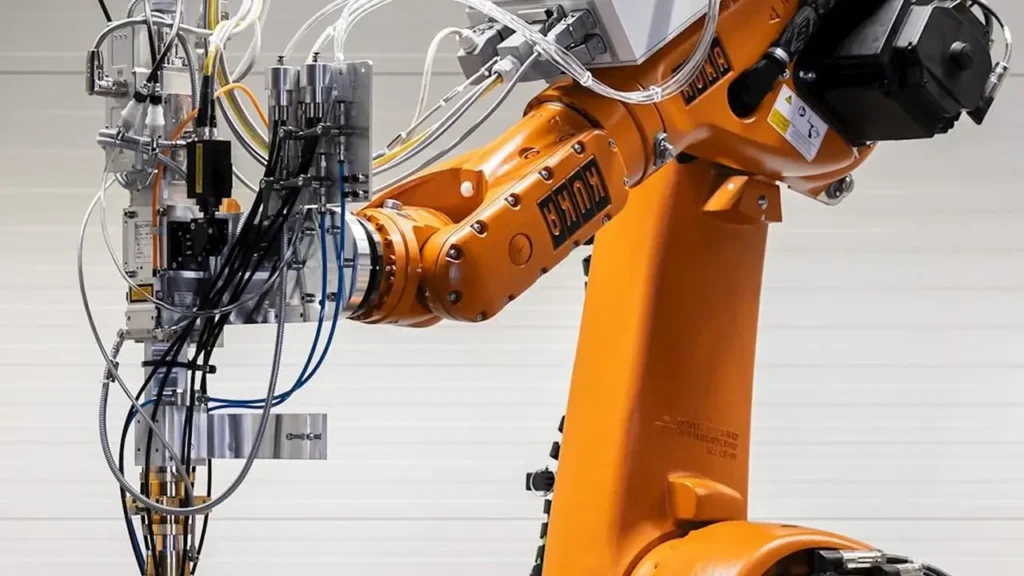
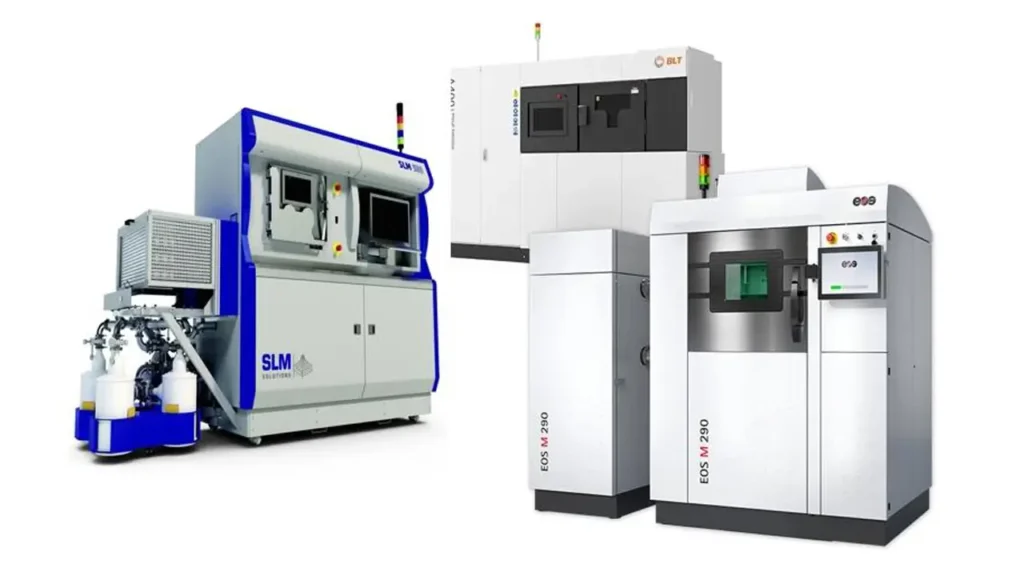
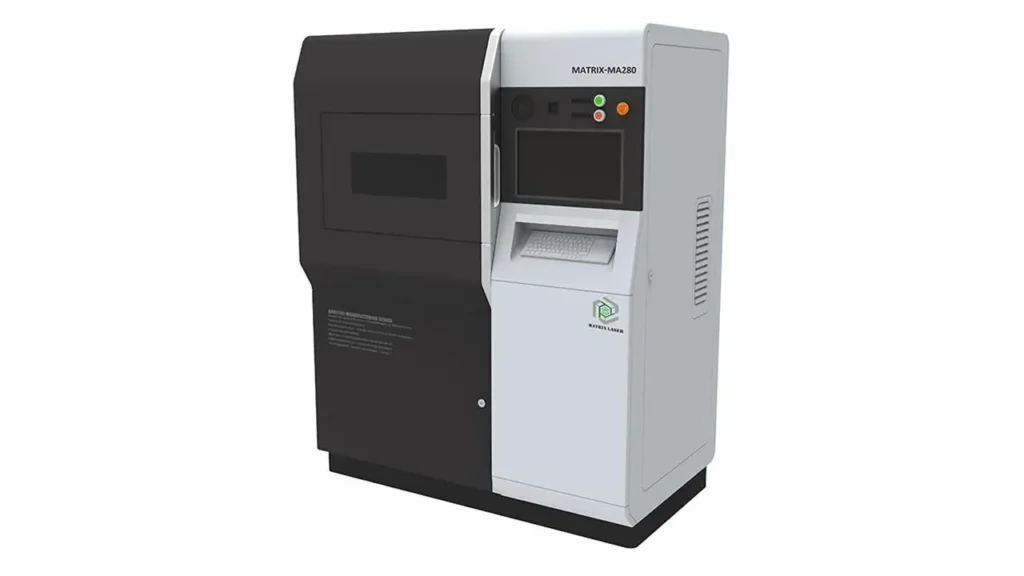
2. What Is LPBF Technology? Understanding the Laser Powder Bed Fusion Printer
Before we evaluate the Mastrex LPBF-250 as a product, it helps to understand what makes it tick. LPBF stands for Laser Powder Bed Fusion — and it’s one of the most precise and capable metal additive manufacturing processes available today.
Here’s how it works: a thin layer of fine metal powder is spread evenly across a build platform. A high-powered laser then selectively melts and fuses the powder in the exact pattern defined by your CAD file. Once that layer is complete, the platform lowers slightly, a fresh layer of powder is spread on top, and the process repeats — layer by layer — until your part is fully formed.
The result is a dense, structurally sound metal component that can match or exceed the properties of traditionally manufactured parts. Unlike binder jetting (which requires a separate sintering step) or directed energy deposition (which has lower resolution), LPBF metal 3D printers produce parts in a single continuous process with excellent surface finish and dimensional accuracy.
What sets a high-quality LPBF metal 3D printer like the LPBF-250 apart from earlier or lower-tier machines is the combination of:
- Laser precision and stability — consistent energy delivery across the entire build area
- Powder handling systems — controlled atmosphere (usually inert gas like argon or nitrogen) to prevent oxidation
- Thermal management — ensuring uniform temperatures to reduce residual stress and warping
- Software integration — real-time monitoring, parameter control, and process simulation
LPBF technology has been validated in the most demanding industries on earth — aerospace, defense, medical implants, and motorsport. The Mastrex LPBF-250 brings this proven process to a practical, right-sized format.
3. Build Volume and Production Capacity: 250×250×300 mm of Industrial Possibility
One of the first questions any buyer asks about an industrial metal 3D printer is: how big can it print?
The Mastrex LPBF-250 offers a build envelope of 250 × 250 × 300 mm (X × Y × Z). At first glance, this might seem modest compared to some large-format industrial machines — but context is everything.
For the vast majority of metal 3D printing applications — from aerospace brackets and turbine components to medical implants and precision tooling inserts — parts fall well within this build volume. In fact, many of the highest-value components produced via LPBF are relatively small, highly complex geometries that benefit enormously from the resolution and detail this technology enables.
The 250×250 footprint also allows for efficient nesting of multiple parts in a single build. Rather than printing one component at a time, operators can populate the build plate with dozens of smaller parts simultaneously — significantly improving throughput and reducing cost per part.
| Parameter | Specification |
|---|---|
| Build Volume (X × Y × Z) | 250 × 250 × 300 mm |
| Build Platform Area | 250 × 250 mm |
| Maximum Build Height | 300 mm |
| Layer Thickness Range | 20 – 100 µm |
| Scan Speed | Up to 7 m/s |
The 300 mm Z-height is particularly noteworthy. This vertical depth allows for tall structural components — think turbine housings, heat exchangers, and medical device frames — that would otherwise require redesigning or splitting into multiple pieces. For production engineers, that kind of flexibility is invaluable.
4. The Entry-Level Industrial Segment: Why the LPBF-250 Is Accessible
The phrase “entry level metal 3D printer” might raise an eyebrow — after all, these machines are still a significant capital investment. But “entry-level” in the industrial metal printing world is a relative term, and an important one.
Enterprise-class LPBF systems from major OEMs can cost anywhere from $500,000 to over $1.5 million USD when you factor in installation, training, and consumables infrastructure. For large corporations with dedicated AM departments, that’s justifiable. For everyone else — the mid-market manufacturer, the engineering service bureau, the university research lab — it’s often a non-starter.
The Mastrex LPBF-250 is designed to change that equation. By targeting a more focused build volume, streamlining certain ancillary systems, and optimizing the machine architecture for practical usability rather than pure maximum performance, Mastrex has produced a system that brings genuine industrial capability to a more accessible price point.
This doesn’t mean compromises on quality where it counts. The core LPBF process — laser precision, powder management, inert atmosphere control — remains at an industrial standard. What changes is the scale and surrounding ecosystem, making it realistic for smaller teams to operate, maintain, and integrate into existing workflows.
For businesses that have been doing metal 3D printing via service bureaus and are ready to bring production in-house, the LPBF-250 represents a logical and financially defensible step.
Flashforge Creator 5
Series
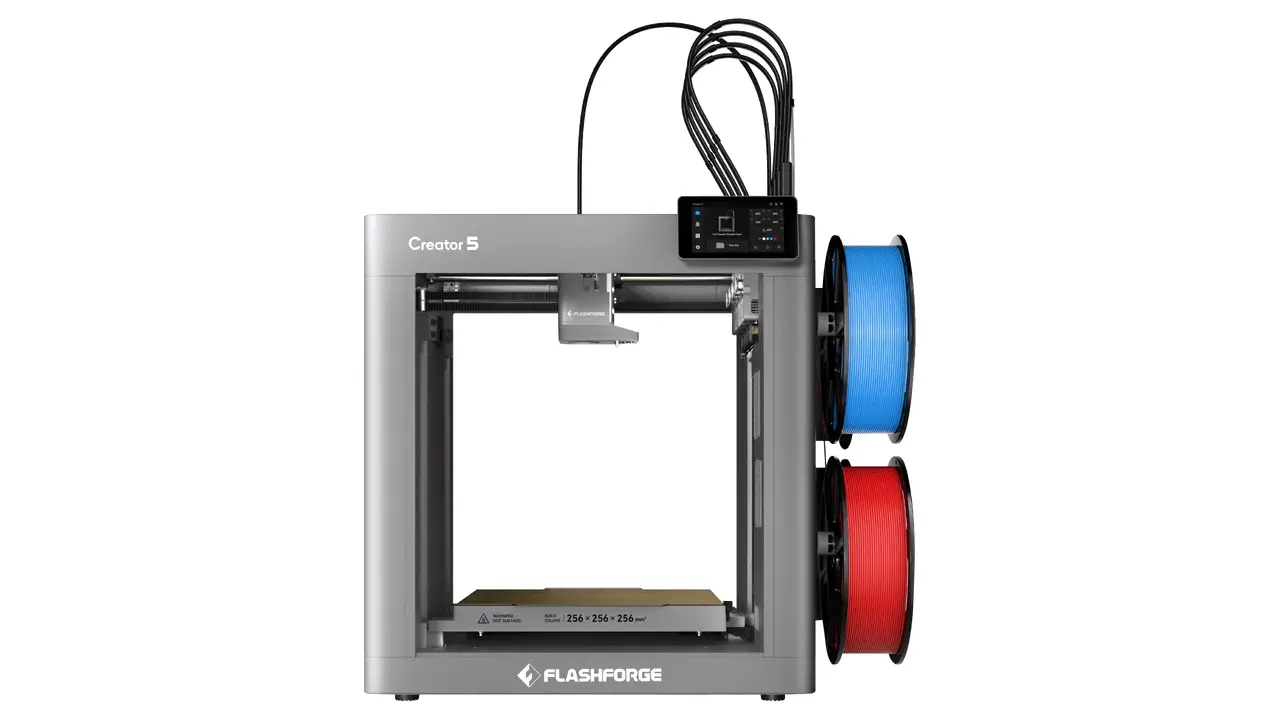
Creator 5
Professional dual extrusion 3D printer with IDEX system, auto-leveling, and enclosed chamber for reliable multi-material printing.
- • Independent Dual Extrusion (IDEX)
- • Auto Bed Leveling
- • Enclosed Design
- • WiFi Connectivity
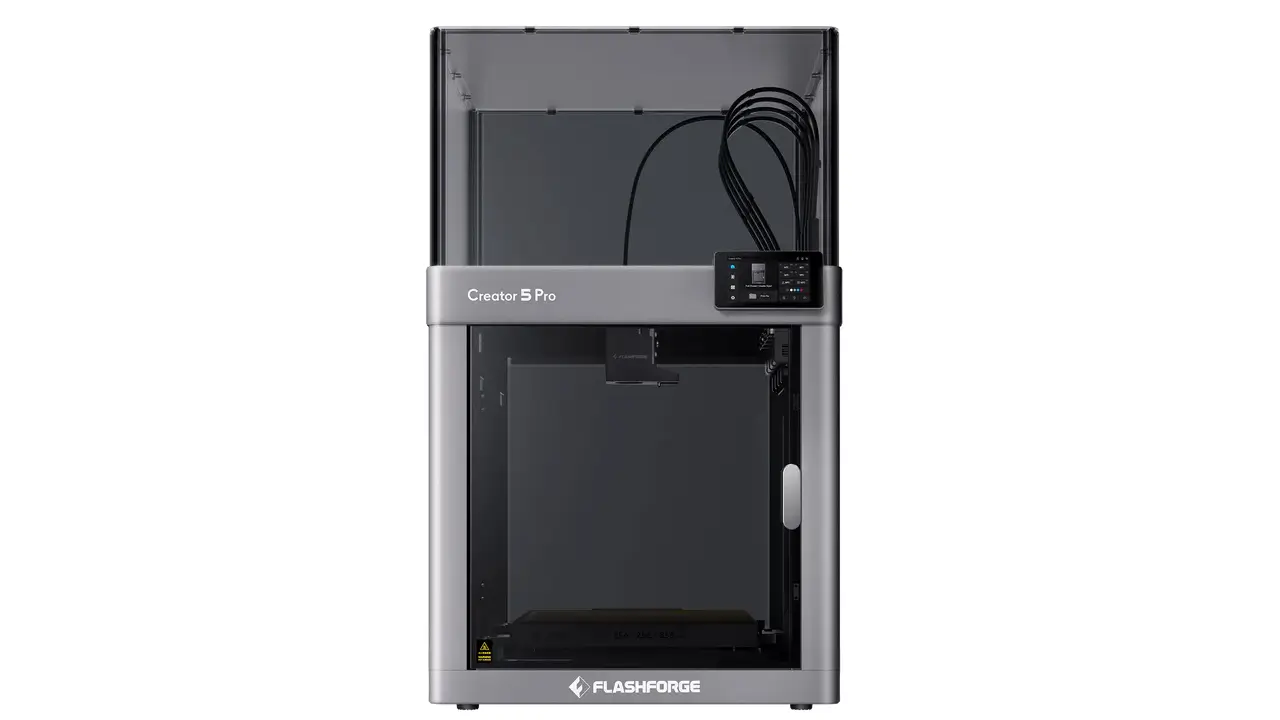
Creator 5 Pro
Advanced professional model with enhanced features, higher temperature hotend, and premium components for demanding applications.
- • 300°C High-Temp Hotend
- • Advanced IDEX System
- • Filament Runout Sensor
- • Power Loss Recovery
5. Core Features and Technical Specifications
At its heart, the Mastrex LPBF-250 is a well-engineered metal additive manufacturing machine. Let’s look at the core technical features that define its performance profile.
Laser System The LPBF-250 uses a fiber laser — the industry standard for LPBF applications. Fiber lasers offer excellent beam quality, long operational lifespans, and precise energy control. The laser spot size and power are calibrated for a range of metal powders, enabling both fine detail work and higher-throughput builds depending on parameter selection.
Compatible Materials This is where the machine really shines for industrial users. The LPBF-250 supports a wide range of engineering-grade metal powders:
| Material Category | Examples | Key Applications |
|---|---|---|
| Stainless Steel | 316L, 17-4 PH | Medical, food processing, general engineering |
| Tool Steel | H13, M2 | Injection molds, die casting inserts |
| Titanium Alloys | Ti-6Al-4V | Aerospace, medical implants |
| Aluminum Alloys | AlSi10Mg | Lightweight structural parts, automotive |
| Nickel Superalloys | Inconel 625, 718 | High-temperature aerospace, turbines |
| Cobalt Chrome | CoCrMo | Dental prosthetics, orthopedic implants |
Precision and Surface Quality The LPBF-250 achieves layer thicknesses as fine as 20 microns, enabling excellent surface finishes and tight dimensional tolerances — typically ±0.1 mm or better depending on geometry and material. For most functional metal parts, this level of precision is fully production-ready without extensive post-processing.
Atmosphere Control An integrated inert gas management system maintains a controlled argon or nitrogen atmosphere inside the build chamber. This is non-negotiable for reactive metals like titanium and aluminum, and it’s handled automatically to minimize operator intervention.
6. Real-World Applications: Where the LPBF-250 Delivers Value
The best way to understand the practical value of metal 3D printing applications is to look at what’s actually being produced with LPBF technology across industries — and then map those use cases onto what the LPBF-250 can realistically handle.
Aerospace and Defense This sector has been an early and enthusiastic adopter of LPBF for good reason. Brackets, housings, fuel nozzles, heat exchangers, and structural inserts with complex internal channels can be produced in a fraction of the time compared to traditional subtractive methods. The LPBF-250’s support for titanium and nickel superalloys means it’s compatible with aerospace-grade material requirements.
Automotive and Motorsport From lightweight suspension components and gearbox parts to custom intake manifolds and brake system hardware, the automotive world demands precision and material performance. LPBF printing enables topology-optimized parts — components that are redesigned by software to use the minimum material needed to meet performance requirements, resulting in significant weight savings.
Medical and Dental Patient-specific implants, surgical instruments, and dental prosthetics are a natural fit for LPBF. The LPBF-250’s compatibility with biocompatible materials like Ti-6Al-4V and CoCrMo, combined with its dimensional accuracy, makes it suitable for regulated medical device production workflows.
Tooling and Mold Making Injection mold inserts with conformal cooling channels — cooling passages that follow the contour of the mold cavity rather than running in straight lines — can dramatically reduce cycle times in plastic injection molding. This is one of the most commercially mature metal 3D printing applications, and the LPBF-250 is well-suited to it.
Industrial Spare Parts and MRO Rather than warehousing thousands of metal spare parts, manufacturers can store digital files and print on demand. The LPBF-250 enables this kind of digital inventory model, reducing storage costs and lead times for critical components.
7. Cost Analysis and ROI: Understanding the Metal 3D Printer Price Equation
Let’s talk about the question that’s probably been on your mind since the beginning: what does all of this cost, and is it worth it?
The metal 3D printer price discussion is nuanced. The LPBF-250 is positioned as an affordable metal 3D printer relative to enterprise-tier systems — but it’s still a capital investment that requires clear ROI thinking.
Acquisition Costs Industrial LPBF systems at this tier are typically priced in the range of $150,000 to $350,000 USD, depending on configuration, included peripherals (powder handling, post-processing equipment), and regional pricing. The LPBF-250’s exact pricing should be confirmed directly with Mastrex, as configurations vary.
Operating Costs Key ongoing costs include:
- Metal powder (ranges from ~$50–$600/kg depending on material)
- Inert gas (argon or nitrogen) consumption
- Laser servicing (fiber lasers have long lifespans, typically 50,000+ hours)
- Post-processing (heat treatment, support removal, surface finishing)
- Software licensing
ROI Drivers
| ROI Factor | Traditional Manufacturing | LPBF-250 (Metal 3D Printing) |
|---|---|---|
| Prototype Lead Time | 4–12 weeks | 1–5 days |
| Tooling Cost | $5,000–$100,000+ | None |
| Design Iteration | Expensive, slow | Fast, file-based |
| Complex Geometry | Often impossible | Standard capability |
| Material Waste | High (subtractive) | Low (powder reuse) |
| Part Consolidation | Assembly required | Print as single part |
For businesses currently outsourcing metal 3D printing to service bureaus, a realistic break-even analysis often shows payback periods of 18–36 months depending on volume. For companies replacing emergency machining orders or tool making, the savings can be even faster.
The key insight: the LPBF-250 doesn’t have to replace all of your manufacturing — it just needs to handle the work where it outperforms alternatives. Even at partial utilization, machines at this price point can justify their cost.
8. Advantages Over Traditional Manufacturing: Why Metal 3D Printing Technology Is Changing the Game
Let’s be direct: CNC machining and metal casting are mature, capable technologies. They’re not going away. But metal 3D printing technology offers distinct advantages that are impossible to replicate with subtractive or formative manufacturing — and those advantages are increasingly relevant for modern production needs.
Geometric Freedom CNC machining is constrained by tool access — a drill or mill can only reach surfaces from certain angles. Casting requires draft angles, parting lines, and cores for internal features. LPBF has none of these constraints. Internal channels, lattice structures, undercuts, and organic geometries are all produced in the same process as simple flat surfaces.
Part Consolidation Consider an assembly that currently consists of 12 separate machined and welded components. With LPBF design freedom, that assembly can often be consolidated into 1–3 parts — reducing assembly labor, eliminating weld joints (potential failure points), and cutting inventory complexity.
Speed to First Part There’s no tooling to design, procure, or validate. The moment your CAD file is ready and your build parameters are set, you can start printing. For prototypes and low-volume production, this speed advantage is enormous.
Material Efficiency Subtractive manufacturing starts with a block of material and removes what you don’t need — sometimes discarding 80–90% of the original billet. LPBF uses only the powder that becomes the part, with unused powder recycled back into the process.
Customization at No Extra Cost Want to change a feature between units? Update the file. There’s no additional tooling cost, no retooling downtime. This is transformative for medical devices (patient-specific implants), aerospace (design iteration), and industrial equipment (custom configurations).
Polimerukr.com
Ukraine
3D Printing Materials & Supplies
Your trusted source for high-quality 3D printing materials in Ukraine. Wide selection of filaments, resins, and accessories for all printer types with fast local shipping.
9. Industrial Integration and Workflow: Connecting the LPBF-250 to Your Production Environment
Buying a machine is only part of the story. Understanding how industrial 3D printing solutions fit into real manufacturing environments is what separates successful implementations from expensive experiments.
Software Ecosystem The LPBF-250 integrates with industry-standard build preparation software. This includes:
- CAD/CAM integration — Import files from SolidWorks, CATIA, Siemens NX, and other major platforms via standard formats (STEP, STL, 3MF)
- Build preparation — Automated support generation, part orientation optimization, and build plate nesting
- Process monitoring — Real-time laser and melt pool monitoring helps catch build anomalies early, reducing material waste and failed builds
- Quality documentation — Build logs and process data capture support traceability requirements in regulated industries
Post-Processing Workflow LPBF parts require post-processing steps before they’re fully finished components. A typical workflow looks like:
- Stress relief / heat treatment — Reduces residual stresses built up during printing
- Part removal — Wire EDM or band saw separates parts from the build plate
- Support removal — Manual or machining-based removal of support structures
- Surface finishing — Bead blasting, machining, or polishing depending on surface requirement
- Inspection — CMM measurement, CT scanning, or dye penetrant testing as required
The LPBF-250 is designed to integrate with standard post-processing equipment, and Mastrex provides process documentation to help teams establish consistent, repeatable workflows from day one.
Automation and Scalability For higher-volume users, the machine’s design supports integration with automated powder handling systems and build plate exchange workflows — allowing continuous operation with minimal manual intervention. This is how serious production environments maximize machine utilization and minimize per-part costs.
Team Requirements Running an LPBF system isn’t a plug-and-play experience — but it’s far more accessible than it was a decade ago. A typical operator needs:
- Basic understanding of metal powder safety protocols
- Familiarity with build preparation software
- Knowledge of the specific materials being processed
Mastrex offers training programs and application engineering support to help new operators get up to speed efficiently.
10. Final Verdict: Who Should Buy This Metal 3D Printer Industrial Platform?
After walking through everything the Mastrex LPBF-250 has to offer, the key question comes back to fit: is this the right metal 3D printer industrial solution for your business?
Ideal Buyers
The LPBF-250 is purpose-built for a specific and growing segment of the manufacturing world. It’s the right choice if you’re:
- A contract manufacturer or service bureau looking to add metal 3D printing to your capabilities without the capital exposure of a flagship enterprise system
- A mid-sized aerospace or automotive supplier that wants to bring prototype and low-volume production in-house to reduce lead times and dependency on external vendors
- A tooling or mold shop interested in conformal cooling capabilities to improve your injection molding cycle times and win more competitive business
- A medical device manufacturer exploring patient-specific metal implants or surgical instrumentation with titanium or cobalt chrome
- A university or research institution that needs a genuinely industrial-grade LPBF platform for applied materials research and student training
- A manufacturing company that has been consistently spending $50,000+ per year on metal 3D printing service bureau work and wants to evaluate in-house production economics
Who Might Wait
If your metal printing needs are primarily very large parts (300+ mm in any dimension), very high-volume production that justifies multi-laser enterprise systems, or purely simple geometries where CNC is faster and cheaper — the LPBF-250 may not be your best fit right now.
The Bottom Line
The Mastrex LPBF-250 is a thoughtfully engineered, industrially capable LPBF platform that occupies a genuinely valuable position in the market. It’s not trying to compete with multi-laser flagship machines on raw throughput — it’s offering a proven, precise, and more accessible entry point into real metal additive manufacturing.
For businesses that are serious about metal 3D printing but haven’t been able to justify the cost or scale of the top-tier platforms, the LPBF-250 deserves serious evaluation. It brings 250×250×300 mm of production-ready build volume, broad material compatibility, industrial-grade process control, and a workflow designed for practical use — all at a price point that makes genuine ROI calculations possible.
Metal additive manufacturing is no longer a technology of the future. It’s a production tool of the present — and the Mastrex LPBF-250 is one of the clearest invitations yet for a wider range of businesses to participate in it.
Discover more from bestchina3dprinters.com
Subscribe to get the latest posts sent to your email.
