If you’ve been watching the 3D printing market lately, you already know that Qidi Technology has been making serious moves. The Qidi 3D printer lineup 2026 is one of the most thoughtfully segmented product families available today — covering everything from beginner-friendly compact machines all the way up to large-format professional workhorses. Whether you’re just starting out or running a small production facility, there’s almost certainly a Qidi printer designed with your exact workflow in mind.
In this guide, we’ll walk through every current model, break down the specs, compare prices, and help you figure out which machine actually fits your needs. No jargon overload — just clear, honest information so you can make a confident choice.
Quick Comparison Table — Qidi Tech 3D Printers Overview
Before we dive into each model individually, here’s a full side-by-side look at the entire Qidi 3D printer lineup 2026. This table is your go-to reference when comparing specs at a glance.
| Model | Build Volume | Max Speed | Max Nozzle Temp | Chamber Heat | Motion System | Price (USD) |
|---|---|---|---|---|---|---|
| X-Smart 3 | 175 × 180 × 170 mm | 500 mm/s | 300 °C | Passive | CoreXY | ~$319–$419 |
| Q2C | 270 × 270 × 256 mm | 600 mm/s | 370 °C | None | CoreXY | ~$350–$450 |
| Q1 Pro | 245 × 245 × 240 mm | 600 mm/s | 350 °C | Active 60 °C | CoreXY | ~$399 |
| Q2 | 270 × 270 × 256 mm | 600 mm/s | 370 °C | Active 65 °C | CoreXY | ~$499 |
| Plus4 | 305 × 305 × 280 mm | 600 mm/s | 370 °C | Active 55–65 °C | CoreXY | ~$699 |
| Max4 | 390 × 390 × 340 mm | 800 mm/s | 370 °C | Active 65 °C | CoreXY | $999+ |
Reading this table is simple: as you move down, machines get larger, faster, and thermally more capable. The real inflection points are the presence of an active heated chamber and the maximum nozzle temperature — two factors that determine which materials you can reliably print.
Qidi Tech
Shenzhen, China
Engineering Printers
Professional-grade printers for engineering materials. Enclosed chambers, high-temperature hotends, and industrial reliability for demanding applications.
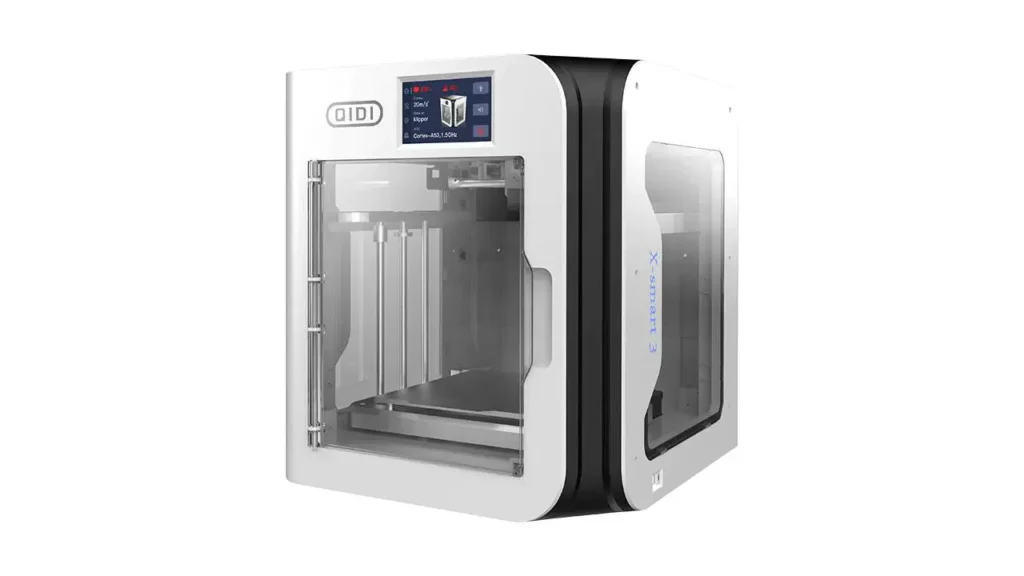
Entry-Level Champion — Qidi X-Smart 3 Breakdown
The X-Smart 3 is where many people first discover what Qidi is all about, and it’s a surprisingly strong introduction. This is genuinely one of the best Qidi 3D printers for beginners, because it doesn’t compromise on the fundamentals while keeping the price accessible and the setup stress-free.
At the heart of this machine is a CoreXY structure paired with Klipper firmware running on a 64-bit Cortex-A53 processor at 1.5 GHz, backed by 8 GB eMMC storage and 1 GB of DDR3 memory. That processing power translates into print speeds of up to 500 mm/s and an acceleration of 20,000 mm/s² — numbers that were firmly in the premium category just two or three years ago.
The build volume of 175 × 180 × 170 mm is compact but covers the vast majority of everyday hobby projects. The nozzle heats to 300 °C and the bed reaches 120 °C, which opens up a solid range of materials including PLA, ABS, ASA, PETG, and TPU. It’s worth noting that the X-Smart 3 relies on passive chamber heating rather than an active dedicated heater, so for demanding engineering materials that require sustained high ambient temperatures, you’ll want to look at models higher up in the lineup.
What makes the X-Smart 3 genuinely beginner-friendly goes beyond specs. The printer ships 95% pre-assembled and is ready to print within about 10 minutes of unboxing — just remove the shipping ties and run the automated leveling and Input Shaper calibration routines. A 4.3-inch full-color touchscreen handles all interaction, and the double-sided flexible magnetic build plate makes part removal effortless. Connectivity covers both Wi-Fi and USB, and QIDI Studio software includes a beginner-friendly “normal mode” alongside an expert mode for when you’re ready to go deeper.
The compact footprint — 370 × 362 × 397 mm overall — and 10.5 kg net weight make it easy to move around a home workspace or small studio. If you’re new to 3D printing and want a machine that lets you learn without fighting the hardware, the X-Smart 3 is a very solid place to start.
QIDI Q2
High-Speed 3D Printer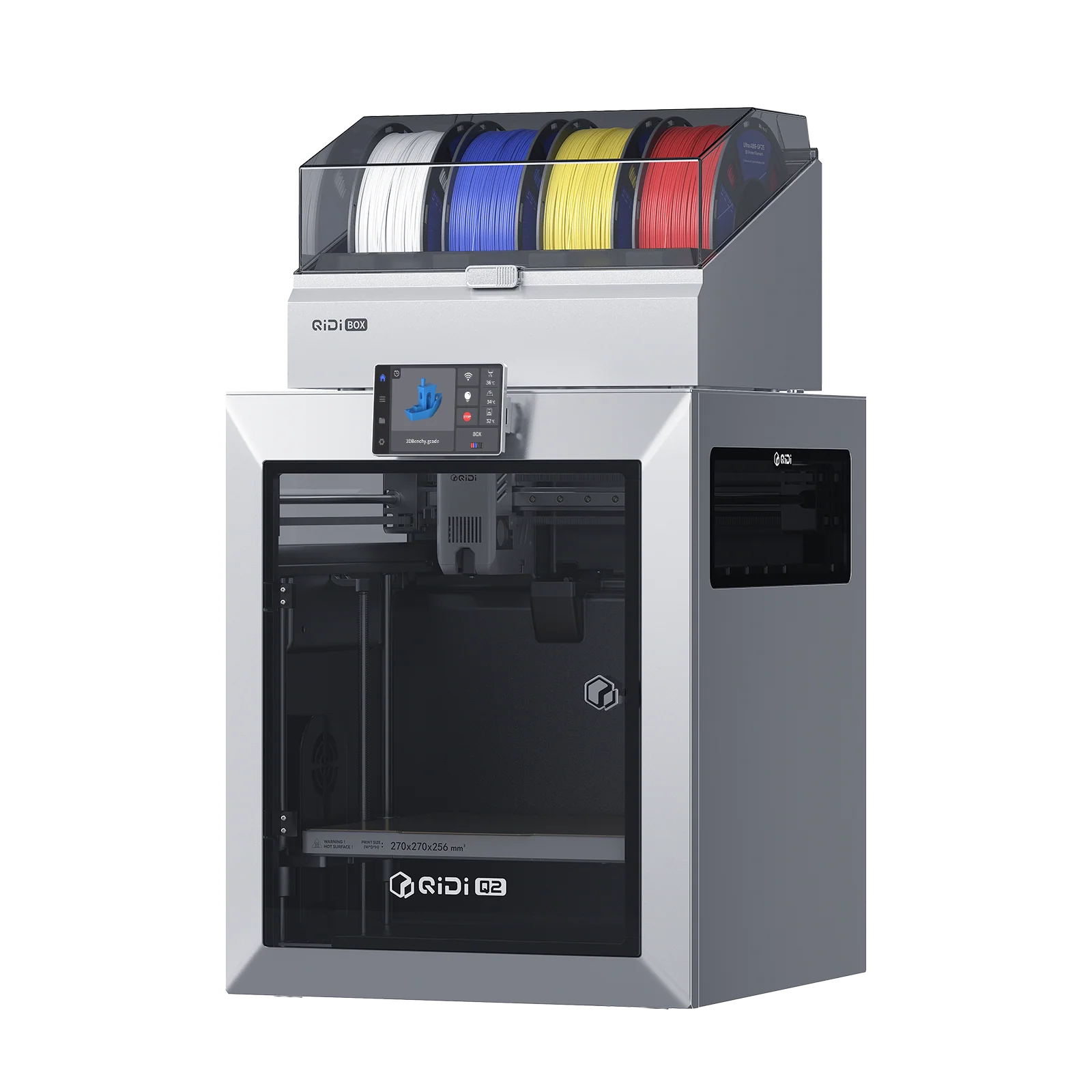
Professional FDM Printer
Next-generation high-speed 3D printer from QIDI Tech. Advanced CoreXY mechanics, intelligent features, and reliable performance for professionals and enthusiasts.
Budget Power — The Q2C Explained
The Q2C sits just above the X-Smart 3 in terms of pricing, but it makes a meaningful jump in capability. Think of it as the “serious entry point” to Qidi’s CoreXY enclosed ecosystem — you get substantially more printing real estate and a significantly hotter hotend, without yet paying for active chamber heating.
The standout hardware specs here are a 600 mm/s top speed, a 370 °C bimetal hardened steel hotend, and a zero-offset nozzle-based leveling system. That hotend temperature is a notable step up from the X-Smart 3’s 300 °C ceiling and unlocks a broader range of engineering filaments in principle — though the absence of active chamber heating does limit practical results with the most warp-prone materials like ABS or PC on larger prints.
The Q2C uses a 1.5GT high-density timing belt system with input shaping, which produces noticeably cleaner surface quality than competitors at similar speeds. The zero-offset leveling is a genuine quality-of-life improvement — the nozzle itself acts as the probe, eliminating calibration drift from bed surface variations or vibrations. First-layer consistency is excellent right out of the box.
The value discussion around the Q2C essentially comes down to one question: do you regularly print ABS, PC, or Nylon in large volumes? If yes, save up for the Q2 with its active 65 °C chamber. If you mostly print PLA, PETG, and occasionally dip into TPU or mild engineering materials, the Q2C delivers genuine CoreXY performance at a budget price and is one of the strongest value propositions in the 2026 market at its price point.
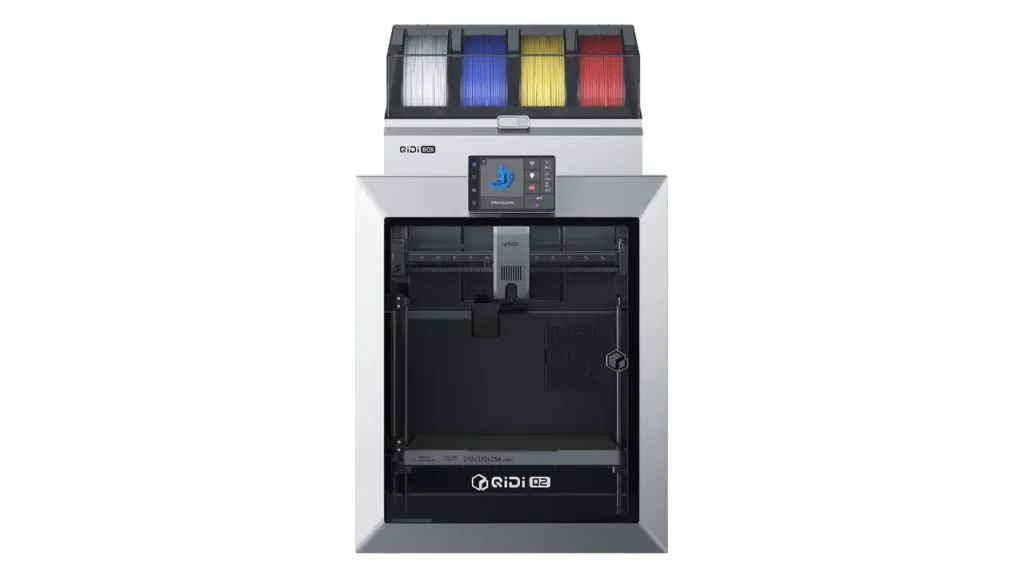
Engineering Tier — Qidi Q2 Performance and Enclosed Chamber Power
The Qidi Q2 is arguably the most talked-about machine in the 2026 lineup, and for good reason. It represents the point in the Qidi range where things get genuinely serious for engineering material printing — and it does so at a $499 price point that undercuts much of its competition.
The Q2’s build volume is 270 × 270 × 256 mm, which is 30% larger than its predecessor the Q1 Pro while actually reducing the overall footprint by 20%. That’s clever engineering. The motion system uses a 1.5GT high-density timing belt, precision linear rails, an all-metal toolhead, and a reinforced CoreXY frame — a proven platform that delivers both speed and long-term mechanical reliability.
The headline feature of the Q2 is its second-generation actively heated chamber, which reaches and maintains 65 °C. This is a big deal in the enclosed 3D printer world. Most “enclosed” printers in this price range rely on passive heating — essentially just trapping the warmth radiating from the heated bed. That approach works reasonably well for small prints but struggles on large objects, where the upper layers cool faster than the lower ones, causing warping and layer splitting. The Q2’s dedicated chamber heater maintains a consistent ambient temperature throughout the full print cycle, which is what makes ABS, ASA, PC, and even PPS-CF behave reliably.
The hotend reaches 370 °C and uses a ceramic throat with a bimetal hardened steel nozzle for durability against abrasive filaments. A 3-in-1 air filtration system with MET certification — recognized across the US, Canada, and over 50 international markets — makes it suitable for home studios, classrooms, and office environments where air quality matters.
Multi-color printing is covered via compatibility with the QIDI Box, the brand’s automatic filament switching system. The Box holds up to four spools, includes its own active heated storage at 65 °C for moisture-sensitive materials, and can be chained up to four units for up to 16-color printing capability.
Connectivity is comprehensive: QIDI Cloud remote monitoring, 2.4 GHz and 5 GHz Wi-Fi, wired Ethernet for stable LAN control, and USB drive offline printing. The firmware is open-source Klipper, meaning experienced users have full access to configuration files and the broader Klipper community ecosystem.
The Q2 is the sweet spot of the entire Qidi 3D printer lineup 2026 for makers who want real engineering material capability without stepping into the $700+ range.
Hybrid Option — Qidi Q1 Pro Analysis
The Q1 Pro occupies an interesting position in the lineup. Priced at around $399, it sits between the Q2C and the Q2 in cost, and its specs reflect that in-between nature — it has active chamber heating like the Q2, but a slightly lower thermal ceiling and a different Z-axis architecture.
The Q1 Pro’s chamber heats actively to 60 °C, which is meaningful but 5 degrees below the Q2’s 65 °C peak. In real-world printing that difference is generally small, but for the most demanding materials it can matter. The hotend reaches 350 °C via a tri-metal hotend design with a lock-proof bimetal nozzle — still hot enough to handle PAHT-CF, PET-CF, PA12-CF, ABS-GF25, and PC/ABS-FR with confidence.
The build volume is 245 × 245 × 240 mm, which is slightly smaller than the Q2’s 270 × 270 × 256 mm. For most projects this is perfectly adequate, and the smaller chamber actually warms up a little faster. The Z-axis uses independent dual motors without a belt — a design choice that delivers high precision and stability on the vertical axis, and handles automatic tilt leveling effectively.
Speed is 600 mm/s with 20,000 mm/s² acceleration, matching the Q2 on paper. The dual sensor auto bed leveling measures Z-offset automatically without the need for paper-based manual adjustment, which is a genuine time-saver. The comprehensive filament detection system handles both runout and tangle detection, cutting down on failed prints significantly.
Where the Q1 Pro really shines is for users who want active chamber heating at the most accessible price in the lineup, and who don’t need the Q2’s larger build volume or extra 5 degrees of chamber temperature. Setup takes about 10 minutes from unboxing, the machine is fully assembled on arrival, and the Klipper-based firmware is unlocked for customization.
The Q1 Pro is the right choice if your budget is firm around $400 and you know you’ll be printing warp-prone materials regularly.
QIDI Plus4
Multi-Material 3D Printer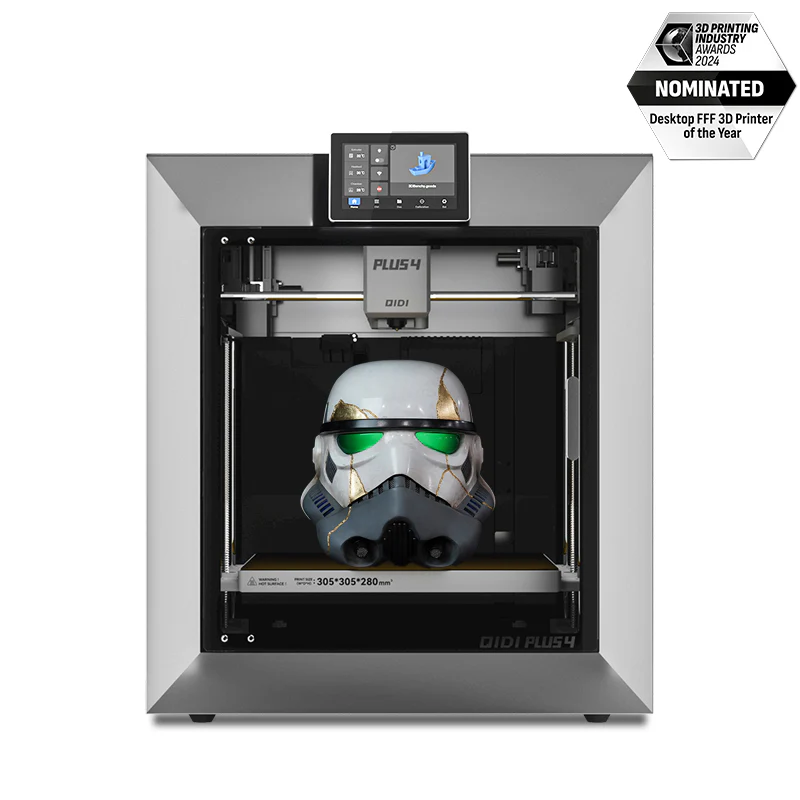
Professional FDM Printer
Advanced multi-material 3D printer from QIDI Tech. High-speed CoreXY mechanics, independent dual extrusion, and intelligent features for professional applications.
Advanced Printing — Qidi Plus4 Overview
Stepping up to the Plus4 means entering what Qidi genuinely considers its performance-focused mid-range tier. The price of around $699 reflects a meaningful set of hardware upgrades that translate directly into better print quality and expanded material capability.
The build volume expands to 305 × 305 × 280 mm — noticeably more room than the Q1 Pro or Q2, and large enough for substantial functional parts or batch production of medium-sized components. The chamber heats actively, with a target range of 55–65 °C depending on configuration, enabling reliable printing of even advanced composites including PPS-CF.
The hotend is a second-generation 80W bimetal unit reaching 370 °C. The higher wattage compared to earlier Qidi hotends means faster heat-up times and more consistent temperature maintenance during high-speed extrusion. The Plus4 also introduces a larger independent hotend fan with an upgraded air duct design, which improves heat transfer, reduces clogging risk, and makes jam resolution faster when it does occur.
The Z-axis uses dual independent motors with 10mm linear shafts and screws, and the bed is upgraded to 6mm aluminum for enhanced flatness across the full 305 × 305 mm surface. These might sound like incremental details, but consistent bed flatness is a significant factor in first-layer adhesion quality on large prints. A super wear-resistant nozzle is standard, making the Plus4 well-suited to regular printing with carbon fiber and fiberglass-filled composites.
Like the rest of the current Qidi lineup, the Plus4 runs Klipper firmware and is compatible with OrcaSlicer, PrusaSlicer, and QIDI Studio. QIDI Box multi-color expansion is fully supported. The corexy 3D printer architecture gives the Plus4 the same speed and precision advantages as the rest of the enclosed lineup, and at 600 mm/s top speed it’s no slouch in throughput terms either.
The Plus4 is the right pick when you need more build space than the Q2 offers, or when you’re consistently printing carbon fiber composites and want the extra thermal headroom and nozzle durability that comes with the upgraded toolhead.
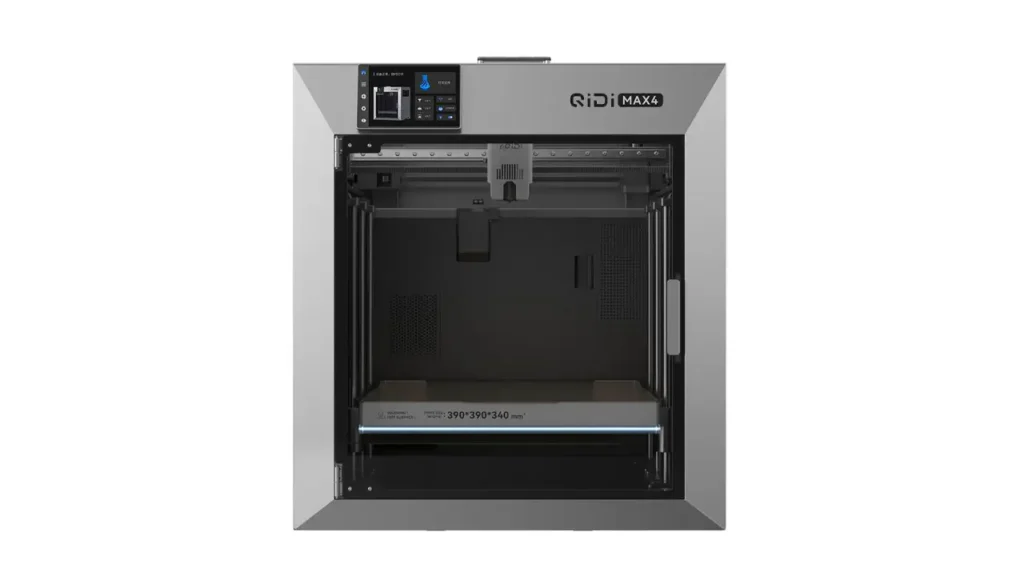
Professional Segment — Qidi Max4 Deep Dive
The Max4 is Qidi’s flagship, and it’s built to show it. This is the machine for large-format functional prototyping, end-use part production, and professional environments where print size and material capability are non-negotiable.
The build volume of 390 × 390 × 340 mm is the largest in the Qidi lineup by a wide margin — enough for full-size engineering components, large architectural models, or efficient batch production of smaller parts. The overall machine footprint is 558 × 578 × 612 mm, so it requires dedicated bench space, but that’s the expected trade-off at this tier.
The Max4’s toolhead can reach speeds up to 800 mm/s with a maximum acceleration of 30,000 mm/s² — the fastest in the Qidi range. In practice, real-world throughput is determined by volumetric flow rate and material requirements, but this headroom means the machine never feels bottlenecked by motion system limitations. The 370 °C hotend and 65 °C active heated chamber are identical to the Q2’s thermal specifications, which means the full range of engineering materials — PLA, PETG, ABS, ASA, TPU, PA, PC, PPS-CF, and carbon fiber composites — are all on the table.
Precision on the Z-axis comes from a 2mm lead screw with an anti-backlash nut, maintaining vertical accuracy across the full 340mm height. The 390 × 390 mm heated bed uses an ultra-uniform heating system to ensure consistent first-layer adhesion across the entire large surface — a detail that matters enormously when you’re printing parts that span the full build area.
The zero-offset nozzle-as-sensor leveling system is present on the Max4, delivering accurate first-layer performance that’s unaffected by bed surface variations or environmental vibration. An AI camera actively monitors for print failures like spaghetti errors, enabling remote oversight via QIDI Cloud, Wi-Fi (2.4 GHz and 5 GHz), or wired Ethernet. USB offline printing is also supported.
Like all current Qidi machines, the Max4 runs Klipper firmware and supports third-party slicers including OrcaSlicer and PrusaSlicer alongside QIDI Studio. The QIDI Box multi-color system is fully compatible, enabling up to 16-color printing on the largest build volume in the lineup.
The Max4 is the answer when your projects have genuinely outgrown the Q2 or Plus4, and when professional reliability and large-format capability justify the investment.
CoreXY vs Non-CoreXY in the Qidi Ecosystem
One thing that stands out when you survey the full Qidi 3D printer lineup 2026 is that Qidi has gone essentially all-in on CoreXY motion architecture across their active product range. Understanding why helps you appreciate what you’re actually getting with any Qidi purchase.
In a traditional Cartesian printer, the print bed moves back and forth along the Y-axis while the toolhead moves on X and Z. This design is simple and reliable, but the moving bed adds mass that limits how fast you can accelerate without causing print quality issues. On large or heavy beds, this becomes a genuine constraint.
CoreXY flips the arrangement. The bed only moves on the Z-axis (up and down), while two synchronized motors control all X and Y movement through a crossed belt system. The toolhead itself becomes a lightweight, fast-moving component. The result is dramatically higher acceleration capability without sacrificing surface quality — which is why Qidi’s machines can credibly claim 500–800 mm/s speeds while still producing clean, accurate prints.
The practical benefits for users are real. Faster acceleration means more of your print time is spent actually depositing material at speed, rather than slowing down and speeding up around corners. Input shaping compensation further cleans up artifacts from high-speed motion. And because the bed doesn’t rock back and forth, taller prints stay more stable throughout long jobs.
The enclosed chamber design works in harmony with CoreXY by keeping all that thermal management internal, letting users fine-tune both print speed and chamber temperature as independent variables. This combination — CoreXY motion plus active heated enclosure plus open Klipper firmware — is the technical foundation of what makes Qidi’s current lineup competitive.
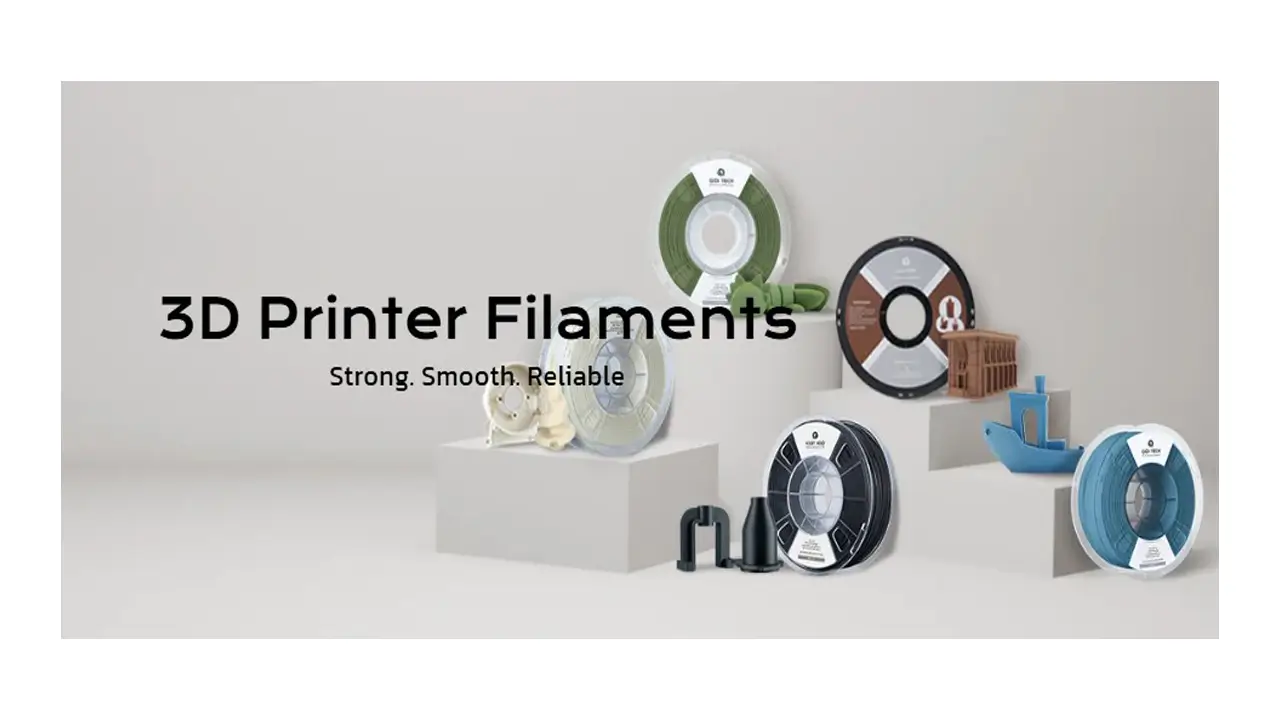
Qidi 3D Printer Filaments
Premium quality filaments from QIDI Tech. Wide range of materials including PLA, ABS, PETG, and specialty filaments optimized for consistent extrusion and excellent print quality.
- • PLA, ABS, PETG Options
- • Consistent Diameter
- • High Quality Materials
- • Smooth Extrusion
Materials Supported Across the Lineup
One of the most useful ways to think about the Qidi lineup is through the lens of material capability, since that’s ultimately what determines which printer you need.
| Material | X-Smart 3 | Q2C | Q1 Pro | Q2 | Plus4 | Max4 |
|---|---|---|---|---|---|---|
| PLA / PETG | Yes | Yes | Yes | Yes | Yes | Yes |
| TPU (95A) | Yes | Yes | Yes | Yes | Yes | Yes |
| ABS / ASA | Limited | Limited | Yes | Yes | Yes | Yes |
| PA / Nylon | No | Limited | Yes | Yes | Yes | Yes |
| PC (Polycarbonate) | No | No | Yes | Yes | Yes | Yes |
| PA-CF / PET-CF | No | No | Yes | Yes | Yes | Yes |
| PPS-CF | No | No | No | Yes | Yes | Yes |
The pattern is clear: active chamber heating is the gateway to reliable engineering material printing, and 65 °C chamber temperature is what unlocks the full spectrum including advanced composites.
CoreXY Architecture — Why It Matters in 2026
One thing that stands out when you look at the full Qidi 3D printer lineup 2026 is that Qidi has committed entirely to CoreXY motion architecture across their active product range. Understanding why that matters helps you appreciate exactly what you’re getting.
In a traditional Cartesian printer, the print bed moves back and forth along the Y-axis while the toolhead moves on X and Z. This design is mechanically simple but the moving bed adds mass that limits how fast you can accelerate without introducing vibration artifacts into your prints. On large or heavy beds, this constraint is significant.
CoreXY flips the arrangement. The bed moves only on the Z-axis, while two synchronized motors control all X and Y movement through a crossed belt system. The toolhead becomes a lightweight, fast-moving component. The practical result is dramatically higher acceleration capability — which is why Qidi machines can credibly reach 500–800 mm/s while still producing clean, accurate prints.
Faster acceleration means more of your print time is spent actually depositing material at target speed, rather than constantly decelerating and re-accelerating around corners and direction changes. Combined with input shaping resonance compensation, which is built into Klipper firmware on all current Qidi models, the print quality at high speeds is substantially better than what earlier-generation printers could achieve.
The enclosed chamber design works in natural harmony with CoreXY by keeping all thermal management internal. This lets users fine-tune print speed and chamber temperature as independent variables — something that bed-slinger designs inherently struggle with, since the moving bed disrupts airflow more unpredictably. The combination of CoreXY motion, active heated enclosure, and open Klipper firmware is the technical foundation of what makes every current Qidi printer competitive in 2026.
Polimerukr.com
Ukraine
3D Printing Materials & Supplies
Your trusted source for high-quality 3D printing materials in Ukraine. Wide selection of filaments, resins, and accessories for all printer types with fast local shipping.
Final Verdict — Which Qidi Printer to Choose in 2026
The Qidi 3D printer lineup 2026 is genuinely well-organized, and choosing the right machine is mostly a matter of honest self-assessment about your material needs, budget, and build size requirements. Here’s a clear decision framework.
Choose the X-Smart 3 if you are completely new to 3D printing, work primarily with PLA, PETG, and basic TPU, and want a compact machine that gets you printing quickly without complexity. At under $420, it’s one of the best entry-level CoreXY printers available, and the Klipper firmware means you won’t outgrow it as your skills grow.
Choose the Q2C if you want more build volume and a hotter hotend than the X-Smart 3 provides, but your budget is below $450 and you don’t regularly print ABS or PC. The 370 °C hotend and zero-offset leveling system are genuine improvements over the entry-level tier, and the CoreXY performance is real.
Choose the Q1 Pro if you have a firm $400 budget and you know you’ll be printing warp-prone materials like ABS, ASA, or Nylon. The active 60 °C chamber is the key differentiator here, and at $399 it’s the most affordable actively-heated enclosed printer in the lineup. The slightly smaller build volume compared to the Q2 is the main trade-off.
Choose the Q2 if you want the best all-around value in the lineup and can stretch to $499. The combination of a 270 × 270 × 256 mm build volume, 65 °C active chamber, 370 °C hotend, MET safety certification, and QIDI Box multi-color compatibility makes this the sweet spot for the vast majority of serious home and enthusiast users. It’s the model most likely to satisfy you long-term without requiring an upgrade.
Choose the Plus4 if your projects regularly exceed the Q2’s build volume or if you work extensively with carbon fiber and glass fiber composites and want the upgraded 80W hotend, enhanced cooling architecture, and 6mm aluminum bed flatness that the Plus4 brings. At $699 it’s a meaningful investment, but it earns that price with tangible hardware improvements.
Choose the Max4 if you are working in a professional or semi-professional environment where large-format capability and industrial-grade material reliability are genuine requirements. The 390 × 390 × 340 mm build volume, 800 mm/s speed ceiling, and 65 °C active chamber put it in a different category from the rest of the range — this is a production tool, not a hobbyist upgrade.
The real insight across the entire Qidi 3D printer lineup 2026 is that the company has built a coherent, logically segmented range where each step up delivers clear, tangible value. The qidi printer price comparison shows a consistent philosophy: more thermal capability and more build volume at each tier, without artificially limiting lower-end machines to push upgrades. That’s a brand worth paying attention to.
🇺🇸 Michael Carter — ⭐⭐⭐⭐⭐
Excellent article and very clear comparison of the Qidi 2026 lineup. I finally understood which printer fits my needs. The website is clean and professional. Highly recommended!
🔗 https://bestchina3dprinters.com/
🇪🇸 Carlos Ramírez — ⭐⭐⭐⭐⭐
Muy buen análisis de las impresoras Qidi. La información es clara y bien estructurada. Me ayudó mucho a elegir mi primera impresora 3D.
🔗 https://bestchina3dprinters.com/
🇸🇦 أحمد العتيبي — ⭐⭐⭐⭐⭐
موقع رائع ومقال مفصل جداً عن طابعات Qidi. الشرح بسيط وواضح حتى للمبتدئين. أنصح بزيارة الموقع لمعرفة المزيد.
🔗 https://bestchina3dprinters.com/
🇨🇳 李伟 (Li Wei) — ⭐⭐⭐⭐⭐
这篇文章对Qidi 3D打印机的对比非常专业,信息详细且易于理解。网站内容质量很高,值得收藏。
🔗 https://bestchina3dprinters.com/
🇫🇷 Julien Moreau — ⭐⭐⭐⭐⭐
Article très complet et bien structuré. La comparaison des modèles Qidi est claire et utile. Le site est sérieux et informatif.
🔗 https://bestchina3dprinters.com/
🇩🇪 Thomas Schneider — ⭐⭐⭐⭐⭐
Sehr informativer Beitrag über die Qidi 3D-Drucker. Alles ist gut erklärt und übersichtlich dargestellt. Die Website ist definitiv einen Besuch wert.
🔗 https://bestchina3dprinters.com/
Discover more from bestchina3dprinters.com
Subscribe to get the latest posts sent to your email.