If you have been shopping for a fast, enclosed 3D printer that runs modern firmware without asking you to spend flagship money, the Tronxy VEHO-1 has probably crossed your radar. It is one of Tronxy’s more compact machines, and it packages several features that used to be reserved for pricier printers: a CoreXY motion system, Klipper firmware, linear-rail guidance, and a headline speed of 600 mm/s. In this Tronxy VEHO-1 review we will walk through the design, the mechanics, the firmware, the specifications, everyday usability, and how it stacks up against the popular Bambu Lab P1S, so you can decide whether it fits your workshop.
1. Introduction to the Tronxy VEHO-1
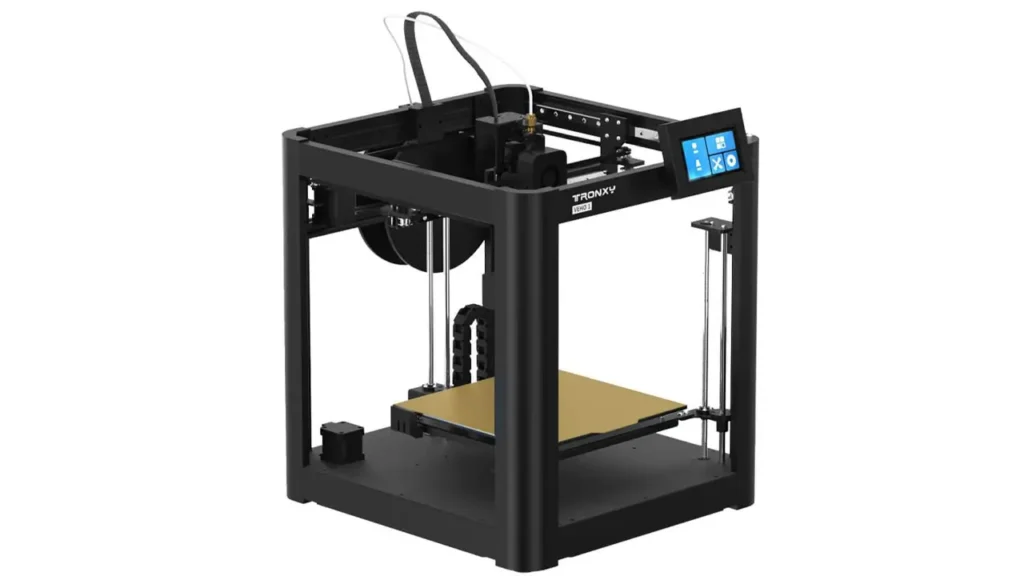
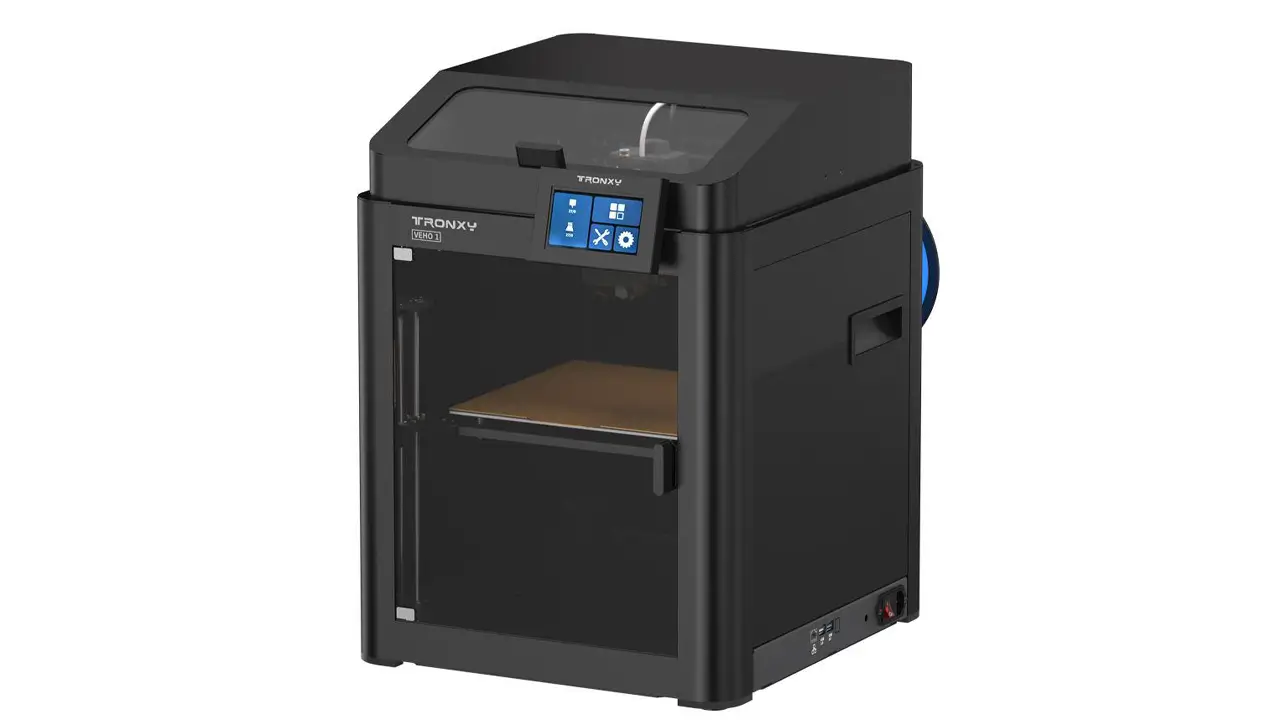
The Tronxy VEHO-1 is a desktop FDM 3D printer aimed at makers who want speed and stability in a small footprint. According to Tronxy’s official store listing, the machine ships fully assembled and ready to print out of the box, which lowers the barrier for newcomers who do not want to spend an afternoon building a kit. It is sold in two configurations: a standard open frame version and a VEHO-1 with enclosure version, giving you a choice depending on the materials you plan to run and the environment you print in.
What makes this model interesting for the price is the combination of technologies Tronxy has put under one roof. Rather than a traditional bed-slinger, the VEHO-1 uses a CoreXY structure paired with a linear guide rail on the X-axis, an upgraded Klipper system, and a ceramic heating print head. Tronxy lists the printer at US$499, down from a regular price of US$648.70, which positions it firmly in the affordable, high-speed category. Throughout this Tronxy VEHO-1 review, keep in mind that the headline numbers—600 mm/s speed and a compact 255 mm cube of build space—describe a printer built for quick, iterative work rather than oversized production runs.
2. Design and Build Quality
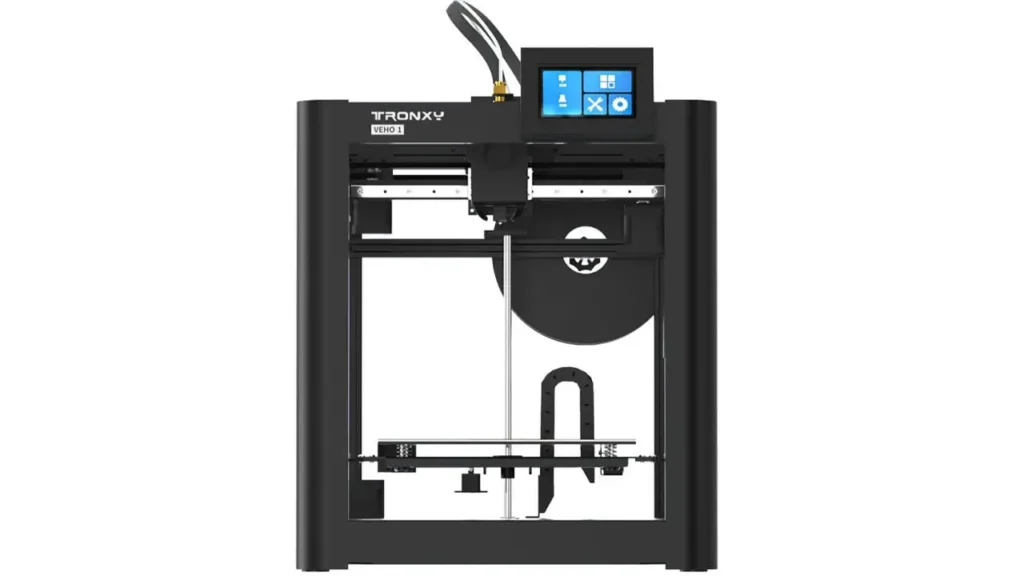
At first glance the Tronxy VEHO-1 3D printer reads as a tidy, modern machine. It centers on a 255 mm × 255 mm × 255 mm build volume, which Tronxy describes as suitable for a wide variety of everyday 3D printing applications. That is roughly a 25 cm cube of usable space—generous enough for helmets, brackets, cosplay parts split into sections, and most functional prints, while staying small enough to sit comfortably on a desk or bench.
The choice between an open frame and a VEHO-1 enclosed printer version matters more than it might seem. An enclosure helps trap heat around the print, which is a real advantage when working with materials that are prone to warping or cracking, such as ABS. The enclosed version also contains noise and fumes better, and it keeps drafts away from the print, which improves layer consistency on temperature-sensitive filaments. If you plan to stick mainly to PLA and PETG in a warm room, the open frame is fine; if higher-temperature engineering plastics are on your list, the enclosed configuration is the more sensible pick.
Interaction happens through a 4.3-inch touchscreen. It is not a large display by 2026 standards, but Tronxy positions it as an intuitive interface that both seasoned and first-time users can operate confidently. The overall build emphasizes a lightweight, purpose-built print head and a rigid motion frame—two ingredients that matter a great deal once you start pushing print speeds, which we will get into next.
Tronxy VEHO-1
Compact and versatile 3D printer from Tronxy. Reliable performance, user-friendly features, and excellent value for beginners and hobbyists exploring the world of 3D printing.
- • Compact Desktop Design
- • Easy Assembly
- • Reliable Performance
- • Great Value
3. CoreXY Motion System Explained
The heart of this machine is its motion system, so it is worth understanding what Tronxy VEHO-1 CoreXY actually means. In a CoreXY design, two stationary motors drive the toolhead in the X and Y directions through a shared belt path, while the print bed only moves up and down on the Z-axis. Because the heavy motors stay put and only the lightweight print head darts around, the machine can accelerate and change direction faster with less wobble. Tronxy states that this CoreXY structure ensures stability and precision through an efficient mechanical design, and that it reduces vibrations for cleaner detail.
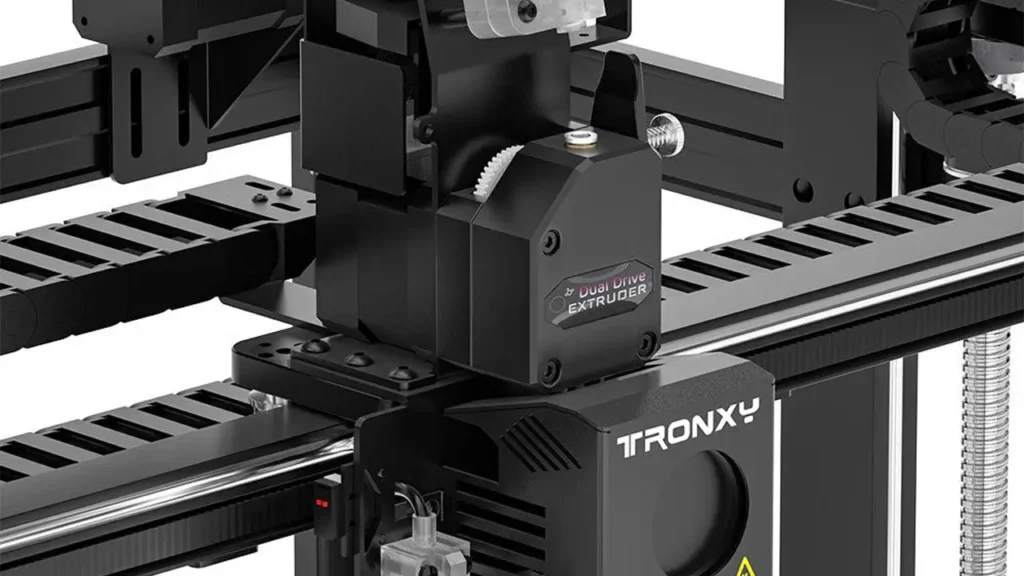
Reinforcing that motion system is the Tronxy VEHO-1 linear rails setup. The X-axis rides on a linear guide rail rather than plain rods or wheels. A linear rail constrains the carriage tightly along a single, precise path, which reduces play and wear over time. Tronxy highlights this as delivering smoother and more accurate movements across the print bed, and notes that it enhances long-term stability. The practical payoff is fewer artifacts on your prints—less ringing and ghosting when the head reverses direction at speed.
Tronxy adds one more clever touch here: automatic XY-axis belt adjustment. Belt tension is one of those maintenance items that quietly degrades print quality as it drifts out of spec. By keeping tension consistent automatically, the VEHO-1 aims to hold its accuracy over time without you needing to fiddle with tensioners. Together, the CoreXY geometry, the linear rail, and the self-adjusting belts form the mechanical foundation that lets this printer chase high speeds while trying to keep surfaces clean.
4. Klipper Firmware Performance
Firmware is where the Tronxy VEHO-1 Klipper story gets compelling. Klipper is an open-source firmware that offloads the heavy motion calculations to a more powerful processor, which allows the printer to plan complex, high-speed movements more precisely than older firmware could. Tronxy equips the VEHO-1 with what it calls a newly upgraded Klipper system, describing it as providing a seamless and efficient printing experience with faster processing and better control of the machine.
Why does this matter for real-world results? Klipper enables features like input shaping and pressure advance, which are the techniques that let a printer move quickly without smearing corners or leaving ripples across flat walls. Combined with the CoreXY hardware, this is what makes the Tronxy VEHO-1 print speed claim of up to 600 mm/s meaningful rather than just a number on a box. Tronxy pairs the firmware with a maximum acceleration of 10,000 mm/s², which is the figure that actually determines how quickly the head reaches top speed on shorter moves.
It is worth being realistic here. A 600 mm/s ceiling is the theoretical maximum under ideal conditions, not the speed you will run for every layer of every model. Detailed prints, fine surfaces, and tricky overhangs still benefit from slower settings. But having that headroom means the VEHO-1 can rip through draft prints, prototypes, and infill quickly, then dial back for the parts that need finesse. That flexibility is the core appeal of a Klipper-driven CoreXY machine at this price.
5. Technical Specifications
Let us put the Tronxy VEHO-1 specs together in one place. The table below summarizes the officially listed figures from Tronxy, along with the standard details for this class of machine. Note that Tronxy offers the VEHO Klipper hotend in several nozzle sizes as accessories, with 0.4 mm being the common default.
| Specification | Tronxy VEHO-1 |
|---|---|
| Build volume | 255 × 255 × 255 mm |
| Motion system | CoreXY with X-axis linear rail |
| Maximum speed | Up to 600 mm/s |
| Maximum acceleration | 10,000 mm/s² |
| Firmware | Upgraded Klipper system |
| Print head | Lightweight ceramic-heating hotend |
| Nozzle | 0.4 mm standard (other sizes available) |
| Extruder | 1.75 mm filament feed |
| Heated bed | PEI build surface |
| Display | 4.3-inch touchscreen |
| Belt system | Automatic XY-axis belt adjustment |
| Materials | PLA, ABS, PETG and more |
| Configurations | Open frame or with enclosure |
| Assembly | Fully assembled, ready to print |
| Price | US$499 (regular US$648.70) |
On the electronics side, the VEHO-1 runs its motion control through the Klipper architecture, which splits duties between a host processor that handles the math and a microcontroller that drives the motors in real time. This is the same fundamental approach used by far more expensive machines, and it is a big part of why the printer can sustain high acceleration figures while staying accurate. The 4.3-inch touchscreen serves as the local control point for starting prints, adjusting settings, and monitoring progress.
6. Print Quality and Speed Tests
The most common question in any Tronxy VEHO-1 review is simple: does the quality hold up when you turn on the speed? The honest, general answer for CoreXY-plus-Klipper machines is that they let you choose your trade-off intelligently. The Tronxy VEHO-1 print speed ceiling of 600 mm/s exists so you can blast through the parts of a model that do not need to look perfect, while the CoreXY rigidity and Klipper’s motion smoothing keep quality respectable when you slow down for detail.
In practice, a sensible workflow looks like this. For quick prototypes, fit checks, and infill-heavy functional parts, you can run aggressive speeds and finish jobs in a fraction of the time a traditional bed-slinger would need. When surface finish matters—display models, visible cosmetic pieces, fine miniatures—you dial the speed back down to a moderate range and let the machine’s stability do its work. The ceramic heating print head supports fast, even temperature delivery, which helps keep extrusion consistent when you are pushing more material through the nozzle at higher flow rates.
A realistic expectation for an affordable high-speed printer is that it will do 80 to 90 percent of what a premium machine does, at a lower cost, with a bit more hands-on tuning. You will likely spend some time refining your slicer profiles to find the sweet spot between speed and finish for your favorite filaments. That is normal for this category, and it is arguably part of the fun for makers who enjoy dialing in their equipment.

AndreevWebStudio.com
Professional web development and design services. Custom WordPress sites, landing pages, e-commerce solutions, and 3D printing content creation for businesses and creators.
- • WordPress Development
- • Custom Web Design
- • E-Commerce Solutions
- • 3D Printing Content
7. Magnetic PEI Build Plate and Daily Use
Adhesion and part removal are where a printer either makes your day easier or drives you up the wall, so the Tronxy VEHO-1 PEI bed deserves attention. PEI (polyetherimide) is the go-to surface across Tronxy’s VEHO line and much of the modern 3D printing world, and for good reason. It grips prints firmly while they are hot, then releases them cleanly once the bed cools. That combination reduces the two most frustrating failure modes: prints lifting mid-job, and prints that refuse to come off without a fight.
On a flexible PEI plate, the daily routine is pleasant. You print, you wait for the bed to cool, you flex the sheet slightly, and the part pops free. There is usually no need for glue sticks, tape, or scraping with a metal spatula that risks gouging the surface. A textured PEI finish also leaves an attractive, lightly matte bottom layer on your prints, which many makers prefer over the glossy look of glass.
For daily use, the VEHO-1’s improved leveling system is the other half of the equation. Tronxy describes it as offering a more accurate and effortless bed-leveling experience, which is important because a well-leveled bed is the single biggest factor in getting a good first layer. Combined with the ready-to-print, fully assembled delivery, the goal is clear: get you from unboxing to successful prints with minimal friction. Keep the PEI surface clean of finger oils with a little isopropyl alcohol now and then, and it should reward you with reliable adhesion for a long time.
8. Advantages and Disadvantages
No printer is perfect, and a fair Tronxy VEHO-1 review needs to weigh the strengths against the compromises. Here is a balanced look.
| Advantages | Disadvantages |
|---|---|
| High-speed printing up to 600 mm/s | Small 4.3-inch screen |
| Stable Tronxy VEHO-1 CoreXY motion | Compact build volume for large parts |
| Upgraded Tronxy VEHO-1 Klipper firmware | May need profile tuning for best finish |
| X-axis linear rail for accuracy | Smaller support community than big brands |
| Ships fully assembled | Shipping times can be long from China |
| Auto XY belt adjustment | No built-in multi-color system |
| Affordable price point | Enclosure is a separate configuration |
The overall picture is a printer that punches above its price on the fundamentals—speed, motion hardware, and firmware—while asking you to accept a modest screen, a compact bed, and the reality that a smaller brand has a smaller user community than the giants. For hands-on makers, those trade-offs are easy to live with.
9. Tronxy VEHO-1 vs Bambu Lab P1S
The comparison everyone wants is the Tronxy VEHO-1 vs Bambu Lab P1S matchup, because both are enclosed CoreXY machines with nearly identical build volumes. They target overlapping buyers but with very different philosophies. The table below lays out the key differences.
| Feature | Tronxy VEHO-1 | Bambu Lab P1S |
|---|---|---|
| Build volume | 255 × 255 × 255 mm | 256 × 256 × 256 mm |
| Max speed | 600 mm/s | 500 mm/s |
| Max acceleration | 10,000 mm/s² | 20,000 mm/s² |
| Firmware | Open Klipper | Proprietary (Bambu) |
| Software | Klipper ecosystem | Bambu Studio / Handy |
| Multi-color | Not built in | AMS up to 16 colors |
| Bed surface | PEI | Textured PEI spring steel |
| Camera | Not standard | Built-in |
| List price | US$499 | US$699 (often discounted) |
Price and speed: On paper, the VEHO-1 claims a higher top speed of 600 mm/s versus the P1S’s 500 mm/s, and it carries a lower list price. However, the P1S posts a much higher acceleration figure of 20,000 mm/s², which strongly affects real-world print times on models with lots of short, quick moves. It is also worth noting that the P1S is frequently discounted well below its US$699 list price, which can narrow or even close the price gap depending on when you buy.
Print quality and software: The P1S is famous for polished, hit-print-and-walk-away results thanks to its mature, tightly integrated software and calibration routines. The VEHO-1 leans on the open Klipper ecosystem, which gives you deeper control and customization if you want it, at the cost of doing a bit more tuning yourself.
Upgrade potential: This is where philosophies diverge sharply. Klipper is open and endlessly tweakable, so the VEHO-1 appeals to tinkerers who like to modify and optimize. The P1S uses proprietary hardware and firmware, meaning you rely on Bambu Lab for support and are more locked into their ecosystem—but you gain the AMS multi-color system, which the VEHO-1 does not offer out of the box. In short, choose the VEHO-1 for openness and value; choose the P1S for polish and multi-color convenience.
10. Final Verdict
So where does this Tronxy VEHO-1 review land? The VEHO-1 is a genuinely appealing option for anyone who wants CoreXY speed, Klipper flexibility, and linear-rail accuracy without paying premium prices. It delivers the mechanical fundamentals that matter—a rigid motion system, a lightweight ceramic hotend, self-adjusting belts, and a friendly PEI bed—inside a compact, ready-to-print package that arrives fully assembled.
For different users, here is how it shakes out. Hobbyists who enjoy dialing in profiles and learning how their machine works will love the open Klipper platform and the strong price-to-feature ratio. Small workshops that need to churn out prototypes and functional parts quickly will appreciate the high-speed ceiling and the enclosed configuration for tougher materials. Makers who value customization and want a printer they can grow with, mod, and optimize will find the VEHO-1’s openness a real advantage over locked-down alternatives. And for engineering prototypes, the CoreXY stability, the linear-rail precision, and the ability to run materials like ABS in the enclosed version make it a practical, cost-effective tool for iterating on designs.
The compromises are honest ones: a modest screen, a compact build area, and the need to tune your profiles to extract the best finish. If those fit your workflow, the Tronxy VEHO-1 is an affordable, capable, and flexible high-speed printer that earns a spot on the shortlist—especially for makers who prefer an open ecosystem over a walled garden.
Really thorough Tronxy VEHO-1 review. The specs and the CoreXY explanation were clear and easy to follow, and the comparison with the Bambu Lab P1S helped me decide. Great, well-organised website with reliable info.
bestchina3dprinters.comUn artículo excelente sobre la Tronxy VEHO-1. Las tablas de especificaciones son muy claras y la explicación del firmware Klipper me ayudó mucho. La web está muy bien hecha y la información parece fiable. ¡Muy recomendable!
bestchina3dprinters.comمقال رائع ومفصّل عن طابعة Tronxy VEHO-1. المواصفات واضحة والمقارنة مع Bambu Lab P1S كانت مفيدة جدًا لاتخاذ القرار. موقع منظم ومعلومات موثوقة. شكرًا لكم على هذا المحتوى الممتاز.
bestchina3dprinters.com这篇 Tronxy VEHO-1 的评测非常专业,参数表格清晰,CoreXY 和 Klipper 固件的讲解 通俗易懂。和 Bambu Lab P1S 的对比也很实用,帮助我做出了购买决定。网站内容可靠, 强烈推荐!
bestchina3dprinters.comUn test très complet de la Tronxy VEHO-1. Les explications sur le système CoreXY et le firmware Klipper sont bien détaillées, et les tableaux sont clairs sur mobile. Un site sérieux avec des informations fiables. Bravo !
bestchina3dprinters.comEin sehr informativer Testbericht zum Tronxy VEHO-1. Die technischen Daten sind übersichtlich dargestellt und der Vergleich mit dem Bambu Lab P1S ist wirklich hilfreich. Gut strukturierte Website mit verlässlichen Informationen. Sehr empfehlenswert!
bestchina3dprinters.comDiscover more from bestchina3dprinters.com
Subscribe to get the latest posts sent to your email.