 Skip to content
 If you’ve been looking for a compact resin 3D printer that delivers professional-grade detail without demanding a professional-grade budget, the Anycubic Photon Mono 4 might be exactly what you’ve been waiting for. This machine has been turning heads in the maker community since its launch, and in this in-depth review, we’ll walk you through everything you need to know — from the technical specs and build volume to real-world print quality, setup experience, and how it stacks up against its competitors.
Whether you’re a seasoned hobbyist printing tabletop miniatures, a jewelry designer looking for fine-detail prototyping, or a total beginner who just wants to dip their toes into resin printing — this guide is for you. Let’s dive in.


What Is the Anycubic Photon Mono 4?
The Anycubic Photon Mono 4 is a consumer-grade MSLA (Masked Stereolithography Apparatus) resin 3D printer developed by Anycubic, a Shenzhen-based company that has been one of the most influential names in desktop 3D printing since 2015. The Photon 4 is designed to hit a sweet spot between affordability and capability, making it an attractive anycubic photon mono 4 resin printer for a wide range of users.
Unlike FDM (Fused Deposition Modeling) printers that melt plastic filament, resin printers use LCD-based masked SLA technology, selectively blocking a 405nm UV light source that cures liquid resin layer by layer. The result is a level of detail and surface smoothness that filament printers simply cannot match.
The target audience is broad: hobbyists creating tabletop gaming miniatures, independent designers prototyping jewelry or product concepts, dental and medical model makers, and engineers who need highly accurate small-scale parts. The Photon Mono 4 sits in the entry-to-mid-level tier of Anycubic’s lineup, positioned as an accessible but genuinely capable machine.
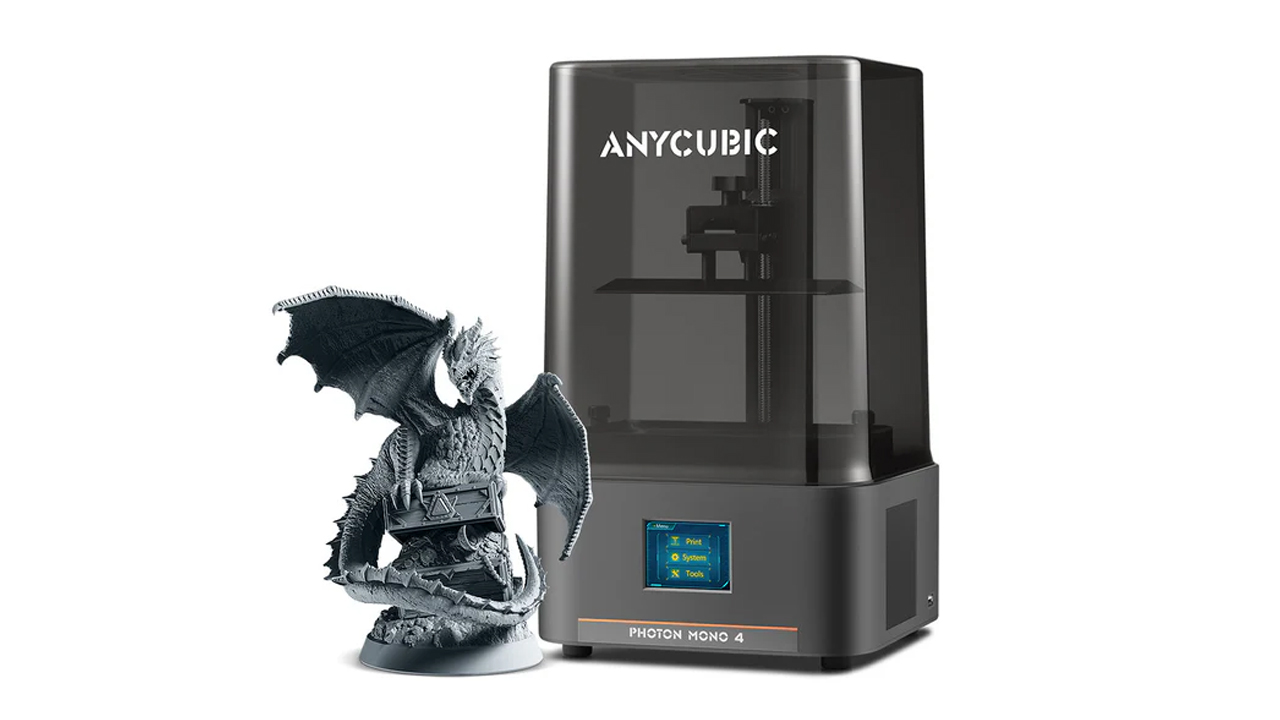
Anycubic Photon Mono 4
High-resolution MSLA resin 3D printer from Anycubic. Fast printing speed, exceptional detail, and user-friendly features perfect for miniatures, jewelry, and professional prototyping.
- • 9K Mono LCD Screen
- • Fast Printing Speed
- • High Precision
- • WiFi Connectivity
Key Specifications Overview
Before we dive into the experience, let’s look at the raw anycubic mono 4 specs. These numbers tell a compelling story on their own.
| Specification | Detail |
|---|---|
| Technology | MSLA (LCD-based resin) |
| Screen Size | 7-inch monochrome LCD |
| Resolution | 10K — 9024 x 5120 px |
| XY Pixel Accuracy | 17 x 17 µm |
| Z-Axis Resolution | 0.01 – 0.15 mm |
| Build Volume | 153.4 x 87 x 165 mm (2.2 L) |
| Max Print Speed | Up to 70 mm/h (High-Speed Resin 2.0) |
| Min Layer Exposure | 1.5 seconds per layer |
| Light Source | LightTurbo Matrix (405nm UV) |
| Light Uniformity | 80% – 90% |
| Touchscreen | 2.8-inch |
| Connectivity | USB |
| Supported Resins | Standard, High-Speed, Flexible, Tough (405nm) |
| Leveling System | 4-point manual leveling |
| Resume Printing | Yes (after power failure) |
| Slicer Software | Anycubic Photon Workshop (also Chitubox, Lychee) |
The standout number here is the 10K resolution — a genuinely impressive figure for a printer in this price category. The XY pixel accuracy of 17 x 17 µm represents a 105% precision improvement over the previous generation Photon Mono 2. That means details that used to be blurry or rounded can now be reproduced with razor-sharp clarity.
Build Volume and Design
Let’s talk about physical footprint and the anycubic mono 4 build volume. The printer offers a build area of 153.4 x 87 x 165 mm, which translates to a total usable volume of 2.2 liters. For context, that’s enough space to print a palm-sized figurine in a single run, or fit a batch of smaller miniatures across the plate in one session.
The machine is compact and relatively light — easy to place on a desk, shelf, or workbench without dominating the space. The housing is clean and functional, with a UV-blocking cover that lets you visually monitor your print in progress without exposing the resin to ambient light or yourself to UV radiation.
One of the more appreciated physical design choices is the laser-engraved build platform. This textured surface significantly improves the adhesion of prints during the printing process, reducing the chance of a model detaching mid-print — one of the most frustrating failures in resin printing. The FEP film sits at the base of the resin vat, and Anycubic includes a screen protector to help extend the lifespan of the LCD screen underneath.
The 2.8-inch touchscreen on the front of the machine handles all navigation — selecting files, adjusting exposure settings, and monitoring print progress. It’s straightforward and responsive, though notably smaller than the 4.3-inch touchscreen found on the higher-end Mono 4 Ultra model.
Overall, the design communicates a clear message: this is a workhorse printer built for reliability and ease of use. Nothing flashy, but nothing lacking either.
Anycubic
Shenzhen, China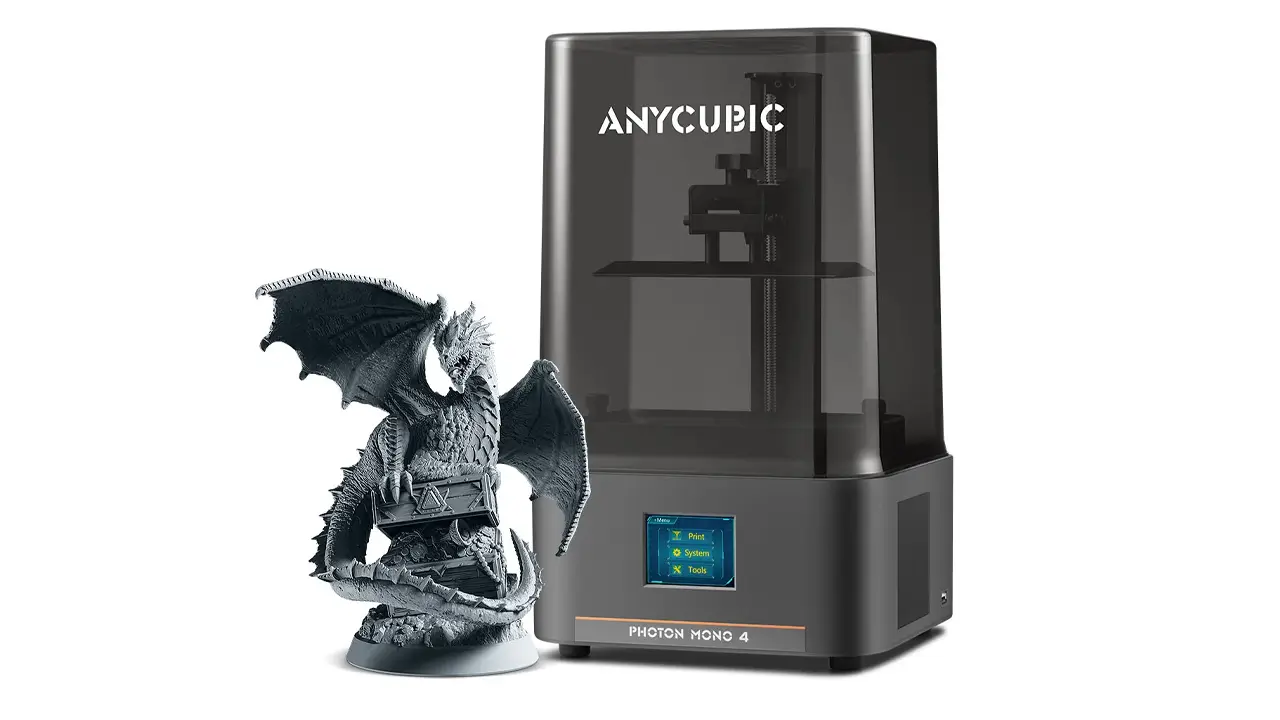
3D Printers & Materials
Speed, stability, and modern electronics. Automatic calibration, high printing speed, well-designed mechanics, and multicolor support for FDM and resin printing.
Print Quality Analysis
Here’s where things get genuinely exciting. When it comes to anycubic mono 4 print quality, the 10K monochrome LCD screen is the star of the show.
With a pixel density of 17 x 17 µm per pixel, the Mono 4 is capable of reproducing extremely fine surface detail. Thin lines, intricate textures, undercuts, and small lettering all come through cleanly. The surface finish on prints is smooth — layer lines are minimal and, in many cases, practically invisible to the naked eye on well-supported models.
The LightTurbo Matrix light source plays a major role in quality consistency. Light uniformity between 80% and 90% across the entire print bed means that models near the edges of the plate cure nearly as well as those positioned dead center. This is a critical factor for batch printing, where you want consistent results across every model on the plate, not just the lucky ones in the middle.
The monochrome LCD screen also contributes directly to print quality in a less obvious way: it allows much more UV light to pass through than older color LCD screens, which means shorter, more precise exposure times. This precision translates directly into sharper, more accurate geometry — less overcuring of thin features, better dimensional accuracy, and cleaner fine details.
For miniatures with 25mm bases, the results are exceptional. Facial features, armor textures, weapon details, and base textures all come through with a level of fidelity that makes the Mono 4 genuinely competitive with much more expensive machines. For jewelry prototyping and dental models, the sub-20 µm pixel accuracy provides the kind of dimensional control that professional workflows demand.
Printing Speed Performance
Speed is one of the areas where modern MSLA resin printers have made the most dramatic improvements, and the anycubic photon mono 4 speed figures reflect that progress clearly.
Using Anycubic’s standard resin, the Photon Mono 4 achieves a comfortable printing pace suitable for everyday use. When paired with Anycubic’s dedicated High-Speed Resin 2.0, the printer can reach up to 70 mm/h. That’s a significant improvement over earlier generations of resin printers, which often crawled along at 20–30 mm/h.
The minimum layer exposure time of 1.5 seconds per layer is one of the key drivers of this speed. Each layer cures quickly and cleanly, allowing the Z-axis to move on to the next layer without extended waiting times. In practical terms, this means that a typical 60–80mm miniature figure can be completed in under two hours under optimal conditions, depending on layer height and support density.
It’s worth noting that print speed in resin printing is influenced by multiple factors beyond just the printer’s capability: the specific resin used, the chosen layer height (thinner layers = more layers = more time), the density and complexity of supports, and the ambient temperature of your workspace. The 70 mm/h figure represents the ceiling under ideal conditions. Real-world speeds for detailed, well-supported prints will typically land somewhat lower — but still very respectable for this class of machine.
For comparison, the older Photon Mono 2 generation was meaningfully slower, so if you’re upgrading, you’ll notice the difference immediately.
Setup and User Experience
One of the biggest concerns for anyone new to resin printing is the setup process, and the anycubic photon mono 4 setup experience is genuinely beginner-friendly. The printer arrives pre-assembled and pre-calibrated from the factory, which eliminates the most intimidating part of getting started with a new machine.
Here’s how the first-time setup process typically flows:
Unboxing: The Photon Mono 4 ships with a well-organized package that includes the printer itself, the resin vat, the build platform, two spatulas, an Allen key set, leveling paper, an anti-scratch film kit, a USB drive with software and sample files, a power supply, gloves, a funnel for resin handling, and the user manual.
Leveling: The 4-point manual leveling system is clear and straightforward. You home the build platform, loosen the four adjustment screws, press the platform flat against the FEP film, retighten the screws, and you’re done. The included leveling paper helps you achieve the correct gap. Most users complete this step successfully on their first attempt in under five minutes.
First Print: Load the included USB drive, select one of the pre-sliced test files, and start the print. The machine takes care of the rest. The on-screen interface displays a progress bar and estimated time remaining, so you always know where you stand.
Software: The Anycubic Photon Workshop slicer software is available for free download and handles everything from importing STL files to generating supports and exporting print-ready files. It also supports anti-aliasing to further smooth out surfaces. Third-party slicers including Chitubox and Lychee Slicer are also fully compatible, giving more experienced users access to the workflow they prefer.
The overall experience is well thought out. Anycubic clearly designed this printer with first-time resin users in mind, without removing the controls that experienced users rely on.
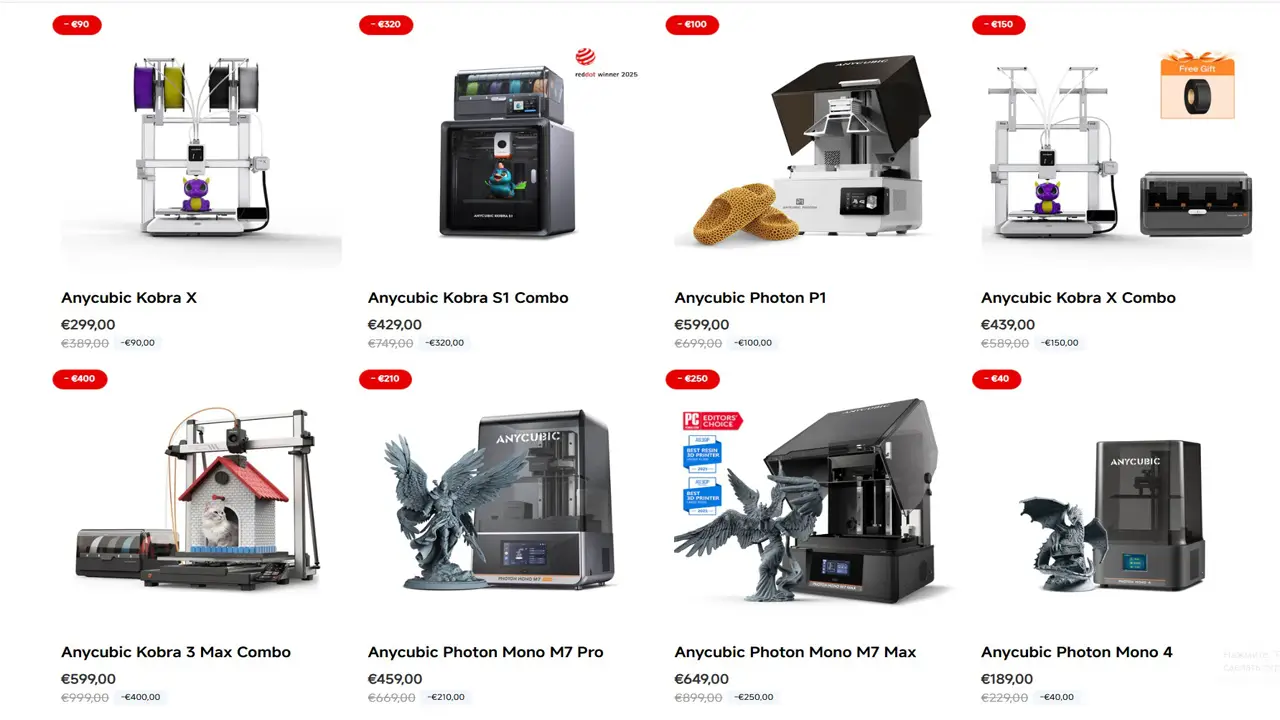
Anycubic
Discount Code for May to June
Exclusive Anycubic discount codes and promotional offers for May-June 2026. Save on 3D printers, filaments, resins, and combo bundles with special coupon codes.
- • Up to €60 OFF on Printers
- • Combo Bundle Discounts
- • Filament & Resin Deals
- • Valid: May – June 2026
Test Prints and Real Results
The proof is always in the output. When evaluating the anycubic photon mono 4 test prints, a few categories tell the full story.
Small Miniatures (25mm base): This is where the 10K resolution truly shines. Figures with this base size come out with sensational detail — individual facial features are distinct, fine texture work on clothing and armor is clearly visible, and even delicate elements like sword edges and filigree patterns hold their shape. The surface is smooth enough that post-processing (sanding or priming) requires very little effort.
Medium Models (50–75mm): Larger models benefit from the 2.2L build volume and continue to show the excellent dimensional accuracy the screen resolution enables. Surface finish remains consistent across the full height of the model, and layer lines are barely perceptible without close inspection.
Functional and Geometric Parts: Flat surfaces, right angles, and circular cross-sections all reproduce faithfully. The 17 µm XY resolution means that small mechanical features — snap fits, pin holes, interlocking parts — come out within tolerance for many hobby and prototyping applications.
Flat Batch Plates: When the build plate is filled with multiple small objects printed simultaneously, quality remains consistent from one model to the next. The 80–90% light uniformity across the plate ensures that models near the edges aren’t disadvantaged compared to centrally placed ones.
The overall test print performance of the Photon Mono 4 consistently meets or exceeds what you’d expect from a machine at this price point. For miniature hobbyists and prototype designers, it genuinely delivers professional-quality results.
Comparison With Other Models
The most common question in online communities is: anycubic mono 4 vs mono x — which one should you choose? Let’s break this down clearly.
| Feature | Photon Mono 4 | Photon Mono X (4K) |
|---|---|---|
| Screen Resolution | 10K — 9024 x 5120 px | 4K — 3840 x 2400 px |
| XY Pixel Size | 17 x 17 µm | ~50 x 50 µm |
| Screen Size | 7 inch | 8.9 inch |
| Build Volume | 153.4 x 87 x 165 mm | 192 x 120 x 245 mm |
| Max Print Speed | Up to 70 mm/h | Up to 50 mm/h |
| Detail Level | Extremely fine (10K) | Good (4K) |
| Target Use | Miniatures, jewelry, prototypes | Larger models, high throughput |
| Generation | Current (2024–2026) | Older generation |
The core takeaway here is straightforward: the Photon Mono 4 wins decisively on resolution and detail — its 10K screen with 17 µm pixels produces noticeably sharper output than the Mono X’s 4K screen with approximately 50 µm pixels. The Photon Mono 4 is also faster, thanks to its newer monochrome screen technology and updated light matrix.
The Mono X, on the other hand, offers a significantly larger build volume — particularly valuable if you regularly need to print large, tall models that won’t fit on the Mono 4’s plate. However, for the vast majority of hobbyist use cases — miniatures, jewelry, small functional parts, and prototypes — the Photon Mono 4’s superior resolution and modern feature set make it the stronger choice in 2025–2026.
There is also the Photon Mono 4 Ultra to consider, which builds on the Mono 4 foundation with a COB light source combined with a Fresnel lens for even tighter light uniformity (≥90%), a 4.3-inch touchscreen, Wi-Fi file transfer, automatic resin level monitoring, failed print detection, and a maximum print speed of up to 120 mm/h with High-Speed Resin 2.0. If those smart features and extra speed matter to your workflow, the Ultra represents a meaningful upgrade. If you want capable 10K printing at the lowest possible entry cost, the base Mono 4 is the better value.
Price and Final Verdict
Let’s talk about the anycubic photon mono 4 price. The Photon Mono 4 is positioned as an entry-level to mid-range offering within Anycubic’s current resin printer lineup, typically retailing in the range of approximately $150–$200 USD depending on the retailer and any active promotions. It is available directly from Anycubic’s official store, as well as through major retailers globally.
For what you get — a 10K monochrome LCD resin printer with 17 µm XY resolution, 70 mm/h max speed, a 2.2L build volume, laser-engraved build plate, resume print function, and compatibility with the most popular third-party slicers — the price-to-performance ratio is exceptional.
Here is a final summary of what the Photon Mono 4 does well and where its limits lie:
| Strengths | Limitations |
|---|---|
| 10K resolution at entry-level price | Smaller build volume than Mono X |
| Excellent surface finish and fine detail | No Wi-Fi (USB only) |
| Fast print speed (up to 70 mm/h) | Small 2.8-inch touchscreen |
| Beginner-friendly setup | No smart print monitoring (available on Ultra) |
| Laser-engraved build platform for strong adhesion | Resin handling requires safety precautions |
| Resume print after power failure | Air purifier sold separately |
| Compatible with major third-party slicers | Not ideal for very large single-piece prints |
Who should buy the Anycubic Photon Mono 4?
This printer is an outstanding choice for tabletop miniature enthusiasts who want every rivet and facial feature to be as sharp as possible. It’s ideal for jewelry designers and makers who need fine-detail prototypes without investing in industrial equipment. It works beautifully for hobbyists entering the world of resin printing for the first time, thanks to its approachable setup process and rock-solid first-print success rate. It’s also a smart upgrade path for anyone currently using an older Photon Mono 2 or similar older-generation machine, as the jump in resolution and speed is substantial.
Who might want to look elsewhere?
If your primary need is large-scale printing — full-size helmets, body armor pieces, display busts, or engineering parts that fill a large build plate — then the Photon Mono X’s significantly bigger build volume may be more relevant than the Mono 4’s superior pixel density. Similarly, if you want smart features like Wi-Fi transfer, automatic resin monitoring, and failed print detection built in from the start, the Photon Mono 4 Ultra is worth the additional investment.
Final Verdict
The Anycubic Photon Mono 4 is one of the most compelling resin printers available at its price point in 2025–2026. It delivers 10K resolution, fast print speeds, a reliable feature set, and a genuinely friendly user experience — all wrapped in a compact, clean package that fits comfortably on any desk. For miniature printing, jewelry prototyping, and detailed small-scale modeling, it punches well above its weight class. If you’re ready to step into high-resolution resin printing without spending a fortune, the Photon Mono 4 earns a confident recommendation.
Polimerukr.com
Ukraine
3D Printing Materials & Supplies
Your trusted source for high-quality 3D printing materials in Ukraine. Wide selection of filaments, resins, and accessories for all printer types with fast local shipping.
- 🇬🇧 English
Great review of the Anycubic Mono 4 — clear structure, solid details on print quality and speed. The site bestchina3dprinters.com is becoming a go-to source for reliable 3D printer insights. - 🇪🇸 Español
Excelente análisis del Anycubic Mono 4. La información es clara y útil, especialmente sobre la calidad de impresión. El sitio bestchina3dprinters.com tiene contenido muy bien organizado. - 🇸🇦 العربية
مراجعة مميزة لطابعة Anycubic Photon 4، الشرح واضح ويغطي الأداء وجودة الطباعة بشكل احترافي. موقع bestchina3dprinters.com مفيد جدًا لعشاق الطباعة ثلاثية الأبعاد. - 🇨🇳 中文
这篇关于Anycubic Mono 4的评测非常专业,内容清晰,特别是打印质量分析部分很有价值。bestchina3dprinters.com 是一个值得关注的网站。 - 🇫🇷 Français
Très bon article sur l’Anycubic Mono 4. Les informations sont précises et faciles à comprendre. Le site bestchina3dprinters.com propose du contenu de qualité. - 🇩🇪 Deutsch
Sehr guter Bericht über den Anycubic Mono 4. Die Details zu Druckqualität und Geschwindigkeit sind besonders hilfreich. bestchina3dprinters.com ist eine starke Ressource für 3D-Drucker.
Discover more from bestchina3dprinters.com
Subscribe to get the latest posts sent to your email.
