 Skip to content
 If you’ve been searching for a large-format 3D printer that doesn’t require a second mortgage, the Tronxy X5SA Pro deserves a serious look. This machine has carved out a dedicated following among makers, cosplayers, engineers, and hobbyists who need a big build area without paying premium brand prices. In this Tronxy X5SA Pro review, we’ll walk through everything — from specs and setup to print quality, upgrades, and how it stacks up against the competition. Whether you’re a seasoned printer enthusiast or stepping up from a compact desktop machine, this guide will give you a clear, honest picture of what to expect.


What Is the Tronxy X5SA Pro?
The Tronxy X5SA Pro is a new and improved version of the Tronxy X5S, a popular and affordable large-format 3D printer. Tronxy is a Chinese manufacturer that has been building FDM (Fused Deposition Modeling) printers for years, and the X5SA Pro represents one of their most refined consumer offerings in the large-format segment.
The printer is large-format, affordable, and built from aluminum. Its lightweight yet sturdy structure delivers accurate printing results and fast print speed. Auto-leveling, power-off print resume, and filament run-out detection make it more user-friendly and practical for everyday use.
What makes the X5SA Pro stand out in an increasingly crowded market is its combination of a CoreXY motion system, a genuinely massive build area, and a price point that sits well below comparable machines from more established Western brands. It’s positioned as a machine for people who want professional-scale output without the professional-scale price tag — and for the most part, it delivers on that promise, provided you’re willing to invest some time during setup and calibration.
The X5SA Pro is specifically developed for people who enjoy large-size printing and DIY. Users assemble and debug it themselves, and in doing so, can enjoy the experience of hands-on building — and can even innovate and modify the printer’s configuration according to their own creative ideas.

Tronxy X5SA Pro
Reliable large-format 3D printer from Tronxy. Sturdy metal frame, auto-leveling sensor, and consistent performance for everyday printing and prototyping projects.
- • 330×330×400 mm Build
- • Auto Bed Leveling
- • Titan Extruder
- • Resume Print Function
Tronxy X5SA Pro Specs Overview
Before diving into real-world performance, let’s look at what’s actually inside the box. The Tronxy X5SA Pro specs paint a picture of a machine designed for rigidity, speed, and versatility.
| Parameter | Specification |
|---|---|
| Build Volume | 330 × 330 × 400 mm |
| Motion System | CoreXY with full belt transmission |
| Frame Material | Aluminum profile (20×20 and 20×40 extrusions) |
| Z-Axis | Dual Z-axis design |
| Extruder | Titan extruder (Bowden setup) |
| Auto Leveling | TR sensor / lattice glass auto leveling |
| Print Bed | Heated glass bed (lattice surface) |
| Display | 3.5-inch touchscreen |
| Power Supply | 24V / 360W |
| Cooling | Dual turbo cooling fans |
| Filament Sensor | Yes — beep alert on runout |
| Resume Printing | Yes — power-off recovery |
| Guide System | Linear rails on print head |
| Supported Filaments | PLA, ABS, PETG, TPU, Nylon, Wood-fill |
| Firmware | Proprietary Tronxy firmware (Klipper upgrade available) |
| Starting Price | From approx. $350–$480 USD |
The CoreXY motion system is one of the most important technical highlights here. Unlike the traditional Cartesian (Prusa-style) design where the heated bed moves back and forth on the Y-axis with every layer, the CoreXY system keeps the print bed stationary on the horizontal plane. Only the print head moves — along both X and Y axes simultaneously using two synchronized belt-driven motors. This dramatically reduces the moving mass during a print, resulting in less vibration, faster movement, and a higher potential for print accuracy, especially at speed.
The dual Z-axis design adds further stability. Rather than a single lead screw lifting the bed, two synchronized Z-axis screws work together to keep the platform level and distribute the load evenly. This is particularly important on a machine with such a large and heavy heated bed.
The frame itself is constructed from aluminum extrusions — a combination of 20×20 and 20×40 profiles — which gives the printer excellent rigidity for its size. The metal mainboard enclosure adds a layer of safety and organization, keeping wiring contained and reducing the risk of electrical interference during long prints.
Massive Build Volume Advantage. Tronxy X5SA Pro
Let’s talk about the feature that makes most people interested in the Tronxy X5SA Pro in the first place: its enormous build volume of 330 × 330 × 400 mm. In real-world terms, that’s roughly 13 × 13 × 15.75 inches of usable printing space.
To put this in perspective, the popular Creality Ender 3 offers a build volume of 220 × 220 × 250 mm. That means the X5SA Pro gives you more than double the usable print area in all three dimensions combined. Even compared to the Creality CR-10 V2 and Artillery Sidewinder X1, which both offer 300 × 300 × 400 mm, the X5SA Pro’s wider footprint gives you a measurable edge for wide flat parts or side-by-side batch printing.
Who actually needs this kind of space? Quite a few people, as it turns out:
Cosplay and prop makers are among the biggest beneficiaries. Helmet shells, armor plates, weapon props, and large decorative pieces that would normally require splitting across multiple prints can often be done in a single run on the X5SA Pro. This eliminates the need for post-print gluing and seam filling, saving both time and effort.
Product designers and prototypers can print functional mockups at full scale rather than at reduced size. A full-sized phone case, keyboard housing, or mechanical bracket can be tested for fit and finish without compromises.
Batch printing is another strong use case. Because the bed is so wide, you can arrange dozens of smaller parts side by side and print an entire production run overnight. Small businesses making custom accessories, spare parts, or modular components find this especially useful.
Architecture and educational models also benefit greatly. Scale models of buildings, terrain pieces for tabletop gaming, or large anatomical models for educational purposes all become practical on this machine.
The heated glass bed supports printing with ABS-type materials, Nylon, and PETG — materials that benefit from consistent bed warmth to prevent warping during long prints on a large surface.
Auto Leveling System Explained.
Bed leveling is one of the most frustrating parts of using any 3D printer, and it becomes even more critical on a large-format machine where any deviation across a 330 mm surface can ruin hours of printing. The Tronxy X5SA Pro auto leveling system addresses this directly.
The printer uses a TR sensor combined with a lattice glass plate to perform automatic bed leveling. Before a print begins, the sensor probes multiple points across the bed surface and maps out any inconsistencies in height. The firmware then compensates for these variations during the first layers of the print, ensuring that the nozzle maintains a consistent distance from the bed across the entire surface.
Before performing automatic leveling, it’s important to make sure the adjustable sensor position is not lower than the nozzle position. After the auto-leveling routine completes, the difference between data points across the bed should ideally be less than 0.05 mm. Setting the correct Z-offset after leveling is also an essential step — this tells the printer exactly how far the nozzle sits above the bed surface at the zero point.
In practical terms, users consistently report that the auto-leveling system is one of the X5SA Pro’s biggest improvements over its predecessor. The lattice glass surface also makes model removal much easier — once the bed cools down, prints often release on their own or with very minimal force, reducing the risk of damaging either the model or the surface.
The 3.5-inch touchscreen makes navigating the leveling menu straightforward. The interface isn’t as polished as something you’d find on a Bambu Lab machine, but it’s responsive and functional. You can initiate a leveling routine, review the mesh map, and set the Z-offset all from the same screen.
For absolute beginners, the auto-leveling feature removes the single biggest source of first-print failures. For experienced users, it speeds up workflow considerably — especially when switching between different filament types that require different bed heights or temperatures.
Setup and Assembly Experience. Tronxy X5SA Pro
Let’s be upfront: the Tronxy X5SA Pro setup is not a plug-and-play experience. This is a DIY kit printer, and the assembly process will take several hours even for someone with prior experience. For a first-time builder, expect to spend anywhere from four to eight hours getting everything together and calibrated.
The box arrives with the main frame components, pre-assembled subassemblies, wiring harnesses, a toolset, and a paper manual. The new pinboard design helps organize the electrical connections, reducing the risk of wiring errors during assembly. The metal mainboard enclosure keeps all the electronics housed safely and makes the final build look much cleaner than older versions with exposed boards.
That said, the manual has been a consistent point of criticism in the community. Diagrams can be small and difficult to read, and some translations from Chinese result in instructions that are technically accurate but unclear in sequence. The recommendation from most experienced builders is to use the paper manual alongside YouTube assembly video walkthroughs simultaneously — the combination of visual reference and written steps makes the process far more manageable.
Tips that experienced users consistently share include: dry-fit all components before tightening any bolts permanently, check belt tension carefully on both X and Y axes before your first print, and make sure the Bowden tube is fully seated into the hotend coupling — an improperly seated tube is one of the most common causes of early feeding problems.
Once assembled and calibrated, the machine is surprisingly stable for its size. The aluminum frame doesn’t flex noticeably during high-speed moves, which is a real achievement given the large footprint. The 24V / 360W power supply heats the bed and hotend quickly — the bed reaches printing temperature in just a few minutes, which is excellent for a surface this large.
A firmware update is often recommended immediately after first boot. Tronxy does release firmware updates through their official channels, and users report that installing the latest version resolves minor bugs and occasionally improves motion control behavior.
Print Quality and Performance Tronxy X5SA Pro
So once everything is set up and calibrated — what does the Tronxy X5SA Pro actually print like?
The CoreXY architecture is a strong foundation for quality output. Because the print head — not the bed — carries most of the motion, vibration-induced artifacts like ghosting and ringing are significantly reduced compared to bed-slinger designs. This becomes especially important when printing large models, where a traditional Cartesian printer would need to rapidly decelerate a heavy bed at every direction change.
For standard PLA printing at 0.2 mm layer height, the X5SA Pro produces clean, well-defined layers with good surface consistency. Small details like text embossing, geometric patterns, and curved surfaces come through accurately when the machine is properly tuned. Print speeds of 60–80 mm/s are comfortable territory for quality output, and users have successfully pushed to 100 mm/s with acceptable results on less detail-critical parts.
With PETG, the dual turbo cooling fans do a good job managing the slower cooling requirements of this filament. ABS is also achievable, particularly thanks to the heated glass bed that keeps the build surface warm enough to prevent corner lifting on larger parts.
Stability on large models is where this printer really earns its reputation. A full-height print using most of the 400 mm Z-axis is a genuine test for any machine — vibrations accumulate, the center of gravity of the growing model shifts, and any mechanical looseness becomes amplified over hundreds of layers. The X5SA Pro’s rigid aluminum frame and dual Z-axis keep tall prints tracking true without the layer shifts or wobble artifacts that plague less robust machines.
Where quality can suffer is during the initial calibration period. Users who skip proper Z-offset adjustment or leave belt tension uneven will see uneven layer lines, poor first-layer adhesion, or inconsistent extrusion. These issues are machine-setup problems rather than design flaws — once dialed in, the print quality is genuinely impressive for the price bracket.
Tronxy 3D Printers
Shenzhen, China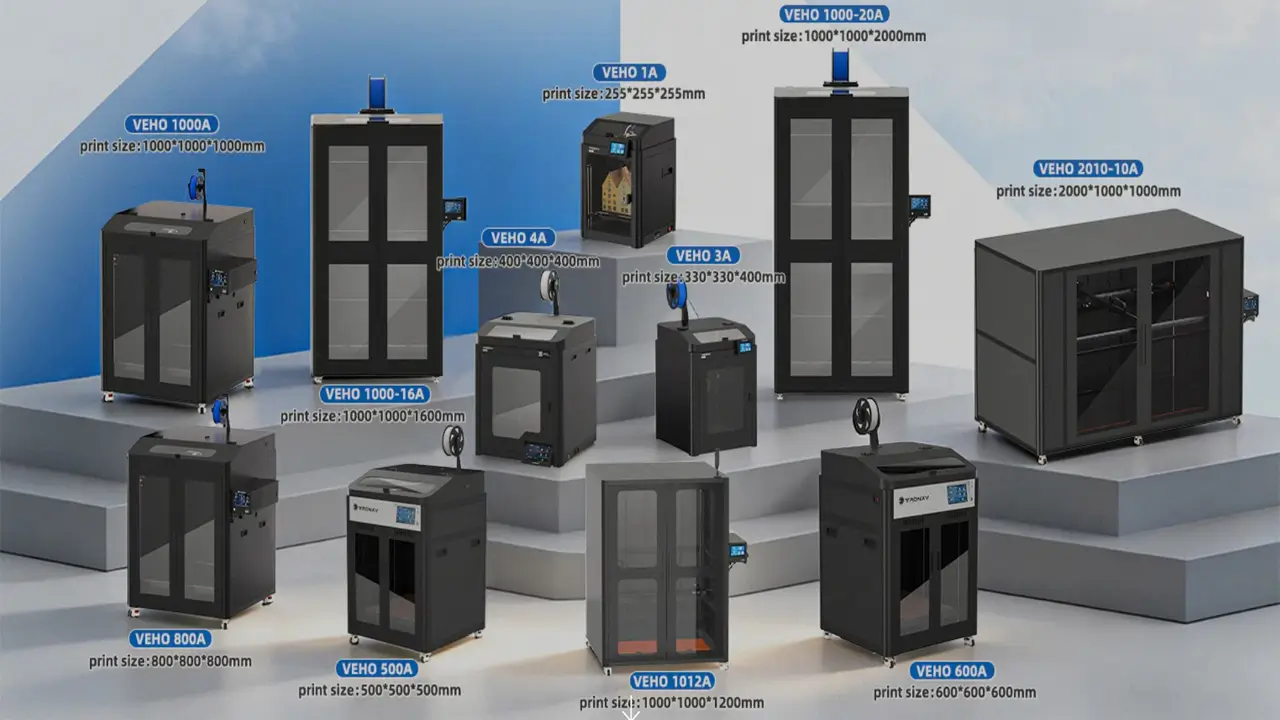
Reliable FDM Printers
Affordable and reliable 3D printers from Tronxy. Wide range of models for beginners and enthusiasts, with sturdy construction and consistent performance for everyday printing.
Software and Cura Profiles
The Tronxy X5SA Pro is compatible with the most popular slicing software on the market. Ultimaker Cura is the most widely used option in the community, and the good news is that dedicated Cura profiles for the X5SA Pro are publicly available from multiple sources.
Community-shared profiles on GitHub cover a solid range of filament types and quality levels. Available configurations include PLA at normal quality (0.2 mm layer), PLA at middle quality (0.14–0.16 mm layer), PETG at normal and middle quality settings, TPU at 0.2 mm, and even Wood/Bamboo filament profiles at finer layer heights. These profiles give you a strong starting point without needing to build settings from scratch.
When setting up Cura manually, the key parameters to get right are the build volume (330 × 330 × 400 mm), the correct start and end G-code for the Tronxy firmware, and the print head offsets. The printer uses a standard Cartesian coordinate system in its firmware despite the CoreXY mechanics, so no special coordinate remapping is needed in the slicer.
A community-developed Cura plugin also exists that adds the X5SA series as a selectable printer profile within the Cura printer database, including a 3D representation of the build platform in the preview window. This makes it much easier to visualize part placement and detect potential size issues before sending a file to the printer.
PrusaSlicer is another capable option for the X5SA Pro, and many users prefer its support generation algorithms for complex models. The custom printer setup in PrusaSlicer requires entering the build volume and configuring the start G-code, but the process is well-documented in community guides.
For those who upgrade to Klipper firmware, the slicer configuration changes slightly — Klipper uses a different start G-code convention — but the slice settings for layer height, speed, and temperature remain the same.
Polimerukr.com
Ukraine
3D Printing Materials & Supplies
Your trusted source for high-quality 3D printing materials in Ukraine. Wide selection of filaments, resins, and accessories for all printer types with fast local shipping.
Upgrade Potential and Modding
One of the defining characteristics of the Tronxy X5SA Pro community is its enthusiasm for modifications. This machine is often described as an excellent platform for upgrades — a solid mechanical foundation that rewards the time and investment put into improving it.
The most popular Tronxy X5SA Pro upgrade is the direct drive conversion. The stock Titan extruder runs in a Bowden configuration, where the motor sits away from the hotend and feeds filament through a PTFE tube. This works well for rigid filaments like PLA and PETG, but flexible materials like TPU become difficult to print reliably due to the long Bowden path. A direct drive conversion mounts the extruder motor directly above the hotend, dramatically improving flexible filament handling and reducing retraction distances for all materials.
Linear rail upgrades are another popular modification. The stock motion system uses V-slot wheels on aluminum extrusions, which work well when new but can develop play and inconsistency as they wear. Replacing the X and Y axes with MGN12 linear rails provides lower friction, better long-term consistency, and a smoother feel during high-speed moves.
Klipper firmware is arguably the single most impactful upgrade available for this printer. Klipper replaces the stock proprietary firmware with an open-source alternative that runs on a Raspberry Pi and enables advanced features like input shaping (which dramatically reduces ringing artifacts at high speeds), pressure advance (improving corner quality and reducing stringing), and much more flexible configuration via a simple text file. Tronxy officially offers Klipper upgrade kits, and the community has extensive documentation for the installation process.
Ball screw upgrades for the Z-axis are favored by users who print very tall objects frequently. Ball screws provide smoother, more precise Z-axis movement compared to the standard trapezoidal lead screws, reducing Z-axis artifacts on tall prints.
Other popular modifications include silicone bed leveling mounts to replace the stock springs, improved cooling shrouds for better part cooling, and reinforcement brackets for the frame corners to increase overall rigidity.
Comparison with Competitors
The Tronxy X5SA Pro vs Ender 5 comparison is one of the most frequently asked questions in the large-format printer community, and it’s a genuinely interesting matchup.
| Feature | Tronxy X5SA Pro | Creality Ender 5 Plus |
|---|---|---|
| Build Volume | 330 × 330 × 400 mm | 350 × 350 × 400 mm |
| Motion System | CoreXY | CoreXY |
| Auto Leveling | Yes (TR sensor) | Yes (BLTouch on some versions) |
| Dual Z-Axis | Yes | Yes |
| Extruder Type | Titan (Bowden) | Bowden |
| Display | 3.5″ Touchscreen | Touchscreen |
| Power Supply | 24V / 360W | 24V / 350W |
| Community Support | Active but smaller | Very large Creality ecosystem |
| Price Range | ~$350–$480 | ~$400–$550 |
| Assembly | Full DIY kit | Partially pre-assembled |
The Ender 5 Plus benefits from being part of the massive Creality ecosystem, which means more readily available replacement parts, a larger pool of community knowledge, and generally more beginner-friendly documentation. For someone who doesn’t enjoy troubleshooting and wants a more guided experience, the Ender 5 Plus is the more comfortable choice.
However, the Tronxy X5SA Pro competes strongly on price. When comparable discounts are applied, the X5SA Pro typically costs noticeably less — and for makers who enjoy tinkering, the Tronxy’s open platform and strong modding community make it an arguably more exciting long-term investment.
The dual Z-axis design on the X5SA Pro provides excellent bed stability during large prints, a feature that the community highlights as a genuine advantage for minimizing errors across the full height of the build.
Community Feedback and Final Verdict
The Tronxy X5SA Pro community is active across several platforms. Thingiverse hosts an active Tronxy group where users share profiles, printed upgrades, and troubleshooting tips. Reddit’s 3D printing communities regularly feature threads about the X5SA Pro, covering everything from first assembly experiences to advanced Klipper configurations. Facebook groups dedicated to Tronxy printers provide another channel for real-time support.
The overall feedback pattern from real users is consistent: the X5SA Pro rewards patience. Users who take time to assemble carefully, calibrate thoroughly, and explore the upgrade path consistently report excellent results and strong satisfaction for the price. Users who expect immediate out-of-box perfection sometimes find the initial learning curve frustrating.
Users frequently highlight the auto-leveling feature and the lattice glass bed as the two most meaningful quality-of-life improvements over the base X5SA model. The touchscreen interface receives positive mentions for being responsive and intuitive. The large build volume earns praise in almost every review — it’s the machine’s defining feature and one that genuinely opens up project possibilities that simply aren’t available on smaller printers.
On the critical side, the assembly manual quality and the initial calibration time are the most cited negatives. Some users also note that the stock Bowden extruder configuration limits performance with flexible filaments, which is why the direct drive upgrade is so popular.
So who should buy the Tronxy X5SA Pro? This machine is an excellent fit for:
Intermediate to advanced makers who are comfortable with DIY assembly and basic troubleshooting, and who want a large print area without paying premium prices.
Cosplayers and prop builders who regularly need to print large single-piece parts and want to reduce post-processing work.
Designers and prototypers who need full-scale functional prints for testing and iteration.
Upgrade enthusiasts who enjoy the process of improving a machine over time and want a platform with room to grow — from Klipper firmware to direct drive conversions to linear rails.
The Tronxy X5SA Pro large format 3D printer sits in a compelling middle ground: it’s not the easiest printer to get started with, but it offers a level of build volume and mechanical capability that few machines in this price range can match. For the right user, it’s not just a good deal — it’s an outstanding one.
If you’re ready to invest time in setup, embrace the DIY spirit, and take advantage of the upgrade potential this platform offers, the Tronxy X5SA Pro will reward you with large, high-quality prints that would cost two or three times as much to achieve on any comparably sized machine from a premium brand.
🇬🇧 English
Excellent review of the Tronxy X5SA Pro. The article clearly explains the build volume, upgrades, and real-world performance. The website is well-structured and very helpful for choosing a 3D printer.
🇪🇸 Español
Gran análisis del Tronxy X5SA Pro. La información sobre el volumen de impresión y las mejoras posibles es muy útil. El sitio es fácil de navegar y tiene contenido de alta calidad.
🇸🇦 العربية
مراجعة ممتازة لطابعة Tronxy X5SA Pro. الشرح واضح حول حجم الطباعة والأداء والتعديلات الممكنة. الموقع منظم ويحتوي على معلومات قيمة للمستخدمين.
🇨🇳 中文
这篇关于 Tronxy X5SA Pro 的评测非常专业。内容详细介绍了打印尺寸、性能和升级潜力。网站结构清晰,对选择3D打印机非常有帮助。
🇫🇷 Français
Très bon article sur la Tronxy X5SA Pro. Les explications sur le volume d’impression et les possibilités d’amélioration sont précises. Le site est clair et agréable à utiliser.
🇩🇪 Deutsch
Sehr gute Bewertung des Tronxy X5SA Pro. Die Details zu Druckvolumen, Leistung und Upgrades sind hilfreich. Die Website ist übersichtlich und bietet echten Mehrwert.
Tronxy X5SA Pro
Reliable large-format 3D printer from Tronxy. Sturdy metal frame, auto-leveling sensor, and consistent performance for everyday printing and prototyping projects.
- • 330×330×400 mm Build
- • Auto Bed Leveling
- • Titan Extruder
- • Resume Print Function
Discover more from bestchina3dprinters.com
Subscribe to get the latest posts sent to your email.
