If you’ve been following the world of 3D printing, you know how fast things are moving. Just a few years ago, printing in multiple colors meant swapping filaments mid-print or painting your model by hand afterward. Today, something genuinely new has arrived — and it’s called the full color 3D printer. Not “multicolor.” Not “dual extrusion.” True, photorealistic, gradient-capable, millions-of-colors full color. The Flashforge CJ270 is leading that charge, and in this article we’re going to take a friendly, thorough look at what makes it special, how it works, and why it matters.
Whether you’re a designer, educator, engineer, or just a curious creator, grab a coffee and let’s explore what might just be the most exciting desktop 3D printer of the decade.
The Rise of Full Color 3D Printing
For most of its history, 3D printing was a world of one color at a time. You loaded a spool of filament — white, black, gray, maybe red — and out came your part. Painting, post-processing, and manual finishing were considered normal parts of the workflow. Nobody questioned it because, well, that’s just how it worked.
Then came a quiet revolution. Designers and engineers started asking: why can’t a 3D printer work more like a high-resolution inkjet printer? Why can’t it mix colors the way a printer mixes cyan, magenta, yellow, and black to reproduce a photograph? The demand was real. Product designers needed realistic prototypes. Medical professionals needed anatomically accurate models. Artists needed objects that looked as good in person as they did on a screen.
The problem was cost. A full color 3D printer capable of photo-realistic output — like the Stratasys J series or the Mimaki 3DUJ-553 — could easily cost between $100,000 and $200,000 or more. That put true full color 3D printing firmly in the realm of large corporations and specialized service bureaus — completely out of reach for small studios, schools, and independent creators.
That’s the gap that the Flashforge CJ270 is aiming to close. And based on everything we know about the machine, it’s making a very compelling case. The market is shifting. Creators are demanding color. And the technology is finally catching up with the dream.
Flashforge
Jinhua, China
Industrial Stability
Industrial stability with intuitive controls. Reliable mechanics, enclosed enclosures for stable ABS and nylon printing, high-quality assembly for education and professional use.
What Is the Flashforge CJ270?
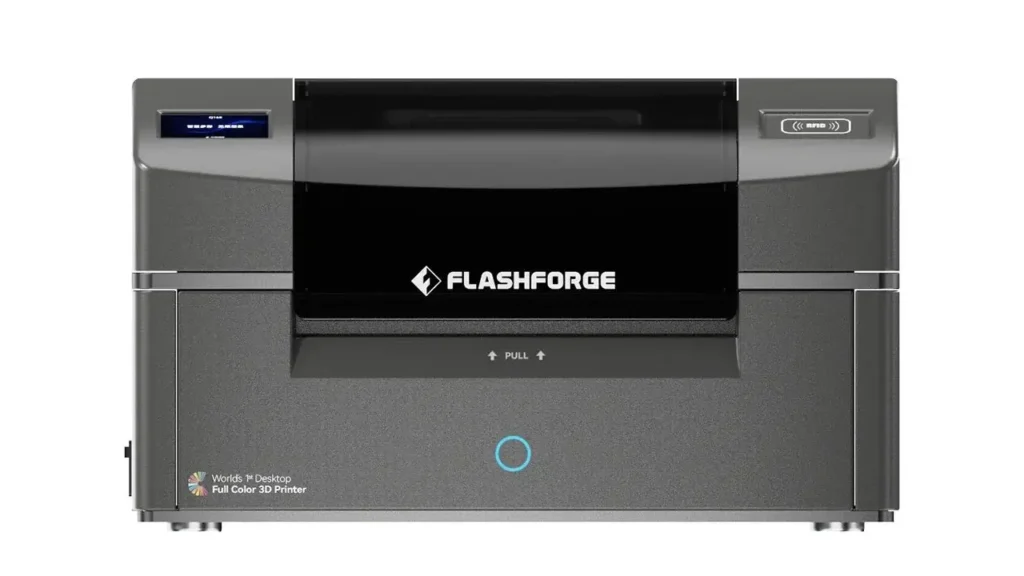
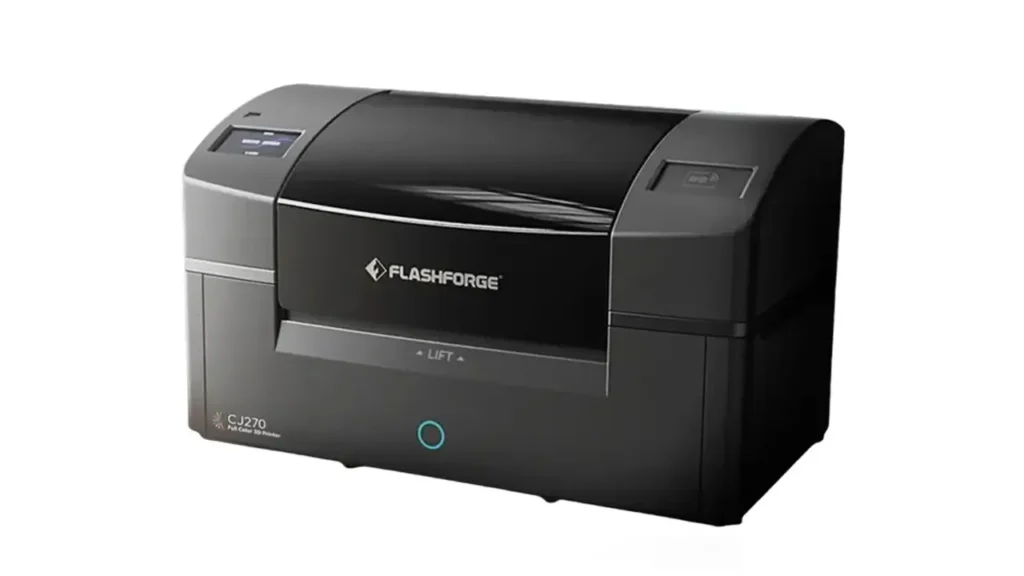
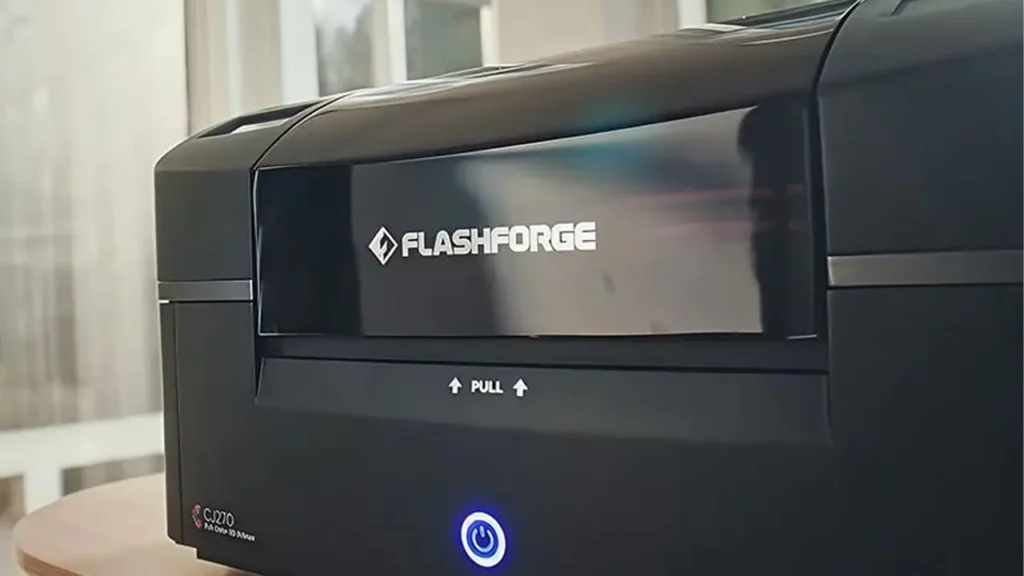
The Flashforge CJ270 is a desktop-sized material-jetting color 3D printer born from the company’s fast-growing experience in the jewelry space with its wax-jet machines. Flashforge — an R&D-driven manufacturing company with over twelve years in the 3D printing industry — has taken that specialized expertise and applied it to a brand-new category of consumer-grade hardware.
Flashforge positions the CJ270 as the world’s first desktop full color 3D printer, bringing material-jetting style color output to a machine sized for studios, classrooms, and small businesses. That’s not marketing fluff — it’s a technical claim backed by a specific set of capabilities that no other desktop machine has matched.
The CJ270 was first publicly showcased at Formnext, one of the world’s leading trade fairs for additive manufacturing, where it immediately attracted serious attention from industry observers. Unlike machines that approximate color by swapping filament rolls, the CJ270 delivers true color mixing at the microscopic level — the same fundamental approach used by systems costing many times more.
Flashforge describes its mission as “Innovation Enriches Everyone’s Dream,” and the CJ270 is perhaps the clearest expression of that mission to date. It is a machine designed to make professional-grade color fabrication accessible to everyone — not just to those with six-figure budgets.
Color 3D Printing Technology Explained
To really appreciate what the Flashforge CJ270 does, it helps to understand the color 3D printing technology behind it. The CJ270 uses a process called material jetting — and it’s closer to how a high-resolution inkjet photo printer works than to anything you’d find in a typical FDM (fused deposition modeling) desktop machine.
Here’s how it works: seven individual printheads are arranged across the machine. Each printhead is dedicated to a specific material — cyan, magenta, yellow, black, white, clear, and a water-soluble support material. As the print platform moves, these heads fire microscopic droplets of photopolymer resin onto the build surface in precise, controlled patterns. After each layer is deposited, a UV light source passes over it and instantly cures — hardens — the resin in place.
The result is that colors are not “switched” between layers. They are blended and mixed at a resolution of 185 x 720 DPI, with each layer being just 10 micrometers thick. That’s thinner than a human hair. This level of precision is what allows the CJ270 to reproduce smooth gradients, realistic textures, and subtle color transitions that would be simply impossible with filament-based approaches.
The G7 color management standard — the same framework used in professional graphic printing — is implemented directly into the machine’s workflow, ensuring that what you see on your screen is faithfully reproduced in the physical object. This is color 3D printing technology not as a gimmick, but as a genuine engineering achievement.
Desktop Full Color 3D Printer Revolution
The phrase “desktop full color 3D printer” might sound modest, but make no mistake — what Flashforge has achieved with the CJ270 is genuinely revolutionary for a very specific reason: size and accessibility.
Industrial full color material jetting systems are large, loud, expensive to operate, and require dedicated infrastructure. They belong in factory environments or high-end prototyping labs. The idea of having one sit on your office desk or studio workbench has always been science fiction — until now.
The CJ270 measures just 680 x 400 x 395 mm and weighs 38 kg, occupying only 0.272 square meters of desktop space — roughly the footprint of a large laser printer. It fits on standard office furniture. It operates at noise levels at or below 55 dB, which is quieter than a normal conversation. You can genuinely run this machine in a shared office, a design studio, a university lab, or even a home workshop without it dominating the space or disturbing anyone around you.
This matters enormously for small creative studios and independent creators. Previously, if you needed a full color prototype, you had two options: send it to a professional 3D printing service bureau (expensive, slow, requires shipping) or buy an industrial system (prohibitively costly). The CJ270 introduces a third option: do it yourself, at your desk, in one seamless workflow.
For educators, the implications are just as exciting. Imagine a design school where students can hold a physically printed, full color version of their digital model within hours. For medical training programs, detailed anatomical models printed in realistic tissue colors. For product design teams, a rapid iteration loop where color accuracy is not a compromise — it’s a given.
10 Million Colors Capability
Let’s talk about the headline number, because it deserves real explanation: the Flashforge CJ270 is capable of producing over 10 million distinct colors. That’s not a rounding-up figure. It reflects the mathematical reality of how CMYK color mixing works at high resolution.
The machine uses six structural resin types — cyan, magenta, yellow, black, white, and transparent — plus a dedicated water-soluble support material, all dispensed through seven individual printheads. By varying the ratios and placement of these base colors at a pixel-by-pixel level within each layer, the system can produce combinations that number in the tens of millions.
What this means in practice is breathtaking. You can print objects with:
— Smooth, photographic gradients that transition seamlessly from one hue to another across the surface of a model — Realistic skin tones for figurines, portraits, and character models — True transparency and semi-transparency, including colored transparent regions — Fine surface textures that combine color and depth in a single print — Accurate branded colors for product prototyping, matching Pantone or RGB references
This is the kind of capability that previously required either hand-painting by a skilled artist or access to a Stratasys or Mimaki industrial system. The 3D printer 10 million colors figure is not marketing hype — it is the direct result of the precision material jetting architecture at the heart of the CJ270.
For anyone who has ever tried to achieve photorealistic color on a 3D print and ended up with blotchy filament transitions or messy hand-painted results, this capability represents a fundamental leap forward.
Polimerukr.com
Ukraine
3D Printing Materials & Supplies
Your trusted source for high-quality 3D printing materials in Ukraine. Wide selection of filaments, resins, and accessories for all printer types with fast local shipping.
Multicolor vs Full Color Printing: Understanding the Difference
There’s an important distinction that gets lost in a lot of 3D printing conversations, and it’s worth clearing up clearly: there is a significant difference between a multicolor 3D printer and a full color 3D printer. The CJ270 is the latter, and that distinction matters more than most people realize.
A multicolor 3D printer — the kind popularized by machines with filament switching systems — works by pausing the print and loading a different colored spool, or by routing multiple filaments into a single hotend and purging between colors. The result is objects that can have several distinct colors, but only in solid, block areas. There are no true gradients. Transitions between colors are abrupt. You might get a red hat on a blue figure, but you won’t get a realistic sunset sky or a human face with natural skin variation.
The Flashforge CJ270 operates on an entirely different principle. Instead of switching between filament colors, it simultaneously deposits all color channels — cyan, magenta, yellow, black, white, and clear — in the exact proportions needed for each individual voxel (3D pixel) of the model. Think of it like the difference between coloring with crayons (swapping colors one area at a time) versus printing a photograph (all colors applied simultaneously at microscopic precision).
Here is a quick side-by-side comparison of the two approaches:
| Feature | Multicolor FDM Printer | Full Color (CJ270) |
|---|---|---|
| Color Mixing Method | Filament switching | CMYK material jetting |
| Number of Colors | Limited to loaded filaments | 10+ million combinations |
| Color Gradients | Not possible | Smooth, photographic |
| Transparency Support | Limited or none | Full transparent & semi-transparent |
| Resolution | Layer-level color | 185 x 720 DPI, 10 µm layers |
| Post-Processing | Sanding, painting often needed | Water rinse only |
| Color Management | Manual color assignment | G7 standard, automated |
The difference is not subtle. It’s the difference between a rough approximation of color and a true reproduction of it. For anyone creating display models, artistic pieces, or professional prototypes, this gap is decisive.
No Post-Processing Workflow: A Game-Changer for Production Speed
One of the most underappreciated advantages of the Flashforge CJ270 is not its color capability — it’s what you don’t have to do after the print finishes. Full color 3D printing without post processing has long seemed like an impossible ideal. With the CJ270, it’s the default workflow.
Traditional 3D printing almost always requires some degree of finishing work after the print completes. With FDM machines, you’re sanding away layer lines, removing support structures that can damage or leave marks on the model, and then applying paint or primer if color is required. Resin printers need UV curing stations, isopropyl alcohol washing baths, and careful support removal. All of this takes time, skill, and specialized equipment.
The CJ270 simplifies this dramatically. Its support structures are made from a dedicated water-soluble material. When the print is finished, you simply submerge the object in water and the supports dissolve on their own — completely and without any manual intervention. The supports dissolve fully in approximately 10 hours in plain tap water, or in just 1 to 2 hours using an ultrasonic cleaning tool. No scraping. No prying. No risk of snapping a delicate feature while wrestling with a support structure.
The overall workflow from idea to finished, full color physical object involves just five steps: import your 3D model file, let the software slice it, initiate the print with a single button press, allow the automated material mixing to run, and finish with the water-based support removal. That’s it. A complex figurine model can go from import to print-ready status in as little as 3 to 5 minutes of software processing, with no manual color assignment or support placement required.
For production environments, creative studios, and anyone who values their time, this is transformative. The ability to iterate quickly — print a prototype in the morning, review it at lunch, adjust and reprint by afternoon — changes how design teams work. Color is no longer a separate, time-consuming step tacked onto the end of the process. It’s built into the print itself.
Resin-Based Color Printing Innovation
The material science behind the Flashforge CJ270 is as impressive as its color capabilities. The machine uses photopolymer resins — liquid materials that harden when exposed to UV light — as its printing medium. This is what gives the CJ270 its exceptional surface quality, fine detail resolution, and vibrant color reproduction.
The CJ270 works with six structural resin types: cyan, magenta, yellow, black, white, and transparent. These materials are loaded into RFID-tagged cartridges, which the machine automatically recognizes and tracks. The RFID system not only confirms that the correct materials are installed, but also manages material usage tracking, ensuring that color profiles remain consistent and accurate throughout a print job. This is part of the G7 color management implementation — a professional-grade standard that ensures color accuracy from digital file to physical object.
The photopolymer resins used in the CJ270 allow for capabilities that no filament-based printer can match. Transparent and semi-transparent prints are possible — meaning you can create objects with clear windows, frosted glass effects, or translucent colored regions within a single print. The layer thickness of 10 micrometers (µm) — compared to the typical 100–300 µm of FDM printers — results in surface quality that is smooth, detailed, and exhibition-ready without sanding.
The UV curing that happens layer by layer during printing means the resin is fully hardened as part of the printing process itself, not as a separate post-print step. This contributes to the no-post-processing advantage discussed earlier and ensures dimensional accuracy throughout the model.
Professional Applications of the Flashforge CJ270
The Flashforge CJ270 is not a toy, and the professional color 3D printer and high resolution color 3D printer capabilities it brings to the desktop open up a remarkable range of real-world applications. Let’s walk through some of the most compelling use cases across different industries.
Product Design and Prototyping
For product designers, the ability to hold a physically accurate, full color prototype of a digital model is invaluable. Color is not an afterthought in product design — it’s a core part of how consumers perceive and evaluate a product. With the CJ270, design teams can print branded packaging mockups with accurate Pantone colors, evaluate ergonomics and aesthetics simultaneously, and present clients with objects that look like finished products rather than rough approximations.
Medical Modeling
In healthcare and medical education, anatomically detailed models are used for surgical planning, patient communication, and training. The CJ270’s ability to print in full color — including realistic tissue tones, color-coded anatomical structures, and transparent sections — makes it a powerful tool for producing models that are not just structurally accurate but visually meaningful. Surgeons can study a patient-specific model with vessels rendered in red, nerves in yellow, and bone in white, all within a single print.
Figurines and Character Models
The gaming, collectibles, and entertainment industries have an enormous appetite for detailed, realistic figurines. The CJ270 can reproduce skin gradients, fur textures, fabric patterns, and facial features with a level of fidelity that previously required skilled hand-painting. Independent artists and small studios can now produce display-quality character models directly from digital sculpts.
Architecture and Scale Models
Architectural firms use scale models to communicate design intent to clients. The CJ270 enables the printing of building models that include accurate facade colors, material textures, landscape features, and interior details — all in a single print. Studios report significant cost savings compared to assembling hand-painted parts from multiple vendors.
Education
Schools and universities can use the CJ270 to bring learning materials to life. Historical artifacts, biological specimens, geographic terrain models, and scientific diagrams can all be printed in full color, giving students tangible, three-dimensional references that enhance understanding in a way that flat diagrams simply cannot.
Here is a summary of professional applications and relevant capabilities:
| Industry | Use Case | Key CJ270 Capability |
|---|---|---|
| Product Design | Color-accurate prototypes | G7 color management, 10M+ colors |
| Medical | Anatomical training models | Full color + transparency |
| Entertainment | Figurines & character models | 7 µm detail, gradient textures |
| Architecture | Full color scale models | Multi-material single print |
| Education | Teaching aids & specimens | Desktop size, quiet operation |
| Jewelry & Art | Decorative & display objects | Transparent + color resin |
The Future of Advanced 3D Printing Technology
Stepping back from the specifics of the CJ270, it’s worth asking a bigger question: what does this machine tell us about where advanced 3D printing technology is headed?
The answer is clear, and it’s exciting. The CJ270 is not merely a new product — it is a signal. It tells us that capabilities once confined to industrial environments costing hundreds of thousands of dollars are now entering the desktop market. The same trajectory played out with laser cutting, CNC machining, and even basic 3D printing itself. Industrial tools become professional tools, then desktop tools, then eventually consumer tools. Full color 3D printing is now firmly in the middle of that journey.
What Flashforge has done with the CJ270 is compress a technology gap that many industry observers thought would take another decade to close. By building on experience with material jetting in the jewelry and wax-jet printing space, and by implementing professional-grade color management standards like G7 in a compact, quiet, user-friendly machine, they’ve delivered something the market has been waiting for.
The CJ270 is described by Flashforge as being up to 97% less expensive than industrial-grade full color 3D printers of comparable output quality. Even if we take that figure conservatively, the democratization it represents is profound. What was a $150,000–$200,000 investment is now, for the first time, within reach of a small business, a freelance designer, a university department, or an ambitious independent creator.
Looking ahead, we can expect this category to grow rapidly. As material costs decrease, build volumes increase, and competing products enter the market, full color 3D printing will become as commonplace as monochrome 3D printing is today. The question for creators and businesses is not whether to adopt this technology — it’s when.
The Flashforge CJ270 is the answer to “when.” The answer is now.
Complete Technical Specifications
To wrap up, here is a clean reference table of the Flashforge CJ270’s official technical specifications:
| Specification | Detail |
|---|---|
| Printing Technology | Material Jetting (MJP) |
| Build Volume | 180 × 120 × 100 mm |
| Print Resolution | 185 × 720 DPI |
| Layer Thickness | 10 µm |
| Detail Resolution | Up to 7 µm |
| Number of Printheads | 7 |
| Materials | Cyan, Magenta, Yellow, Black, White, Clear + Water-Soluble Support |
| Color Range | 10,000,000+ combinations |
| Print Speed | Up to 2.4 mm/h (vertical) |
| Support Removal | Water-soluble; dissolves in ~10 hours (1–2 hours with ultrasonic tool) |
| Color Management | G7 Standard |
| Machine Dimensions | 680 × 400 × 395 mm |
| Machine Weight | 38 kg |
| Noise Level | ≤ 55 dB |
| Desktop Footprint | 0.272 m² |
| Compatible File Formats | STL, OBJ |
| Software | Flashforge Slicing Software (proprietary, G7-integrated) |
| Material Tracking | RFID-tagged cartridges |
| Warranty | 1-year limited (printer); 3 months (extruder parts) |
The Flashforge CJ270 is a landmark product. It doesn’t just add color to 3D printing — it redefines what color 3D printing means at the desktop level. For creators, professionals, educators, and innovators who have been waiting for the full color revolution to become affordable and accessible, the wait is over.
🇬🇧 English:
Great article! The review of the Flashforge CJ270 is clear and very informative. I like how the site explains complex 3D printing technology in a simple way. Definitely one of the best sources for 3D printer reviews. I’ll be coming back for more updates.
🇪🇸 Español:
Excelente artículo. La explicación del Flashforge CJ270 es muy clara y fácil de entender. Me gusta cómo el sitio cubre nuevas tecnologías de impresión 3D. Es una web muy útil para quienes buscan información confiable. Totalmente recomendada.
🇸🇦 العربية:
مقال رائع ومفيد جداً. الشرح عن طابعة Flashforge CJ270 واضح وسهل الفهم. الموقع يقدم معلومات قيمة عن تقنيات الطباعة ثلاثية الأبعاد الحديثة. بالتأكيد سأزور الموقع مرة أخرى لمعرفة المزيد.
🇨🇳 中文:
非常好的文章!对 Flashforge CJ270 的介绍非常清晰专业。这个网站提供了很多关于3D打印机的有价值信息,内容易于理解。对于想了解新技术的人来说非常有帮助。
🇫🇷 Français:
Très bon article ! La présentation du Flashforge CJ270 est claire et bien structurée. Le site propose des analyses détaillées et faciles à comprendre. Une excellente ressource pour découvrir les nouvelles imprimantes 3D.
🇩🇪 Deutsch:
Sehr informativer Artikel! Die Beschreibung des Flashforge CJ270 ist klar und verständlich. Die Website bietet hochwertige Inhalte über moderne 3D-Drucktechnologien. Eine der besten Seiten für aktuelle 3D-Drucker-Reviews.
Flashforge Creator 5
Series
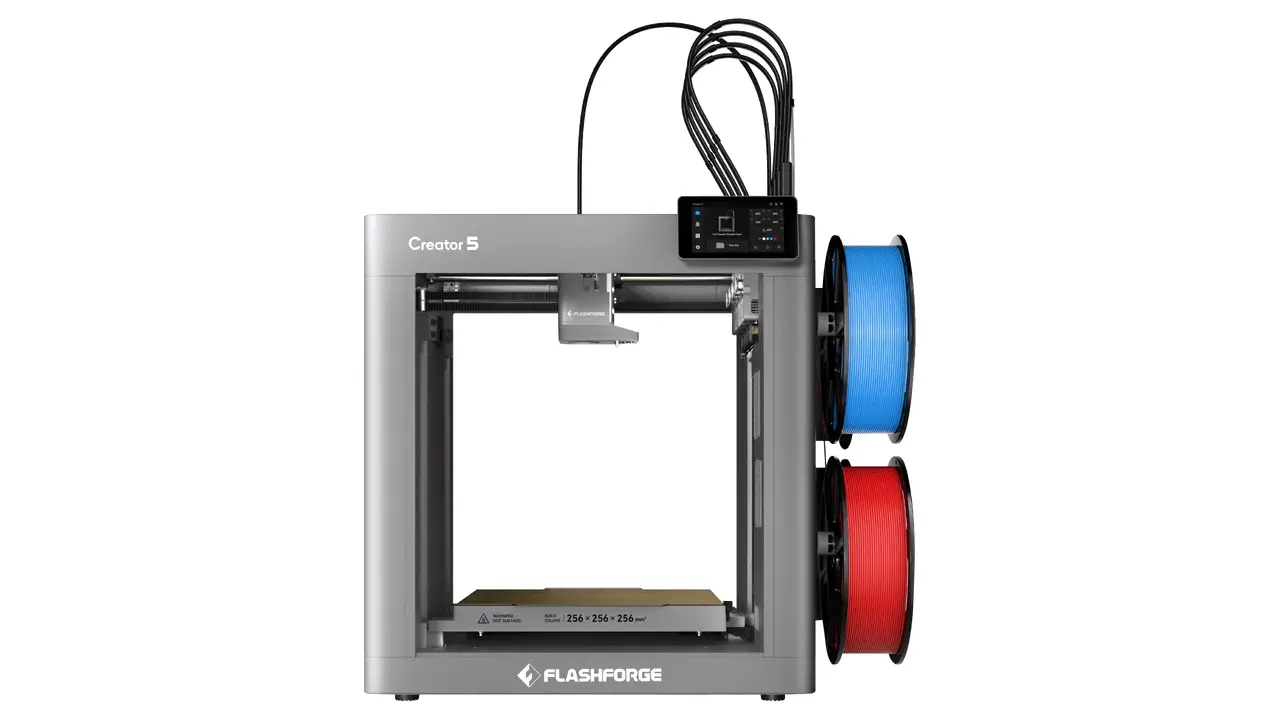
Creator 5
Professional dual extrusion 3D printer with IDEX system, auto-leveling, and enclosed chamber for reliable multi-material printing.
- Independent Dual Extrusion (IDEX)
- Auto Bed Leveling
- Enclosed Design
- WiFi Connectivity
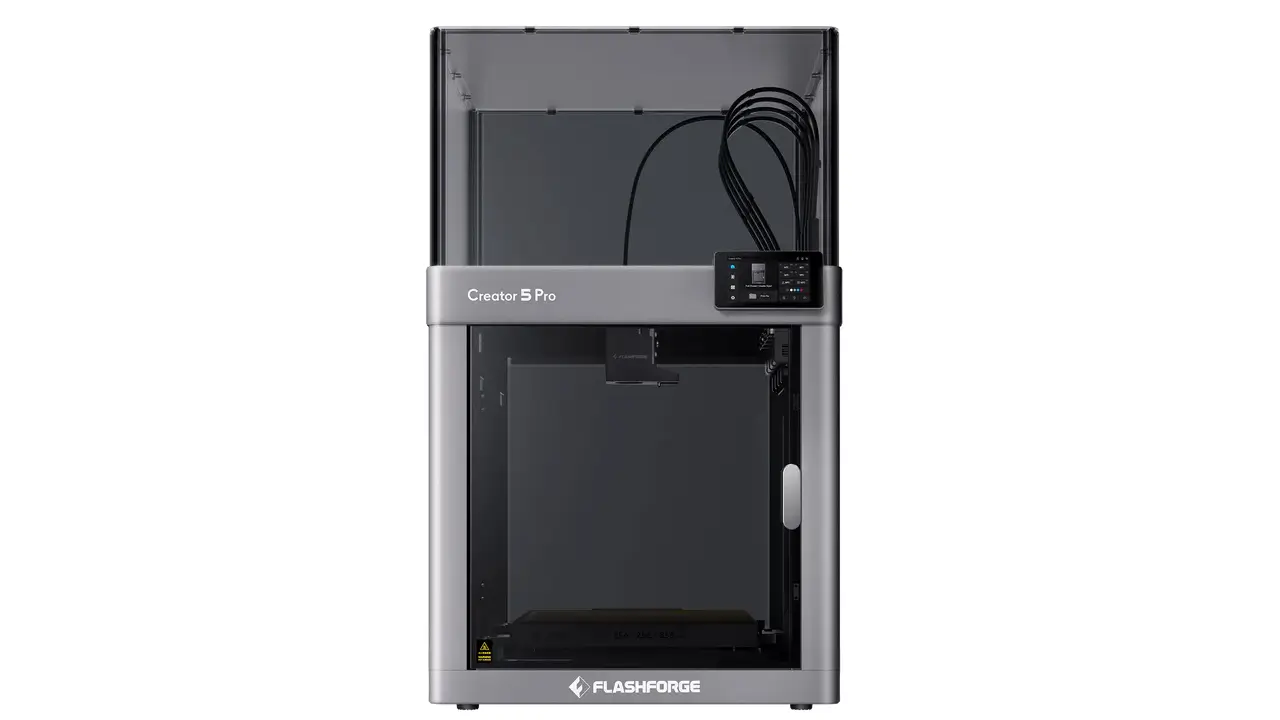
Creator 5 Pro
Advanced professional model with enhanced features, higher temperature hotend, and premium components for demanding applications.
- 300°C High-Temp Hotend
- Advanced IDEX System
- Filament Runout Sensor
- Power Loss Recovery
Discover more from bestchina3dprinters.com
Subscribe to get the latest posts sent to your email.