Flashforge vs Bambu Lab vs Creality 2026 — Which 3D Printer Brand Is Right for You?
If you’ve been searching for the best 3D printer brand in 2026, you’ve almost certainly landed on three names that dominate the conversation: Flashforge, Bambu Lab, and Creality. Together, these three manufacturers have reshaped the desktop 3D printing world — each carving out a unique identity, a loyal community, and a distinct philosophy about what a 3D printer should be.
But here’s the thing: choosing between Flashforge vs Bambu Lab vs Creality is no longer simply about which machine prints faster or which costs less. In 2026, the real battle is about ecosystems, user experience, automation, and long-term value. The hardware has converged considerably — what truly separates these brands is everything surrounding the printer itself: the software, the community, the support system, and the vision for where 3D printing is headed.
This guide takes a deep, friendly, and thoroughly researched look at all three brands — covering their histories, software environments, print quality, pricing strategies, and most importantly, who each brand is genuinely best suited for. Whether you’re a first-time maker, a classroom teacher, a small business owner, or an engineering enthusiast, by the time you finish reading, you’ll know exactly which brand deserves a spot on your desk in 2026.
Brand Overview: Who Are Flashforge, Bambu Lab, and Creality?
Before diving into specs and head-to-head comparisons, it helps to understand where each company comes from and what drives their product decisions. The backstory matters — because these brands’ origins explain almost everything about how their printers are designed today.
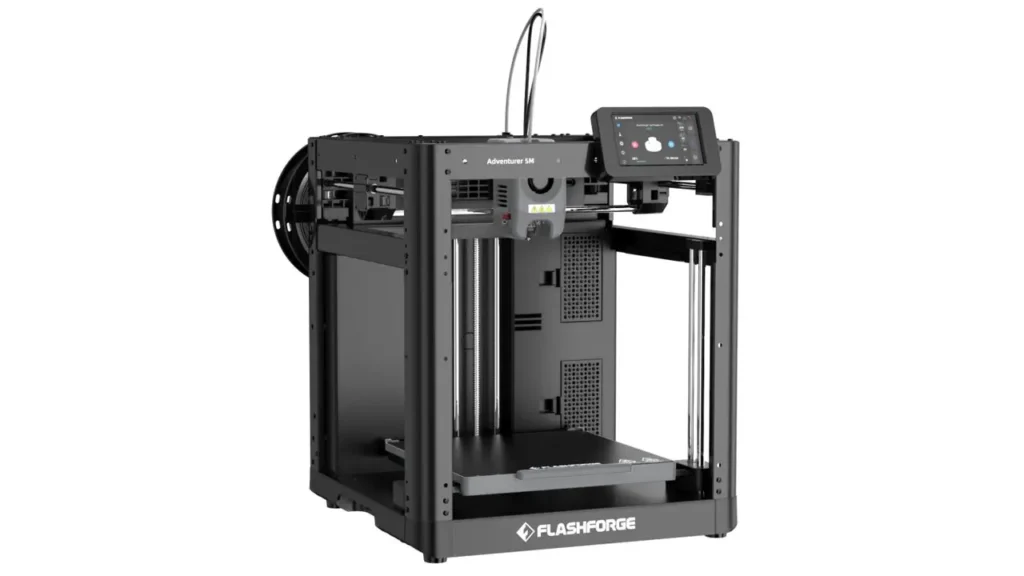
Flashforge is the veteran of the group. Founded in 2011 in Jinhua, Zhejiang Province, China, Flashforge built its reputation on one clear promise: safe, reliable, plug-and-play 3D printing for everyone. From educators to hobbyists to professionals, Flashforge centered its entire product strategy around enclosed machines with minimal setup, consistent results, and a low learning curve.
The company is backed by 134 national patents and 36 software copyrights, and its products have reached users in more than 200 countries worldwide. Models like the Finder, Adventurer, and Creator series became classroom staples around the globe. Today, Flashforge spans consumer, commercial, and industrial segments — serving dental labs, jewelry studios, engineering departments, and STEM classrooms. Universities including MIT and Rice University have incorporated Flashforge technology into their educational programs.
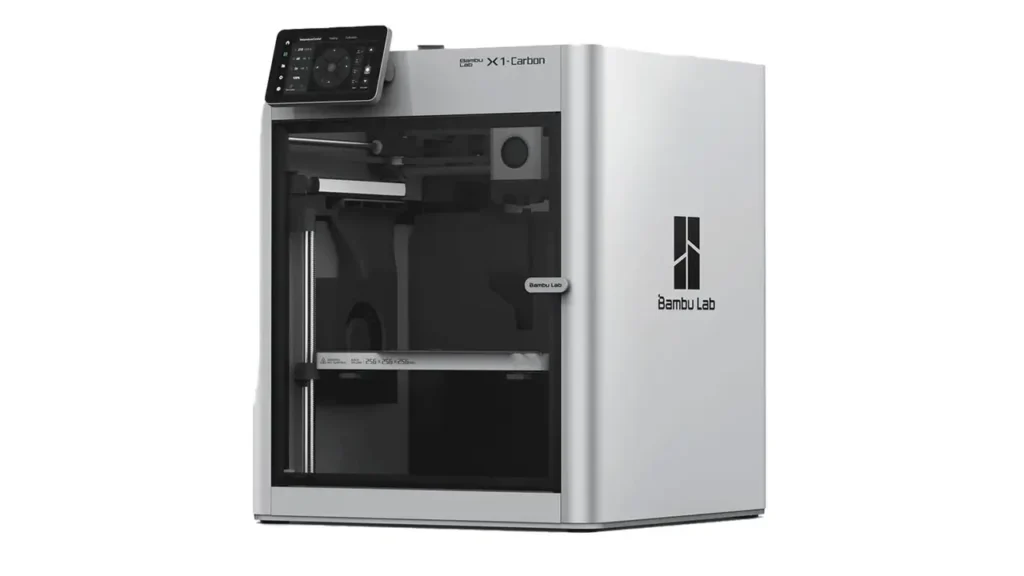
Bambu Lab is the disruptor that nobody saw coming. Founded in Shenzhen by a team of engineers who previously worked at DJI — the company behind the world’s best-selling consumer drones — Bambu Lab launched its first printer on Kickstarter in May 2022 and raised over $7 million from more than 5,500 backers, making it one of the largest hardware crowdfunding campaigns in 3D printing history. Led by Dr. Ye Tao, former head of DJI’s consumer drone department, the founding team applied drone engineering principles — tight hardware-software integration, aggressive pricing, and factory efficiency — to the 3D printing world.
The strategy worked spectacularly. By 2025, Bambu Lab’s annual revenue had crossed $1.5 billion USD, and the brand had become the undisputed leader in entry-level to mid-range desktop printers globally. Backed by Temasek, IDG Capital, and Tencent, Bambu Lab in 2026 continues to push boundaries with its newest flagship models including the X2D with dual nozzles and the large-format H2D series.
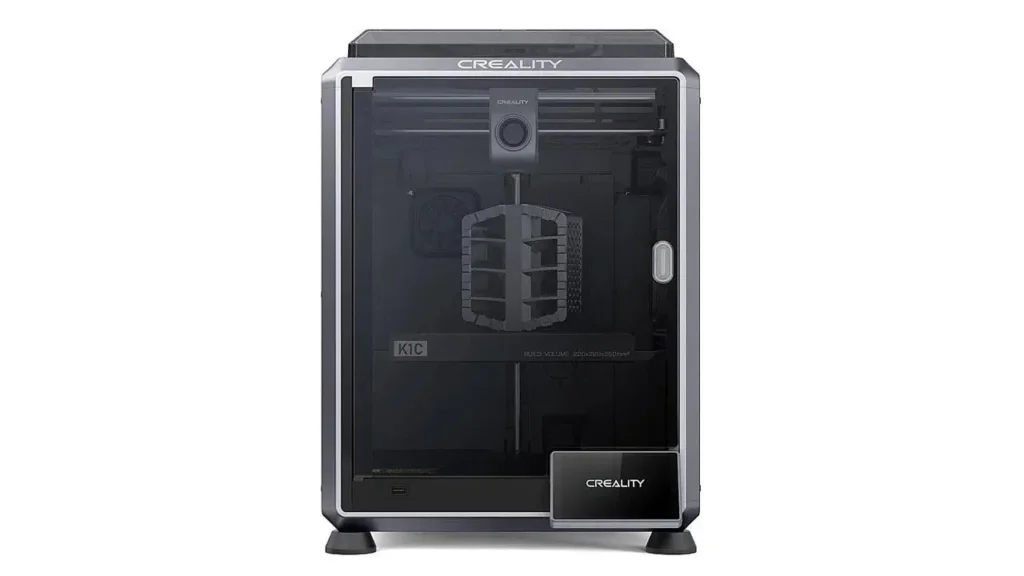
Creality rounds out the trio as the open-source giant and the brand that democratized 3D printing at scale. Founded in Shenzhen in 2014, Creality became famous almost overnight with the Ender 3 — an affordable, open-frame FDM printer that became one of the best-selling 3D printers of all time. Creality’s philosophy has always been rooted in accessibility and community: open-source firmware, massive third-party modification support, and a price point that puts 3D printing within reach of virtually anyone.
While Bambu Lab focused on appliance-like simplicity and Flashforge on educational reliability, Creality built its empire by giving tinkerers and makers exactly what they wanted — a capable, affordable machine they could endlessly customize. Today, Creality offers everything from budget Ender-series printers to high-speed K-series CoreXY machines capable of competing directly with Bambu Lab on speed and automation.
Flashforge
Jinhua, China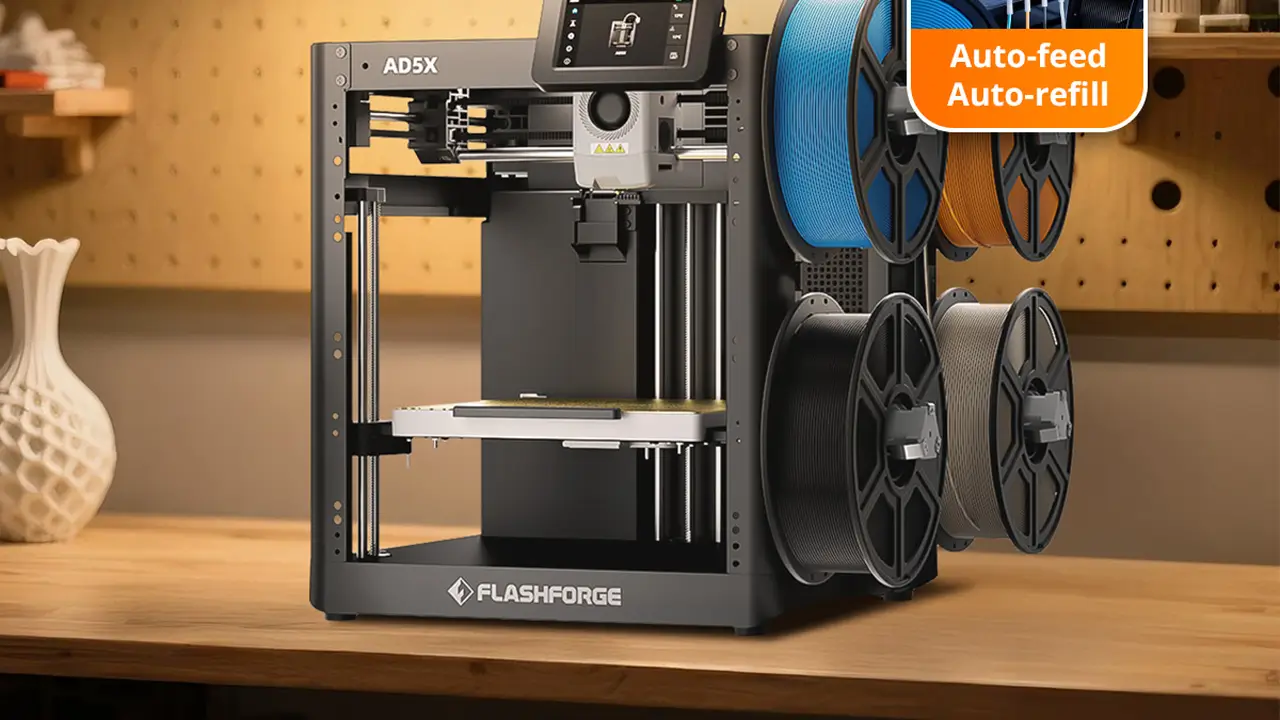
Industrial Stability
Industrial stability with intuitive controls. Reliable mechanics, enclosed enclosures for stable ABS and nylon printing, high-quality assembly for education and professional use.
Ecosystem Comparison: Software, Hardware Integration, and Community
In 2026, buying a 3D printer means buying into an ecosystem — and nowhere is the difference between these three brands more apparent than in how their software, hardware, and communities interact.
Bambu Lab’s ecosystem is the most tightly integrated of the three, and for many users, that is its greatest strength and its most debated weakness. Bambu Studio, the company’s proprietary slicer, is widely considered one of the best beginner-friendly slicing applications available. It combines an intuitive interface with powerful features like automatic flow calibration, cloud-based print monitoring, and seamless multi-material configuration.
Paired with MakerWorld — Bambu Lab’s own model-sharing platform — the ecosystem creates a complete loop: find a model, slice it, and print it, all within the same software environment. The AMS (Automatic Material System) is deeply embedded in this ecosystem, using RFID technology on official filament spools to automatically identify materials and apply optimal print settings without any manual input from the user.
The flip side is ecosystem lock-in. Third-party filaments require manual profile configuration in Bambu Studio, and some advanced AMS features work best — or exclusively — with Bambu-branded materials. For makers who value openness and flexibility, this semi-closed approach can feel limiting.
Creality’s ecosystem sits at the opposite end of the spectrum. Creality embraces open-source principles with broad compatibility: its printers run on Klipper or Marlin firmware, both of which are heavily supported by the global maker community. The Creality Print slicer serves as the brand’s native software — described by the company itself as a practical tool for remote control and monitoring — but Creality users are equally at home with third-party solutions like OrcaSlicer, which was originally forked from Bambu Studio and now supports Creality printers with pre-configured profiles out of the box.
This open flexibility is a major advantage for power users who want to squeeze maximum performance from their hardware. Creality Cloud provides a community space for model sharing, but it has not yet achieved the polish or integration depth of Bambu’s MakerWorld. What Creality does have, however, is the largest community of any brand in this comparison — forums, Reddit communities, YouTube channels, and modification guides number in the thousands.
Flashforge’s ecosystem takes a third approach: a curated, semi-closed environment built around simplicity and stability. The FlashPrint slicer is designed for ease of use, offering model cutting, rotation optimization, auto repair functions, and straightforward material configuration. It is not the most powerful slicer on the market, but it consistently performs well for the workflows it targets — primarily PLA, PETG, and standard ABS on enclosed machines.
Higher-end Flashforge models accept third-party filament, though entry-level and mid-range units often use proprietary filament systems that restrict third-party compatibility unless modified. For educational institutions and professional environments where consistency and simplicity matter more than customization, the Flashforge ecosystem delivers reliably. The trade-off is a smaller community compared to both Bambu Lab and Creality, and fewer third-party resources available online.
Creality
Shenzhen, China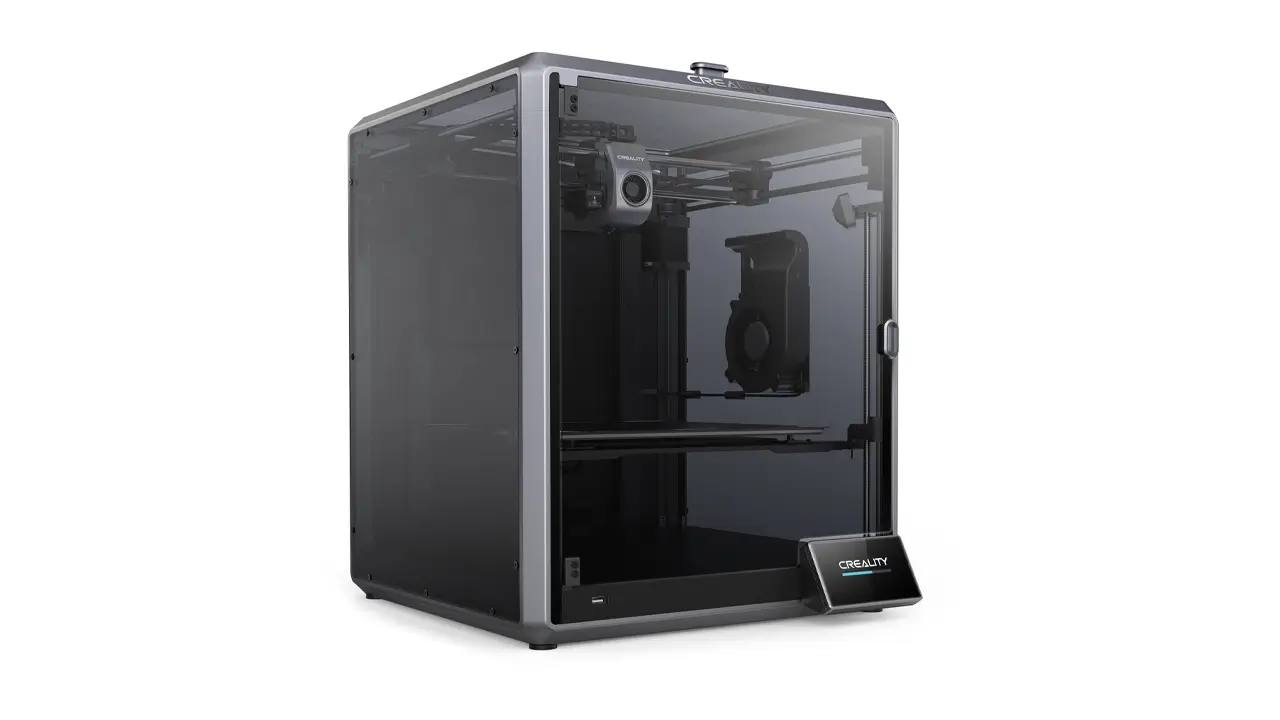
3D Printers & Accessories
The world’s most popular 3D printer brand. Ender series legends, K1 high-speed models, and reliable budget options for every maker with massive community support.
Print Quality Showdown: Creality vs Bambu Lab vs Flashforge
Print quality is always contextual — it depends on the material, the settings, and what you’re actually making. That said, in 2026, all three brands have dramatically raised the baseline of what affordable desktop printing looks like.
Bambu Lab consistently receives top marks for out-of-the-box print quality, particularly on PLA, PETG, and ABS. The combination of CoreXY motion systems, multi-axis vibration compensation, LIDAR-assisted first-layer calibration (on select models), and AI-powered error detection means that a brand-new Bambu printer produces excellent results from the very first print — without tuning, without calibration towers, and without trial and error. Surface finish quality is smooth and consistent. Layer adhesion is strong. Multi-color prints using the AMS system show clean transitions with minimal color bleed. For engineering materials, the enclosed P1S, P2S, and X2D models maintain chamber temperatures that prevent warping on ABS and ASA, delivering dimensional accuracy that previously required machines costing several times as much.
Creality’s print quality story is more nuanced. Entry-level machines like the Ender 3 series require more user effort — bed leveling, first-layer tuning, and retraction calibration are not automatic, and results can vary significantly based on how much time you invest in setup. However, Creality’s K-series CoreXY machines — particularly the K1 Max and K2 Plus — changed this narrative substantially. Capable of speeds up to 600 mm/s with active vibration compensation, these printers produce quality that directly rivals Bambu Lab’s P-series at competitive price points. The large community also means that any print quality issue you encounter has almost certainly been solved and documented somewhere online.
Flashforge occupies a reliable middle ground. Print quality across the Adventurer and Creator series is consistently good — not always as fast as Bambu, not as endlessly customizable as Creality, but predictable and stable in a way that institutional users genuinely value. Enclosure design helps Flashforge machines handle ABS and other warping-prone materials well. The AD5X’s 300°C direct drive expands material options to PETG and flexible TPU without significant tuning overhead. For users whose primary goal is consistent, repeatable output rather than maximum speed or customization, Flashforge delivers.
Flashforge Creator 5
Series
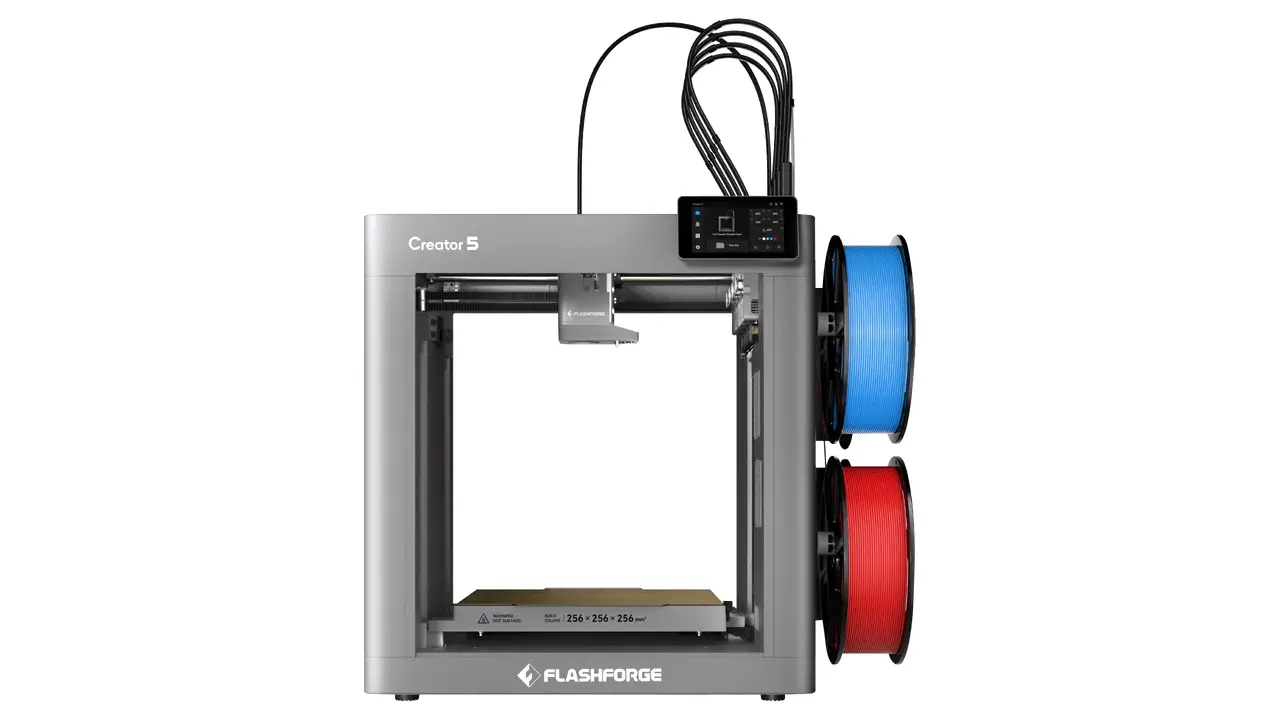
Creator 5
Professional dual extrusion 3D printer with IDEX system, auto-leveling, and enclosed chamber for reliable multi-material printing.
- Independent Dual Extrusion (IDEX)
- Auto Bed Leveling
- Enclosed Design
- WiFi Connectivity
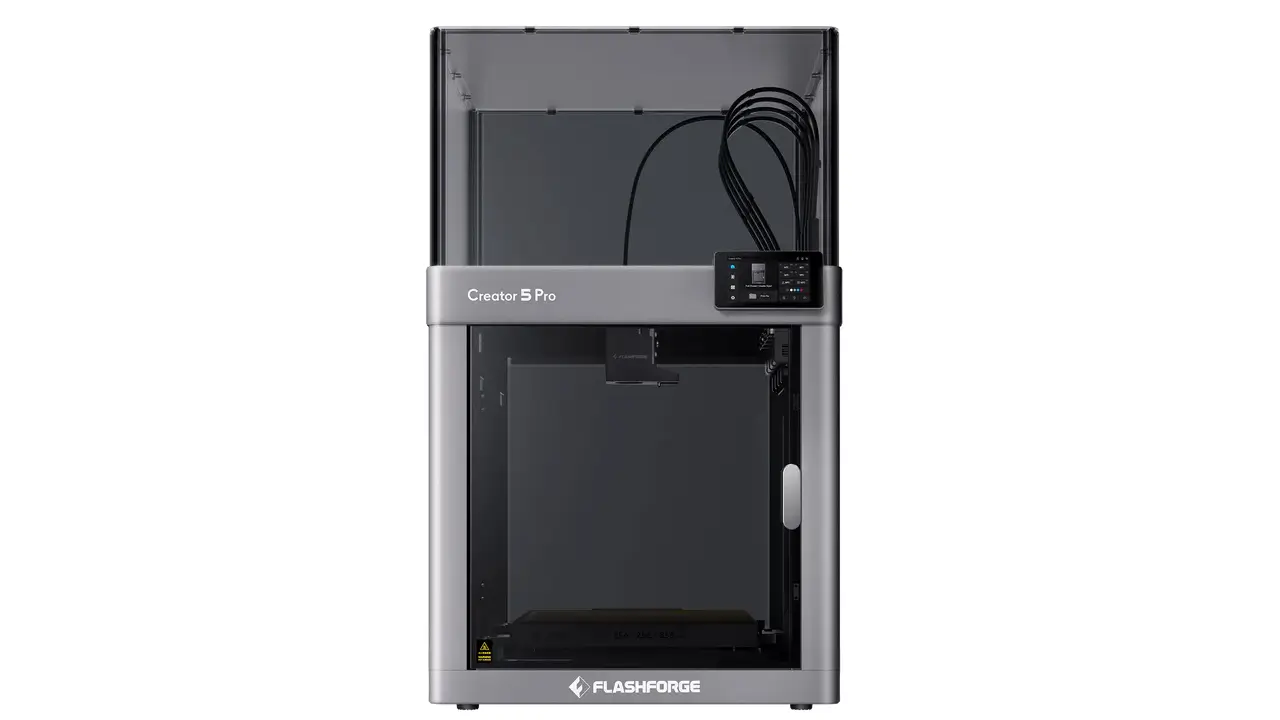
Creator 5 Pro
Advanced professional model with enhanced features, higher temperature hotend, and premium components for demanding applications.
- 300°C High-Temp Hotend
- Advanced IDEX System
- Filament Runout Sensor
- Power Loss Recovery
Flashforge vs Creality: Reliability and Ease of Use
When comparing Flashforge vs Creality directly, the central tension is between plug-and-play reliability and open-ended customizability.
Flashforge is built from the ground up for ease of use. Enclosed chassis designs keep printing environments stable, reduce warping, and protect prints from drafts and temperature fluctuations. Auto-bed leveling, touchscreen interfaces, and pre-tuned FlashPrint profiles mean that most Flashforge machines are genuinely ready to print minutes after unboxing. For educators managing thirty students simultaneously, or professionals who need a reliable output device rather than an engineering project, this approach is invaluable. Flashforge machines also tend to run quietly, an underappreciated feature in shared classroom or office environments.
Creality takes the opposite philosophy. Open-frame machines like the Ender series are deliberately accessible for modification — users can upgrade hotends, swap extruders, install enclosures, and flash custom firmware with relative ease. This openness creates a steeper learning curve, particularly for total beginners, but it also means that Creality printers can evolve with you over time. A Creality machine that costs $200 today can, with community-sourced upgrades and firmware tweaks, punch well above its price class. Creality’s newer K-series machines bridge this gap meaningfully — they offer much of Bambu Lab’s automation with the openness Creality users expect — but they still require more initial setup and calibration than a comparable Flashforge or Bambu machine.
For absolute beginners who want zero friction, Flashforge is the more forgiving choice. For users who enjoy learning and tinkering, Creality’s open ecosystem is a genuine advantage.
Bambu Lab vs Creality: Speed and Innovation
The Bambu Lab vs Creality battle is arguably the most dynamic rivalry in desktop 3D printing today, and it is fundamentally a competition around speed, automation, and innovation trajectory.
Bambu Lab entered the market with CoreXY architecture as standard across its lineup — a motion system that enables dramatically faster print speeds than traditional Cartesian designs by moving only the lightweight print head rather than the heavy build plate. Combined with active vibration compensation and AI-assisted calibration, Bambu Lab printers deliver high-quality results at speeds that previously required significant manual tuning on competing machines.
The AMS multi-material system, capable of handling up to 16 colors when multiple units are stacked, has no direct equivalent in the consumer space from Creality. And in 2026, Bambu Lab continues to push forward: the X2D introduced dual-nozzle printing, where one nozzle handles the main model and a second handles support material — eliminating the messy, time-consuming process of removing supports by hand.
Creality has responded aggressively. The K2 Plus Combo, capable of up to 600 mm/s with a 350 x 350 x 350 mm build volume, targets Bambu Lab’s performance claims directly. Creality Cloud and AI-monitoring features have been added to newer K-series machines, narrowing the automation gap. Where Creality maintains a genuine edge is in build volume — its large-format machines offer more printing real estate than most Bambu models — and in openness, allowing power users to extract performance that rivals machines at twice the price through firmware and hardware optimization.
The honest summary: Bambu Lab innovates faster and integrates more seamlessly, while Creality offers more power-user flexibility and better large-format options for the money.
Bambu Lab vs Flashforge: Automation vs Consistency
Bambu Lab vs Flashforge is a clash of visions more than a clash of specifications. Both brands target users who want reliable, relatively low-maintenance 3D printing — but they define “reliable” quite differently.
Bambu Lab’s automation is genuinely impressive. Every print begins with automatic bed leveling, flow calibration, and vibration compensation — processes that on other printers require manual attention and periodic re-tuning. The Bambu Studio slicer intelligently manages multi-material purging, support generation, and print scheduling. Bambu Lab’s AI-powered error detection monitors prints in real time and can pause or stop a print when it detects failures like spaghetti printing or layer delamination. For users who want the maximum amount of printing with the minimum amount of management, this ecosystem is hard to beat.
Flashforge’s consistency comes from a different source: simplicity and restraint. Flashforge does not try to be the fastest or the most automated — it tries to be the most predictable. Enclosed designs, pre-configured material profiles, and conservative default settings mean that Flashforge machines produce reliable results day after day without unexpected failures. For educational environments where dozens of users of varying skill levels interact with the same machine, this predictability has real value. Flashforge machines are also typically quieter and carry international safety certifications including CE, FCC, and RoHS — important considerations for institutional purchasing committees.
If you want a printer that dazzles with automation and speed, Bambu Lab wins. If you want a printer that quietly does its job, year after year, with minimal drama, Flashforge is the more seasoned choice.
Pricing and Value in 2026: Affordable 3D Printers Across All Budgets
One of the most exciting developments in 2026 is that excellent 3D printing has never been more accessible. All three brands offer strong value at multiple price tiers — though they define “value” differently.
| Brand | Entry Level | Mid Range | Premium |
|---|---|---|---|
| Flashforge | $250–$400 (Adventurer, Finder) | $400–$800 (Adventurer 5M Pro, AD5X) | $1,000+ (Creator 3 Pro, Creator 4S) |
| Bambu Lab | $219–$329 (A1 Mini / Combo) | $399–$799 (P1S, P2S Combo) | $649–$1,999 (X2D, H2D series) |
| Creality | $150–$250 (Ender 3 V3 SE) | $300–$600 (K1 Max, K2 Pro) | $700–$1,200 (K2 Plus Combo) |
Creality holds the undisputed crown for entry-level affordability. The Ender 3 V3 SE remains one of the most recommended first printers in online communities worldwide, offering a capable, upgradable machine at a price point that makes 3D printing genuinely accessible to anyone. Higher up the range, Creality’s K-series machines offer impressive specifications — including large build volumes and high-speed CoreXY motion — at prices that undercut Bambu Lab’s comparable offerings.
Bambu Lab’s pricing reflects a different kind of value proposition: you are paying for everything to work perfectly out of the box, for a polished software experience, and for the ongoing ecosystem investment the company has made in features like AMS, AI monitoring, and cloud integration. The A1 Mini Combo at $329 delivers multi-color printing capabilities that would have cost several times more just a few years ago, making it a remarkable value for what it includes.
Flashforge’s pricing is honest and mid-range focused. The entry-level Adventurer series offers enclosed printing at a reasonable cost, while the Creator series justifies premium prices with features like independent dual extrusion, high-temperature hotends, and industrial-grade build quality. Ongoing costs for proprietary filament in some models are worth factoring into the total ownership calculation.
Which Brand Is the Best 3D Printer Brand in 2026?
The honest answer is that there is no single best 3D printer brand in 2026 — there is only the best brand for your specific situation. But we can give you a clear framework for deciding.
| Category | Winner | Runner-Up |
|---|---|---|
| Ease of Use | Bambu Lab | Flashforge |
| Print Speed | Bambu Lab / Creality (tie) | Flashforge |
| Affordability | Creality | Bambu Lab |
| Ecosystem & Software | Bambu Lab | Creality |
| Open Source & Modding | Creality | Bambu Lab |
| Education & Institutions | Flashforge | Bambu Lab |
| Multi-Color Printing | Bambu Lab | Flashforge |
| Community Size | Creality | Bambu Lab |
| Innovation Rate | Bambu Lab | Creality |
| Reliability / Consistency | Flashforge | Bambu Lab |
In 2026, Bambu Lab dominates on innovation, automation, and beginner experience. Creality leads on affordability, community, and open flexibility. Flashforge holds its ground in institutional reliability, educational deployment, and quiet professional use.
Flashforge Creator 5 Pro
Professional Dual Extrusion FDM
Advanced Professional FDM Printer
Premium dual extrusion 3D printer from Flashforge. Enhanced IDEX system, 300°C high-temp hotend, and advanced features for demanding professional applications.
Final Verdict: Which 3D Printer Brand Should You Choose?
Let’s break it down by scenario — because the right brand genuinely depends on who you are and what you plan to print.
For the complete beginner who has never touched a 3D printer and wants to start making things as quickly and painlessly as possible, Bambu Lab is the clear recommendation. The A1 Mini Combo at $329 delivers multi-color printing, fully automatic calibration, and a slicer that genuinely guides you through the entire workflow. You will be printing high-quality objects within an hour of unboxing — no YouTube tutorials required, no calibration frustration, no failed first prints. It is the closest thing to an iPhone moment that the 3D printing world has produced.
For the educator or institution managing multiple printers across classrooms, libraries, or makerspaces, Flashforge stands above the competition. Enclosed designs provide a safe printing environment around students. Pre-configured FlashPrint profiles reduce the variables that lead to failed prints in unsupervised or multi-user settings. International safety certifications satisfy institutional procurement requirements. And the brand’s consistent, low-drama operation means teachers can focus on the curriculum rather than printer maintenance. The Adventurer 5M and Creator series are particularly well-suited to this environment.
For the enthusiast and tinkerer who wants deep control, maximum customization, and the freedom to experiment endlessly with hardware and firmware, Creality is the natural home. The open-source ecosystem means your printer is never truly finished — you can always upgrade it, optimize it, or adapt it to a new use case. The enormous community ensures that whatever challenge you face, someone has faced it before and documented the solution. Creality’s K-series machines now offer high-speed CoreXY performance that genuinely competes with premium brands, while still giving you the freedom to run OrcaSlicer, Klipper, and a full suite of open tools.
For the small business or professional using 3D printing for prototyping, small-batch production, or client deliverables, the calculus depends on your materials. For PLA and PETG prototyping at high volume and multi-color output, Bambu Lab’s P1S or P2S with AMS offers the best combination of speed, quality, and automation. For engineering materials like Nylon, PC, or carbon fiber composites, Flashforge’s Creator 3 Pro and Creator 4S offer the enclosed, high-temperature environment these materials demand. For large-format production runs where build volume matters more than speed, Creality’s K2 Plus Combo provides an exceptional amount of printer for the money.
For mass production environments where printers run continuously and downtime is costly, Flashforge’s industrial-grade reliability and comprehensive warranty support make it a sensible foundation. Bambu Lab’s growing print farm ecosystem — enabled by its cloud monitoring and AMS automation — is also increasingly viable for semi-automated multi-printer production setups.
The 3D printing world in 2026 is richer, faster, more accessible, and more capable than it has ever been. Flashforge, Bambu Lab, and Creality have each contributed to that progress in their own way — and whichever brand you choose, you are getting more printer for your money than was imaginable just five years ago. The best machine is the one that fits your workflow, respects your budget, and gets you printing the things you actually care about making.
Polimerukr.com
Ukraine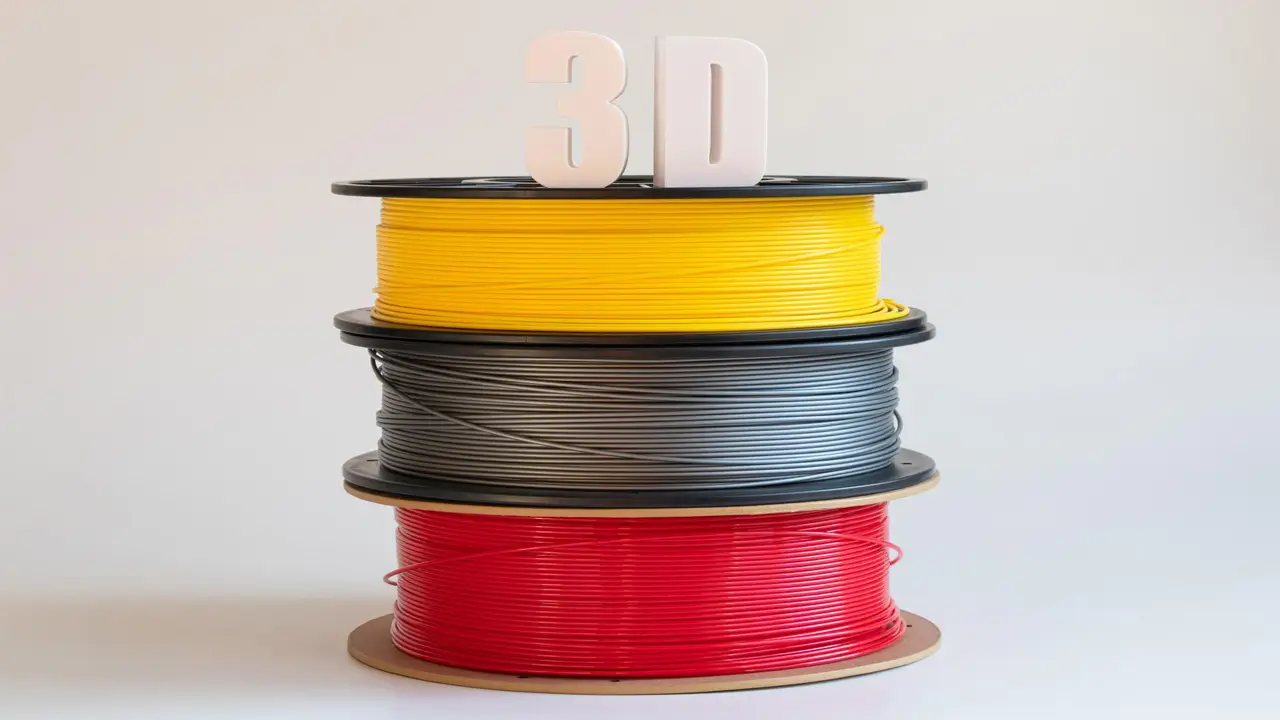
3D Printing Materials & Supplies
Your trusted source for high-quality 3D printing materials in Ukraine. Wide selection of filaments, resins, and accessories for all printer types with fast local shipping.
🇬🇧 English Review
Excellent comparison of Flashforge, Bambu Lab, and Creality. The article is clear, well-structured, and very helpful for choosing the right 3D printer in 2026. The site bestchina3dprinters.com provides real value with detailed insights and up-to-date information.
🇪🇸 Reseña en Español
Una comparación muy completa entre Flashforge, Bambu Lab y Creality. El artículo está bien organizado y es fácil de entender. El sitio bestchina3dprinters.com es una fuente confiable para quienes buscan elegir una impresora 3D en 2026.
🇸🇦 مراجعة باللغة العربية
مقال رائع يقارن بين Flashforge وBambu Lab وCreality بطريقة واضحة ومفيدة. المعلومات دقيقة وحديثة، والموقع bestchina3dprinters.com يقدم محتوى قيّم لكل من يهتم بالطباعة ثلاثية الأبعاد.
🇨🇳 中文评价
这篇关于Flashforge、Bambu Lab和Creality的对比文章非常专业,结构清晰,内容实用。bestchina3dprinters.com 提供了高质量的信息,是选择3D打印机的可靠资源。
🇫🇷 Avis en Français
Très bon article comparatif entre Flashforge, Bambu Lab et Creality. Le contenu est clair, précis et utile pour faire le bon choix en 2026. Le site bestchina3dprinters.com est une excellente ressource.
🇩🇪 Bewertung auf Deutsch
Ein sehr informativer Vergleich zwischen Flashforge, Bambu Lab und Creality. Der Artikel ist gut strukturiert und leicht verständlich. bestchina3dprinters.com ist eine vertrauenswürdige Quelle für 3D-Drucker im Jahr 2026.
Discover more from bestchina3dprinters.com
Subscribe to get the latest posts sent to your email.